Espen Kraft throws us into the deep end of 80s MIDI madness, showing off his labyrinthine patch bay setup. This isn’t your average Golden Retriever-friendly studio tour. We’re talking programmable patch bays, master keyboard domination, ADAT digital wizardry, and a graveyard of classic samplers and gritty synths—all wired for instant action. If you want to see real workflow chaos tamed, Kraft’s approach is as old-school as it is unapologetically efficient.
14. October 2026
SPARKY
Patch Bay Mayhem: Espen Kraft’s MIDI & Audio Jungle Explained
Akai S1000, Alesis ADAT HD24, Anatech SMP 16 MIDI and Audio Patch Bay, Audient iD14, Behringer Analog Mixer, Bit.01, E-mu E-MAX 2, E-mu ESI 4000, Eventide Effects Unit, Korg DDM220, Lexicon Effects Unit, M-Audio MIDI Sport 4x4, Roland Alpha Juno 2, Roland D550, Roland JV880, Roland JX-8P, Roland MC50, Roland MKS20, Roland MSQ 700, Roland S10, Roland S550, Roland UM1, Sequential Tom, Studio 128X MIDI Patch Bay, Yamaha 01V, Yamaha A3000, Yamaha QX3, Yamaha TX802, Yamaha TX81Z
Patch Bay Power: Not for the Faint-Hearted
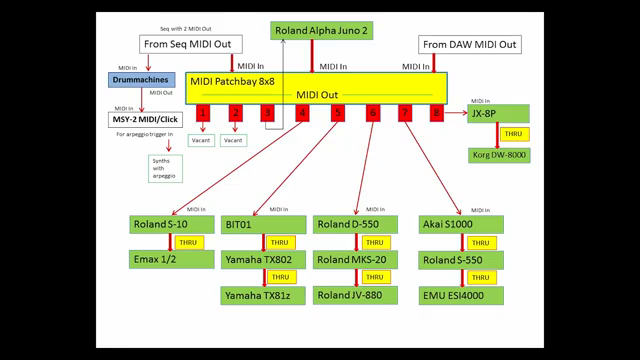
Espen Kraft doesn’t dabble—he dives headfirst into MIDI patch bay territory, because running a serious 80s-inspired setup means you quickly outrun basic MIDI thru chains. His patch bay isn’t just a convenience; it’s a necessity when you’re wrangling samplers, modules, and enough synths to fill a rave bunker. Forget cable spaghetti—this is all about controllable chaos, making sure every bit of kit gets its say.
The real beauty here is the flexibility: multiple MIDI ins and outs let him route signals wherever he fancies, all from the front panel or display. Kraft’s approach means you can play any synth from your master keyboard, sequence with hardware or from the DAW, and avoid crawling behind racks like a lost squirrel. No more unplugging cables mid-jam—just hit the right button and you’re off.
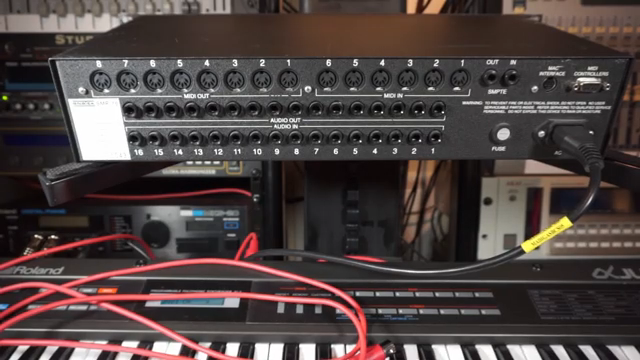
"On the back on a patch bay you have lots of MIDI ins and you have lots of MIDI outs."
© Screenshot/Quote: Espenkraft (YouTube)
Master Keyboard: The Control Freak’s Dream
"Pick one that has at least two MIDI outs because then you can use the other MIDI out to feed the drum machines if you have one and it will be synced in tempo."
© Screenshot/Quote: Espenkraft (YouTube)
With everything patched up, Kraft’s Juno 2 stands as the master keyboard, ruling over the MIDI domain. One MIDI out, a sea of options: he can trigger anything he’s got, from JX-8P to stacks of chained samplers, just by setting channels and routing. That’s workflow—no fiddling, just play.
He’s got sequencers and drum machines locked in too, with clever daisy-chaining to avoid the need for endless patch bays. If you’re thinking of going this route, Kraft’s advice is gold: get a hardware sequencer with at least two MIDI outs for proper sync and flexibility. And if you want DAW control, just patch it in. It’s all about options—every synth, every module, just a MIDI flick away.
Digital Routing: ADAT and the DAWless Dream
Moving to audio, Kraft’s setup gets digital with ADAT HD24. He’s running a Yamaha digital mixer as a submixer, funnelling drum machines and samplers, then shooting everything optically into the ADAT recorder. No computer needed—just pure, old-school DAWless multitrack action. If you want to avoid staring at a screen and still keep things tight, this is the way.
He’s also got his drum machines and sequencers in the loop, keeping everything locked and ready. Some gear runs through the DAW for extra options, but at the heart, it’s a live-ready, hardware-centric workflow. Kraft’s not messing about—he’s recording real gear, in real time, no apologies.
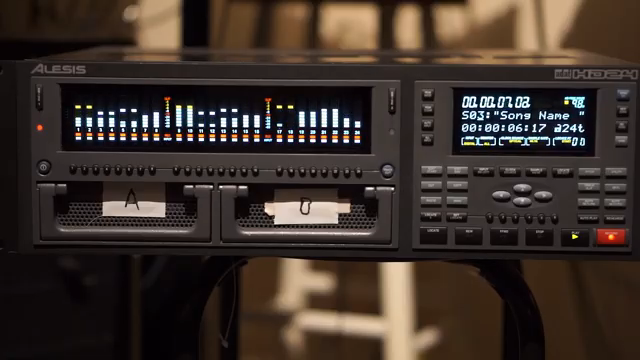
"The HD24 enables me to go completely dolless if I want to record a multitrack without a computer."
© Screenshot/Quote: Espenkraft (YouTube)
Submixers and Patch Bays: Herding Audio Cats
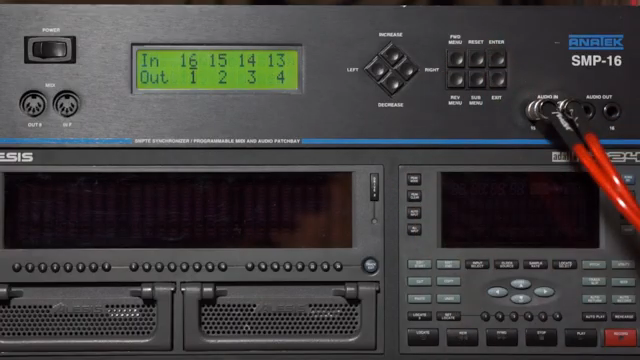
"It's one of the most advanced patch bays you can get to root both MIDI and audio and once set up it works perfectly and everything is stored in the memory of this patch bay unit."
© Screenshot/Quote: Espenkraft (YouTube)
Signal flow in Kraft’s dungeon is about as complex as you’d expect from a man who collects samplers like vinyl. The Yamaha 01V takes main mixing duties, letting him route effects—Lexicon, Eventide—at the touch of a button. He’s loyal to these mixers, and honestly, if it ain’t broke, don’t upgrade.
From Yamaha, everything passes into a Behringer analog mixer, then finally into the DAW. Kraft only records one thing at a time unless he’s going full live performance. For sampling, the audio patch bay is a lifesaver—he’s hooked up every sampler input, so no more diving behind gear. Routing is all handled up front; the Anatech SMP 16 keeps things smooth, memory-stored, and ready for action.
Vintage Grit: Samplers and Synths with Attitude
Kraft’s sound arsenal is full of character: the E-MAX 2 brings grunge and metallic flavour, while the S10, Akai S1000, ESI 4000, and Yamaha A3000 each add their own dirt and depth. The TX81Z delivers classic FM punch, and the Bit.01 plus TX802 round out the rig. Some of these boxes are under the radar, but in this setup, they’re front and centre—giving the whole system its 80s bite. Want to hear the real difference? You’ll get more from Kraft’s video than any written word can offer.
This article is also available in German. Read it here: https://synthmagazin.at/patchbay-chaos-espen-krafts-midi-audio-dschungel-erklaert/
More articles about these products:
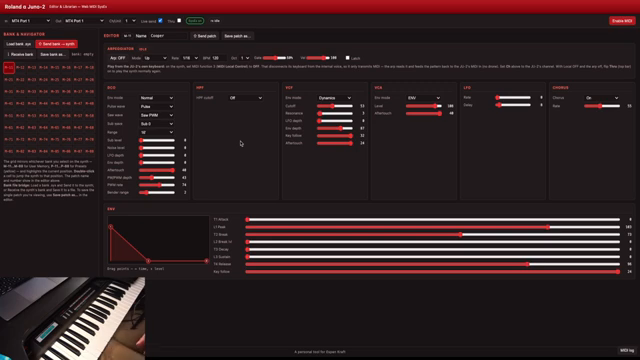 Espen Kraft’s Alpha Juno-2 Editor: No Nonsense, All Groove
 Jorb and the Sonic Alchemy of Bad Mood: Grit-Soaked Ambience Reimagined
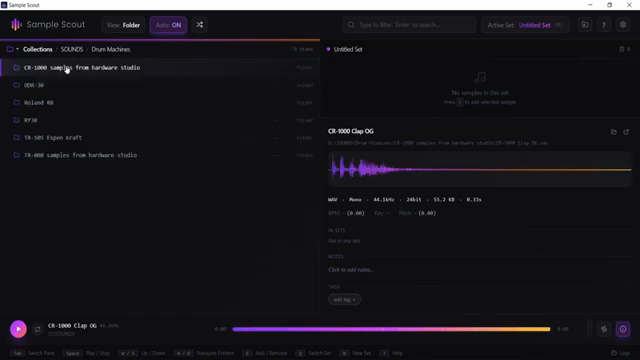 Sample Scout Rampage: Espen Kraft’s Lightning-Fast Workflow for Vintage and DAW Chaos
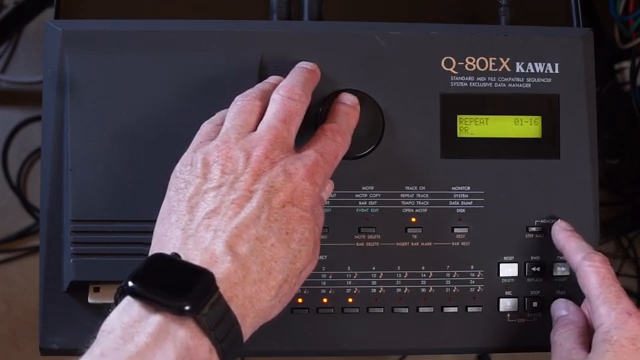 Espen Kraft Unleashes the Kawai Q-80EX: 32-Track Mayhem from the 80s
 Espen Kraft’s Model 8: Tape Dreams in a DAW Nightmare
 Espen Kraft vs The DAW: How the Yamaha QX3 Becomes a Sonic Street Weapon
 Voltage Labs x Space Dimension Controller: Amsterdam Studio Tour with Sampler Obsession and Acid Tech Tricks
 Voltage Labs: Space Dimension Controller and the Ghosts in the Akai Machine
 Tonepusher’s Ode to Bad Synths: Industrial Mayhem in a Box
 Doctor Mix Goes Full Outback: Rebuilding Enigma’s ‘Sadeness’ with UVI Vintage Vault 5
 Optoproductions Digs Deep: MIDI Amsterdam’s 30-Year Rave Bunker Legacy
 Espen Kraft’s Minimalist Gig Prep: From Rehearsal to Rave Bunker
Watch on YouTube:
Latest articles
Watch on YouTube:
Visit the channel:
https://www.youtube.com/EspenKraft
https://www.youtube.com/EspenKraft
Links from EspenKraft:
Instagram: https://instagram.com/espenkraft
Sponsored links:
If you purchase via these links, we may earn a small commission – at no extra cost to you. The link opens an Amazon keyword search, and results may vary depending on availability.
Akai S1000
🔗 Check price on Amazon
🔗 Check price on Amazon
Alesis ADAT HD24
🔗 Check price on Amazon
🔗 Check price on Amazon
Anatech SMP 16 MIDI and Audio Patch Bay
🔗 Check price on Amazon
🔗 Check price on Amazon
Audient iD14
🔗 Check price on Amazon
🔗 Check price on Amazon
Behringer Analog Mixer
🔗 Check price on Amazon
🔗 Check price on Amazon
Bit.01
🔗 Check price on Amazon
🔗 Check price on Amazon
E-mu E-MAX 2
🔗 Check price on Amazon
🔗 Check price on Amazon
E-mu ESI 4000
🔗 Check price on Amazon
🔗 Check price on Amazon
Eventide Effects Unit
🔗 Check price on Amazon
🔗 Check price on Amazon
Korg DDM220
🔗 Check price on Amazon
🔗 Check price on Amazon
Lexicon Effects Unit
🔗 Check price on Amazon
🔗 Check price on Amazon
M-Audio MIDI Sport 4x4
🔗 Check price on Amazon
🔗 Check price on Amazon
Roland Alpha Juno 2
🔗 Check price on Amazon
🔗 Check price on Amazon
Roland D550
🔗 Check price on Amazon
🔗 Check price on Amazon
Roland JV880
🔗 Check price on Amazon
🔗 Check price on Amazon
Roland JX-8P
🔗 Check price on Amazon
🔗 Check price on Amazon
Roland MC50
🔗 Check price on Amazon
🔗 Check price on Amazon
Roland MKS20
🔗 Check price on Amazon
🔗 Check price on Amazon
Roland MSQ 700
🔗 Check price on Amazon
🔗 Check price on Amazon
Roland S10
🔗 Check price on Amazon
🔗 Check price on Amazon
Roland S550
🔗 Check price on Amazon
🔗 Check price on Amazon
Roland UM1
🔗 Check price on Amazon
🔗 Check price on Amazon
Sequential Tom
🔗 Check price on Amazon
🔗 Check price on Amazon
Studio 128X MIDI Patch Bay
🔗 Check price on Amazon
🔗 Check price on Amazon
Yamaha 01V
🔗 Check price on Amazon
🔗 Check price on Amazon
Yamaha A3000
🔗 Check price on Amazon
🔗 Check price on Amazon
Yamaha QX3
🔗 Check price on Amazon
🔗 Check price on Amazon
Yamaha TX802
🔗 Check price on Amazon
🔗 Check price on Amazon
Yamaha TX81Z
🔗 Check price on Amazon
🔗 Check price on Amazon