Molten Music Technology, helmed by Robin Vincent, takes the gloves off for a no-BS review of the AJH Synth Gemini 2412. Two SEM-inspired filters, a feedback circuit that can melt your face, and enough modulation options to keep even the most jaded modular heads interested. Robin digs into the chunky panel, calls out the quirks, and shows off the Gemini’s vintage and modern tricks. If you like your filters smooth but not tame, this one’s got both beauty and beast mode. Let’s see if it’s worth the rack space—or just a posh paperweight.
14. October 2026
SPARKY
Molten Music Technology Burns Through the AJH Gemini 2412: Dual SEM Filter Mayhem
AJH Synth Gemini 2412, Bart Instruments Bond Oscillator, Batumi
Double Trouble: SEM-Style Filtering, Times Two
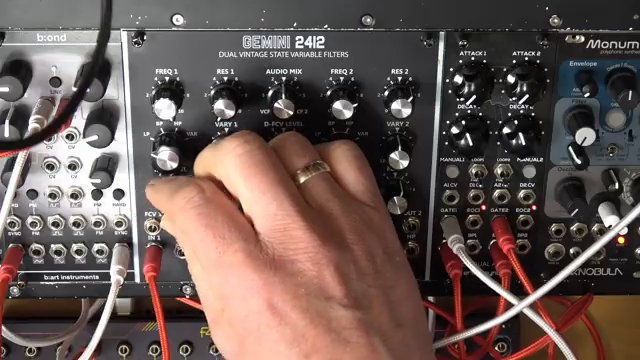
AJH Synth’s Gemini 2412 is no shrinking violet—it’s a slab of dual SEM-inspired filter muscle, giving you two independent 12dB state-variable filters to play with. Molten Music Technology’s Robin Vincent wastes no time highlighting the chunky, luxury feel and the flexibility of running them as twins or stacking them in cascade mode. You can send separate signals through each filter, run them in parallel for stereo shenanigans, or chain them for extra slope—like strapping two rave bunkers together just because you can.
While Robin admits the module takes up a fair bit of rack real estate, he’s quick to point out that having two filters in one can actually be more efficient than you’d think. Whether you want to duel oscillators, carve up a stereo field, or get lost in the cascade, the Gemini is ready for the fight. It’s not for the faint of heart—or the shallow of rack, but when you want vintage Oberheim vibes with modern modular flexibility, it’s hard to look away.
Feedback Frenzy: Resonance to the Edge and Beyond
Here’s where things get bonkers: the Gemini’s feedback circuit. Unlike classic SEMs, this one lets you dial resonance so far it’ll start self-oscillating like it’s trying out for a sine wave Olympics. Robin’s first encounter with the module left him scratching his head—he wanted silky resonance, not a screaming oscillator. Surprise! The feedback mod comes pre-installed (via back-panel jumpers), and it’s utterly wild when engaged.
Disabling the feedback circuit brings back the classic, smooth SEM behaviour, but if you’re craving madness, leave it on and hang on to your knobs. The only catch? You have to yank the module out of your rack to flip those jumpers—no front-panel switch, which is a proper faff. Still, for those who love to live dangerously, the Gemini can go from polite filter to feral noise-beast with just a little fiddling (and a screwdriver).

"this has some fantastically overwhelming, extraordinarily bonkers feedback circuits built in there"
© Screenshot/Quote: Moltenmusictech (YouTube)
Smooth Moves: Modulation and Sonic Character
"I put a sawtooth into that. I guess it's pushing more into the filter, so we might get some more distortion there"
© Screenshot/Quote: Moltenmusictech (YouTube)
This filter isn’t just about raw power—it’s got style. Robin demonstrates how the Gemini’s sound is all about that Oberheim smoothness, with a silkiness and restraint that’s hard to fake. Even with all the modulation options—envelope, LFO, sequencer CVs—the core sound stays sweet. You get low pass, band pass, high pass, and even a variable mode that sweeps between them, letting you sculpt tones from vintage warmth to shimmering modern textures.
The filter’s controls have proper bite. Push the input past 8, and things start to overdrive—perfect for those who like their analog dirty, not dainty. Modulation is flexible but not overwhelming, so you can get weird without getting lost. Whether you’re after classic sweeps or more experimental fare, the Gemini’s character never turns to plastic. It’s a filter with taste—and just enough attitude.
Hands-On: Dual-Filter Tricks and Modular Madness
Robin doesn’t just talk theory—he gets gritty with patch cables and shows what the Gemini can really do. From running two oscillators through each filter side to blending waveforms with CV, the module’s architecture unlocks all sorts of stereo and serial filtering games. Mixing, modulating, and inverting between channels—this is where modular gets fun and a bit chaotic.
But don’t expect a plug-and-play experience. Understanding how the dual filters interact, especially in cascade mode, is key. Robin finds the sweet spot for stereo width, formant filtering, and creative signal mangling, but he’s honest about the learning curve. If you want to see the full madness—and hear those wild resonance shrieks—you’ll have to watch the video. Words don’t do justice to a full-on Gemini jam session.
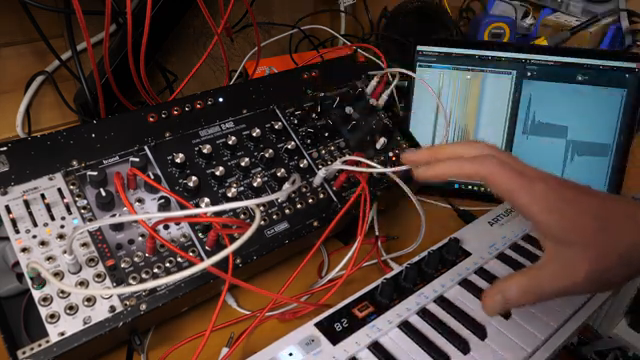
"it's a very nice interplay between the two filters in cascade mode. It is cool."
© Screenshot/Quote: Moltenmusictech (YouTube)
Final Riff: Space vs. Sonic Muscle

"The value of having two filters, I don't know, I think the jury's out on that."
© Screenshot/Quote: Moltenmusictech (YouTube)
So, where does the Gemini 2412 land in the world of modular mayhem? Robin’s not shy about the trade-offs: it’s a big module, and the dual-filter setup can be overkill for the minimalist. But if you’ve got the rack space and a hunger for Oberheim tones with a modern twist, it’s a serious street weapon. The feedback circuit is both blessing and curse—brilliant for experimentalists, annoying for those who just want instant creamy sweeps.
Robin’s verdict? The Gemini 2412 is a luxury filter for those who know what they want and aren’t scared of a little chaos. It may not be for everyone, and a front-panel feedback switch would’ve been nice, but the sound and flexibility are undeniable. If you want silky resonance, stereo tricks, and the option to go full toaster-fight, this filter delivers. Just be sure your rack—and your ears—are ready.
This article is also available in German. Read it here: https://synthmagazin.at/molten-music-technology-grillt-den-ajh-gemini-2412-doppel-sem-filter-im-haertetest/
Watch on YouTube:
Latest articles
Watch on YouTube:
Visit the channel:
https://www.youtube.com/MoltenMusicTech
https://www.youtube.com/MoltenMusicTech
Links from MoltenMusicTech:
website: https://moltenmusictechnology.com
twitter: https://x.com/MoltenMusicTech
Sponsored links:
If you purchase via these links, we may earn a small commission – at no extra cost to you. The link opens an Amazon keyword search, and results may vary depending on availability.
AJH Synth Gemini 2412
🔗 Check price on Amazon
🔗 Check price on Amazon
Bart Instruments Bond Oscillator
🔗 Check price on Amazon
🔗 Check price on Amazon
Batumi
🔗 Check price on Amazon
🔗 Check price on Amazon