Akai Professional dives deep into vintage synth territory with the AIR Fabric Vintage CS, a virtual instrument inspired by a legendary late ’70s and early ’80s polysynth. This walkthrough on the official Akai Pro channel gives us a practical look at oscillator banks, preset variety, and how this synth integrates seamlessly into modern MPC and DAW workflows. As always, Akai focuses on expressive control and hands-on sound design, bridging classic textures with today’s production environments. Let’s see how the Fabric engine brings analog warmth and digital flexibility together.
5. August 2026
LYRA
Akai Professional’s Fabric Vintage CS: A Digital Homage to Polysynth Legends
A New Vintage: Inspiration and Intent
Akai Professional introduces the Fabric Vintage CS as part of its AIR Fabric Vintage Synths Volume 2 collection, positioning it as a modern virtual instrument that channels the essence of a renowned late ’70s and early ’80s polysynth. Rather than a direct emulation, this instrument is presented as an homage, aiming to capture the warmth and expressive character that defined the original hardware’s iconic sci-fi soundtrack appearances.
The video quickly sets the tone: this is a tool designed for those seeking classic analog textures within a flexible, contemporary environment. Akai underscores the idea that Fabric Vintage CS is about instant access to expressive sound, not deep-diving into technical mimicry. It’s a respectful nod to history, reimagined for streamlined music production.
Under the Hood: AIR Fabric Engine and Performance Controls
The backbone of the Fabric Vintage CS is the AIR Fabric engine, which provides not just vintage character but also modern enhancements like expanded polyphony and tightly integrated effects. The synth’s architecture offers a variety of oscillator banks, each with multiple oscillator types, and a straightforward way to toggle between them. Oscillator 2, sub, and noise sources are present, and the panel allows for individual activation and blending, supporting deep layering and nuanced timbres.
Performance-centric controls are at the forefront: from filter cutoff and resonance to attack, release, oscillator balance, and quick-access effects such as delay and reverb. Modulation and distortion can be enabled directly from the front panel, letting users shape sounds efficiently without getting lost in menu dives. This focus on immediacy ensures that expressive tweaks are accessible in real-time, yet the architecture still allows for deeper exploration via the plugin interface.
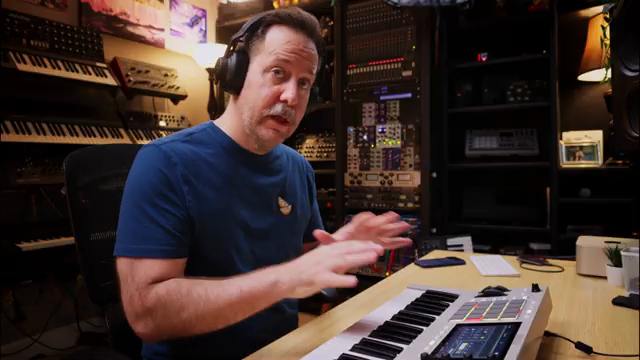
"So just from the front panel, you can obviously do some powerful controls immediately without having to dig too deep into the plugin yet."
© Screenshot/Quote: Akai Pro (YouTube)
Oscillator Options and Preset Diversity: From Analog Grit to Cinematic Lushness
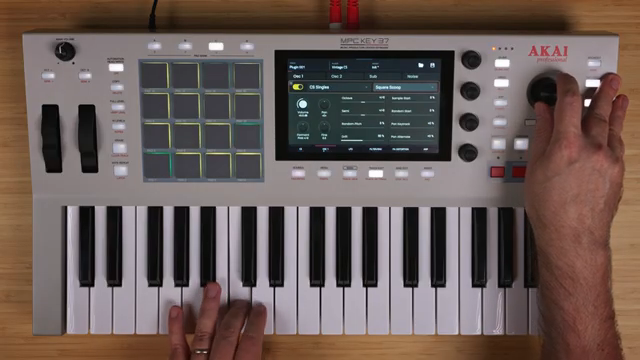
"And those are the oscillator samples that come in the CS Singles Bank. A lot of options right there."
© Screenshot/Quote: Akai Pro (YouTube)
Akai’s walkthrough spotlights the oscillator banks: CS Singles, CS PWM, and GX, each offering distinct flavors. Within CS Singles, users find classic saw waves and other foundational analog textures, while CS PWM provides four nuanced pulse width modulation variants—slow/narrow, slow/wide, fast/narrow, and fast/wide—covering the spectrum from smooth to aggressive. The GX bank introduces stereo oscillator options, expanding the instrument’s spatial potential.
Preset browsing is a highlight, revealing the instrument’s versatility. The host demos a range of sounds: from lush polysynth pads and cinematic atmospheres to punchy basses, shimmering arpeggios, and expressive leads. Pads like ‘Cars Can Fly’ and ‘Big Atmos Pad’ evoke classic analog width, while keys, plucks, and effects patches illustrate the breadth available for modern production. The video also demonstrates how effects like delay, reverb, and distortion can be toggled on the fly, adding further dimension to each preset.
With an abundance of presets covering arps, synths, pads, keys, leads, plucks, and more, the Fabric Vintage CS comes across as a deep and varied palette. Akai makes it clear that what’s shown in the video is only scratching the surface, encouraging users to explore the vast library themselves for personal discovery and inspiration.
Integration and Workflow: MPC and DAW Flexibility
Perhaps most crucial for modern producers, the video demonstrates how seamlessly Fabric Vintage CS fits into the broader Akai ecosystem. Whether running on MPC hardware, MPC Desktop, or as a plugin in major DAWs, the workflow remains consistent and fluid. Track duplication, layering, and automation of parameters like filter cutoff are shown in real time, highlighting the instrument’s suitability for both hands-on beatmaking and more intricate studio production.
This integration means users can move from sketching ideas on standalone MPCs to full arrangements in their DAW without friction. The quick access to presets, intuitive control layout, and deep sound design capabilities position Fabric Vintage CS as a bridge between vintage inspiration and modern workflow demands, making it a compelling tool for those who crave analog character in a digital world.
This article is also available in German. Read it here: https://synthmagazin.at/akai-professional-fabric-vintage-cs-digitale-hommage-an-polysynth-legenden/
More articles about these products:
 Akai Professional’s Stereophonic Enhancer: In-Depth Stereo Polish for MPC and Beyond
 Voltage Labs: Jennifer Loveless and the Art of Sonic Shedding
 Akai Professional AIR Tape Double Track: Vintage Double-Tracking, Modern MPC Workflow
 Akai Professional Ups the Game: MPC Pro Pack Deep Dive
 Groove Box Magic with jonmakesbeats
 malobeats and the MPC 3.0: A Love/Hate Beat Affair
Watch on YouTube:
Latest articles
Watch on YouTube:
Visit the channel:
https://www.youtube.com/Akai_Pro
https://www.youtube.com/Akai_Pro
Links from Akai_Pro:
website: https://akaipro.com
instagram: https://instagram.com/akai_pro
facebook: https://www.facebook.com/AkaiPro
twitter: https://twitter.com/akai_pro
google_plus: https://plus.google.com/107127819149441645522/posts
Sponsored links:
If you purchase via these links, we may earn a small commission – at no extra cost to you. The link opens an Amazon keyword search, and results may vary depending on availability.
AIR Fabric Vintage CS
🔗 Check price on Amazon
🔗 Check price on Amazon