OXI Instruments, the Spanish innovators behind the OXI One, are out to bust myths and push boundaries in hybrid sequencing. In this official walkthrough, they demonstrate how the OXI One morphs from a supposed four-track device into a full-blown 32-track drum sequencer, tightly integrated with Ableton Live. The video dives deep into multitrack workflows, pattern generation, velocity shaping, and modulation tricks—showcasing how digital sequencing architecture can unlock dynamic, expressive beats. For anyone obsessed with workflow, macro control, and the interplay between hardware brains and DAW flexibility, this is a must-watch exploration of what the OXI One brings to modern production.
5. December 2024
LYRA
OXI Instruments Turns Ableton Live into a 32-Track Drum Playground: OXI One as Multitrack Sequencer
From Four Tracks to Thirty-Two: Debunking the OXI One Myth
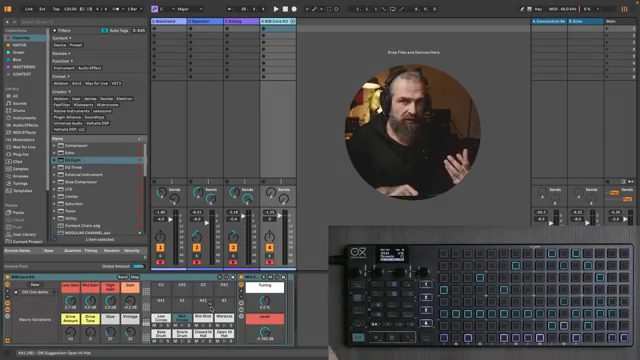
The video wastes no time dispelling the persistent misconception that the OXI One is limited to just four tracks. Instead, OXI Instruments demonstrates how, by leveraging the Multitrack mode, this compact sequencer can be transformed into a 32-track powerhouse. The key lies in the Multitrack workflow, which allows each row to function as an independent sequencer, each with its own MIDI channel, length, time division, and start/end points. This effectively turns a single page into an eight-track sequencer, and with four pages, you reach the full 32-track potential.
Integration with Ableton Live is presented as seamless. The OXI One is connected to Ableton, with each track routed to a different MIDI channel and mapped to individual instruments within a Drum Rack. The setup process is methodically shown: activating input ports, assigning MIDI channels, and arming tracks in Ableton. The result is a hybrid environment where the OXI One acts as the brain, driving complex, multi-layered drum sequencing well beyond the limits of a typical groovebox.
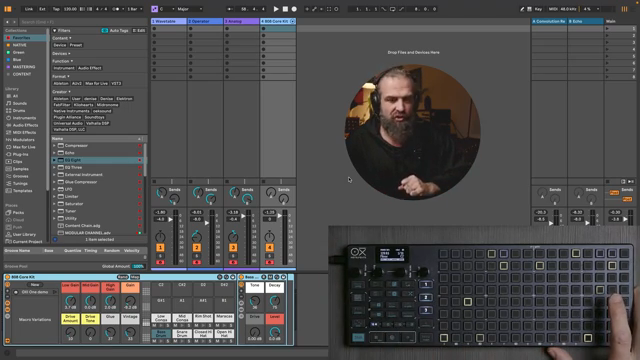
"Using multi-track, you can transform this little beast into a 32-tracks sequencer."
© Screenshot/Quote: Oxiinstruments (YouTube)
Building Rhythms: Patterns, Velocity, and Conditional Triggers
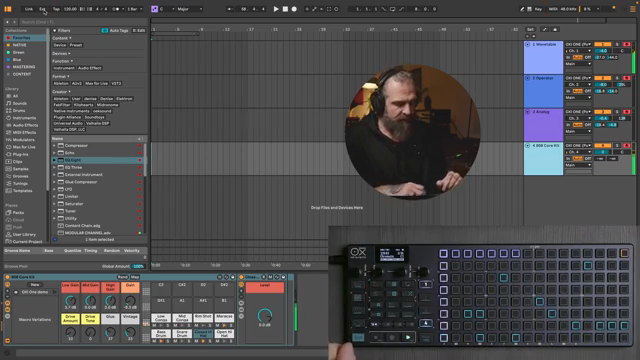
"Let's play with velocity."
© Screenshot/Quote: Oxiinstruments (YouTube)
The core creative process begins with constructing drum patterns using the Multitrack mode. Each row in the sequencer is mapped to a specific drum sound in Ableton’s Drum Rack, with the video walking through the assignment of notes and MIDI channels for kicks, snares, hats, and maracas. The workflow emphasizes hands-on control: triggers are placed step-by-step, and the interface provides immediate feedback on note assignments, making it intuitive to build up basic patterns.
Basic pattern creation is only the starting point. The OXI One’s interface allows for rapid muting, soloing, and even step-level muting, granting granular control over each element of the rhythm. Once a pattern is established, the focus shifts to dynamics. The velocity page is accessed via a dedicated knob, enabling per-step velocity editing. This, combined with swing adjustments, injects groove and human feel into otherwise rigid sequences.
To add further complexity, the video demonstrates the use of conditional triggers. By setting specific steps to trigger only on certain cycles (e.g., two out of every four), the OXI One introduces evolving, non-repetitive elements into the beat. This approach, along with dynamic velocity changes, results in drum patterns that feel lively and unpredictable—far from the static loops of lesser sequencers.
Creative Workflows: Pattern Generators and Modulation Lanes
The OXI One’s creative toolkit extends well beyond manual step sequencing. The video highlights the built-in drum pattern generator, inspired by Mutable Instruments’ Grids module. By selecting an empty pattern and activating the generator, users can instantly populate tracks with algorithmically generated rhythms. Key parameters like density, X/Y algorithmic spread, and chaos are available for real-time tweaking, allowing for both subtle variations and wild generative explorations. Importantly, these generated patterns can be layered atop manually programmed triggers, resulting in hybrid grooves that blend human intent with algorithmic surprise.
Modulation lanes are another standout feature. The video shows how these lanes can be mapped to parameters within Ableton Live—such as the release time of a hi-hat—using straightforward MIDI mapping. Each modulation lane can have its own length and time division, decoupled from the main pattern, which means modulation cycles can evolve independently of the rhythm. This architectural flexibility is a hallmark of modern digital sequencing, and OXI Instruments leans into it, enabling intricate, evolving automation that would be tedious to achieve with mouse-driven DAW workflows.
The combination of pattern generation and modulation lanes positions the OXI One as a creative hub, not just a step recorder. The workflow encourages experimentation, happy accidents, and deep integration with DAW-based sound design, all while keeping hands-on control at the forefront.
Expressive Beats: LFOs, Track Lengths, and Time Division Freedom
The final section of the video spotlights the OXI One’s advanced modulation capabilities, particularly the use of LFOs to animate drum patterns. Assigning an LFO to velocity on a snare track, for example, introduces random or cyclical dynamic changes, making each hit feel unique. The interface allows users to select which tracks are affected, choose waveforms (such as sample and hold), and set modulation amounts—all from the hardware itself, without diving into menus.
A major architectural strength is the ability to decouple track lengths and time divisions. Tracks can run at different lengths (e.g., seven steps for maracas, fifteen for hats), and divisions (such as 16th notes or triplets) can be set independently per track. This polyrhythmic flexibility is rarely this accessible in hardware sequencers and is presented as a core part of the OXI One’s workflow philosophy. The result is evolving, non-linear drum patterns that avoid the gridlock of traditional step sequencing.
The video concludes by emphasizing how modulation lanes and LFOs can be mapped to virtually any parameter in Ableton Live, multiplying the expressive potential. With up to eight modulation lanes and two LFOs available, users can sculpt complex, ever-changing grooves that blur the line between hardware sequencing and DAW automation. For producers seeking deep expressiveness and workflow-centric design, the OXI One’s approach is both modern and inspiring.
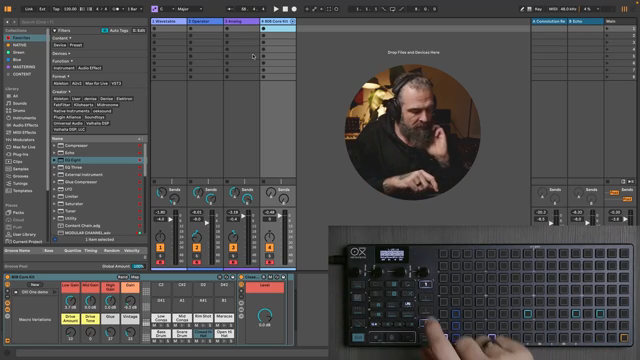
"I will select the internal destination as velocity."
© Screenshot/Quote: Oxiinstruments (YouTube)
This article is also available in German. Read it here: https://synthmagazin.at/oxi-instruments-macht-ableton-live-zur-32-spur-drum-spielwiese-oxi-one-als-multitrack-sequencer/
More articles about these products:
 The Unperson Unleashes Elastic OSC: Plaits Goes Polyphonic and Gets Rowdy
 S1gns Of L1fe Modular: Modular 101 Without the Fluff
 The Unperson’s 40HP Granular Street Weapon: Small Case, Massive Sound
 OXI Instruments: Mod Lanes, Pattern Reset and the Hidden Rhythms Within
 The Unperson Unleashes the DPO: Complex Oscillator or Sonic Street Weapon?
 Lodewijk Vos (LØ): The Desk Setup That Turns Workflow Into a Weapon
 The Unperson’s Sequencer Showdown: From Vintage Steps to Probability Chaos
 The Unperson’s Polymeter Playground: Rhythms That Refuse to Behave
 LiamKillen’s Digitally Funky Live Setup
 OXI Instruments OXI ONE Firmware 5: Sequencing Evolved, Community-Driven
 Building Tracks the Modular Way: OXI Instruments Ecosystem in Action
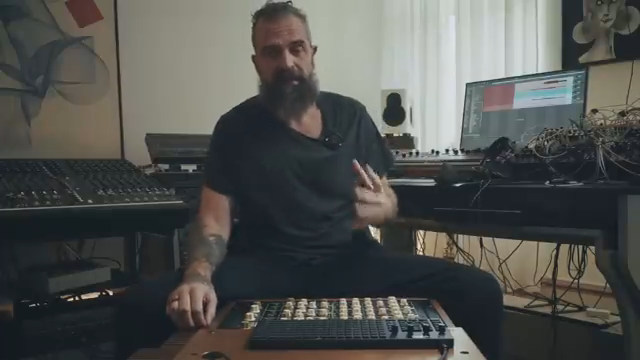 OXI Instruments and the Art of Sequencing: Why the OXI One Wants to Be Your Creative Brain
Watch on YouTube:
Latest articles
Watch on YouTube:
Visit the channel:
https://www.youtube.com/oxiinstruments
https://www.youtube.com/oxiinstruments
Links from oxiinstruments:
website: https://oxiinstruments.com
instagram: https://www.instagram.com/oxiinstruments
facebook: https://www.facebook.com/oxiinstruments/
support: https://oxiinstruments.com/support
Sponsored links:
If you purchase via these links, we may earn a small commission – at no extra cost to you. The link opens an Amazon keyword search, and results may vary depending on availability.
Oxi One
🔗 Check price on Amazon
🔗 Check price on Amazon