Ableton Simpler: One sample fragment can become an entire song
Ableton Simpler is a sample instrument in Ableton Live. These four creator examples explore different approaches: finding useful slices, modulating a sample’s start point, tuning samples, and shaping vocal material with filter modulation.
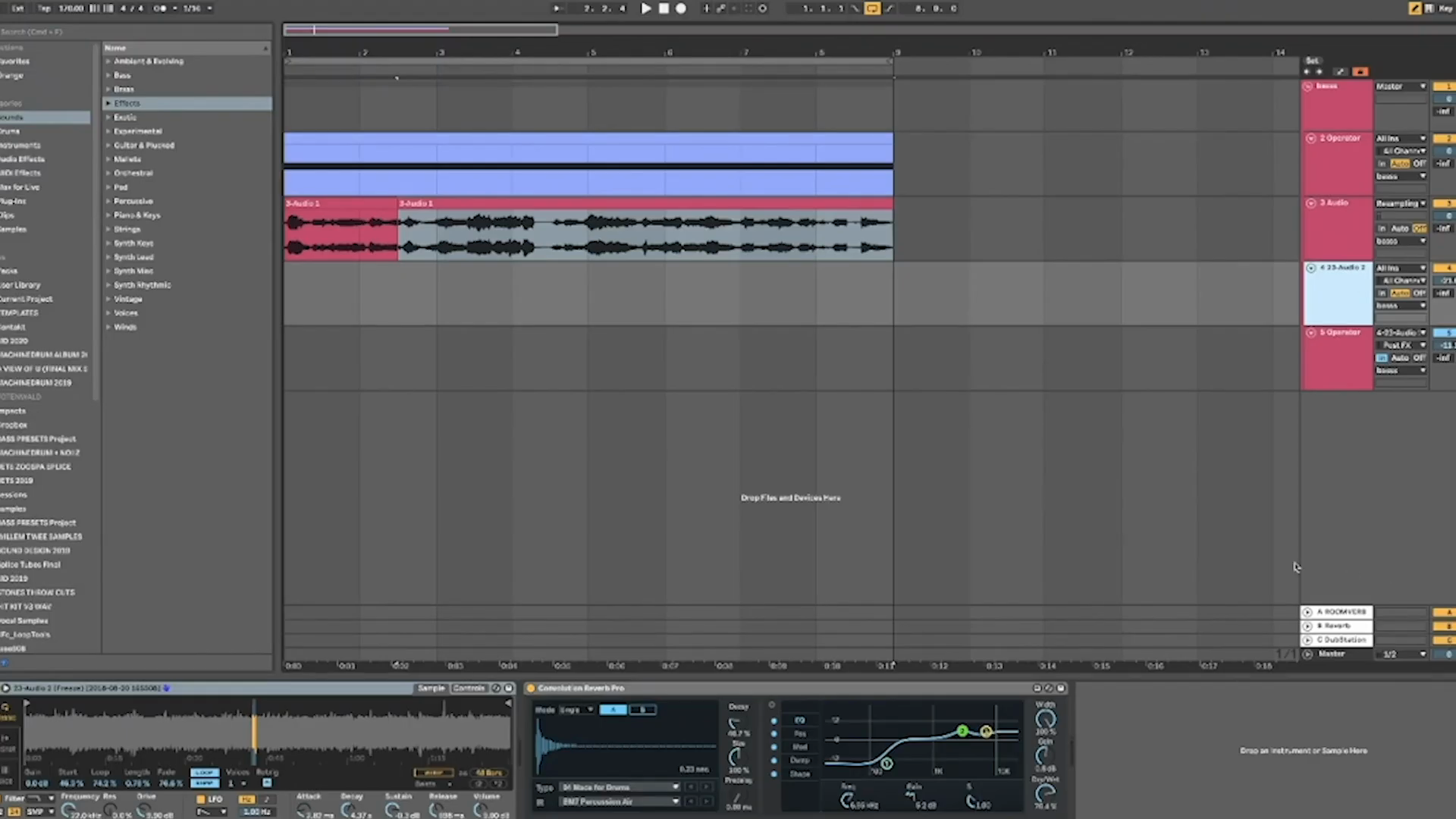
Machinedrum shifts the start point of a resampled bass, searching for the small slice that can carry everything. One adjustment, a new fragment—and suddenly there’s a foundation for a song.
MusicRadar Tech
„You can move the start point around. So yeah, it allows you to kind of play around with the sound and come up with, you know, maybe you just find one little chunk that you like, and that becomes the baseline of your entire song.“
Ableton Simpler: Take sliced samples into another setup
chirashi moves sample material between Simpler and other sampler formats. New diagnostics reveal the planned conversion before output files are written.
+
A loop prepared in Simpler can become the starting point for a session on another sampler. chirashi by g-lok reads Simpler presets and offers outputs including WAV with slice markers and formats for other samplers. That creates an interesting route from work inside Live to a setup outside the DAW.
Its new preview facilities are particularly useful before committing to a conversion. Inspection displays audio properties, tempo and slice boundaries with exact frame positions. A dry run simulates the planned processing without creating files or directories. It reveals proposed changes to channel count, sample rate and bit depth, alongside output destinations. For a breakbeat whose cuts need to land precisely, that is useful preparation. Larger transfers can also be checked for their planned structure first. The creative opportunity is to reuse material already sliced; the additional checks make that transition easier to understand.
Compatibility and limitations
External command-line tool for macOS, Windows and Linux. Simpler ADV presets are documented inputs; an Ableton User Library path helps resolve samples. A complete Live version compatibility matrix is not provided.
Presets reference external audio files; missing samples prevent a complete transfer. Destination formats have their own slice limits. Conversion does not provide a complete transfer of sound processing or effects; the destination instrument and results require separate checks.
Ableton Simpler: Turn sample folders into a preset library
Ableton Device Creator makes an individual Simpler preset for each sample. A shared template can provide the starting point for a personal instrument collection.
+
A recording session often leaves a folder full of useful individual sounds, with no instruments prepared yet. Ableton Device Creator by ben-juodvalkis addresses that stage: the Python tool turns a sample folder into individual Simpler presets, one per audio file. Subfolders can be included when needed.
For a collection of bass notes, found percussion or short textures, this suggests a preparation step between recording and composition. Instead of creating each instrument separately, a custom ADV template can serve as their shared starting point. The musical decisions remain in selecting the material and designing that template. A separate output folder is also supported, helping organize the generated collection deliberately. The project carries earlier script generations forward as a Python library and command-line tool. Its first public release bundles the default templates, providing a concrete improvement for preparing a personal sound library around Simpler.
Compatibility and limitations
Python 3.8 or later; optional CLI uses Click. The bundled Simpler template requires Ableton Live 12.2 or later. The general Live 12.1 minimum does not cover that template.
The tool modifies compressed XML device formats. Compatibility of custom templates is not established universally. Check generated presets and sample references in the intended Live version before production use; no independent tests were performed.
Ableton Simpler: Bring personal samples into an open Set through MCP
Ableton DJ MCP connects an AI client to Live. Its documented update searches personal sample folders and loads material directly into Simpler or drum pads.
+
A bass idea is ready, but the right sample is somewhere in a personal collection. Ableton DJ MCP by gpulga connects an MCP client to the open Live Set and can search libraries added to Places. BPM and key are read from filenames. Found material can be loaded into Simpler and developed within the existing musical context.
An interesting use is a conversation about your own material: finding a suitably named loop, for example, and turning it into a new starting point for the track. The documented release also adds access to Live conversions that can turn an audio clip into the basis of a new track. Technically, the project connects a Max for Live device to a portal and Python bridge. Each tool call gets its own undo step. This makes changes in the open Set easier to follow, while musical judgment remains with the musician. The project extends access to Simpler within a broader production workflow.
Compatibility and limitations
Loading samples into Simpler requires Live 12.4 or later with Max for Live: Suite, or Standard with the add-on. macOS and Windows; an MCP client is required. Intro and Lite are unsupported.
The tool can modify the open Set. The release explicitly identifies potential overwriting of Arrangement clips and automation. Testing mainly uses Claude Code on macOS; Windows is less tested. BPM and key from filenames do not constitute audio analysis.
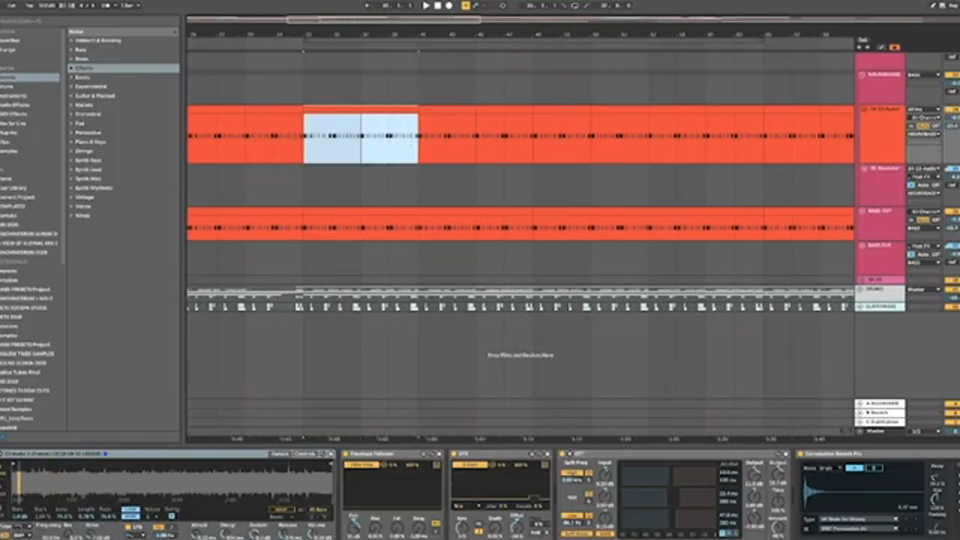
According to MusicRadar Tech, Machinedrum modulates the start offset with an LFO. Controlled by automation of the offset, playback jumps to a different section of the sample.
„I have this LFO here that's changing the offset of the start time. As you can see, it jumped to a new section in the sample based on the automation of this offset.“
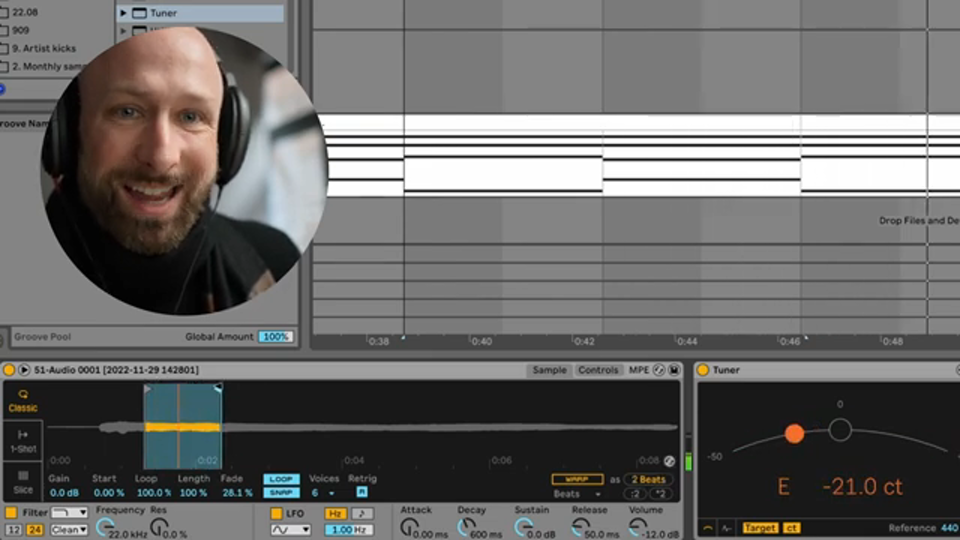
Underdog Electronic Music School describes using detune and transpose to bring a sung sample note to the desired pitch. In the example, it is transposed down four semitones from E to C so that the C key actually plays C.
„here's a section where I'm on key but so what I could have done was over here under transpose and detune I could move the detuning up or down until I'm hitting the note consistently and because I want C on my keyboard to be really C in the audio domain I'm going to transpose down from E down four semitones until I'm at the C“
Reddit / r/abletonThe notes stay; the slices change
The MIDI figure is already there, but its musical shape is still up for grabs. One producer changes Simpler’s transient-detection sensitivity in Transients mode, making the same notes hit different parts of the sample. It’s a way to search for song beginnings by repartitioning the material beneath the sequence.
+
Asked about a favourite creative tool, one producer names Simpler: drop in samples, slice them at transients and play melodies from them. A follow-up reveals the key move. He puts a random note pattern into the piano roll, then changes the sensitivity of transient detection. The slices become longer or shorter, so the existing MIDI pattern plays against a changed division of the material.
He uses both melodic and rhythmic samples as source material. He is interested in chopping them into small pieces, which he describes as something close to granular. He explicitly uses this approach to find inspiration for song beginnings. The musical decision shifts to the slice points: which parts of a recording the notes reach remains changeable. The sequence provides the framework; newly placed boundaries alter its audible shape.
For a field-recording challenge, a participant turns a shed into a storehouse of sounds. He records objects he finds there, then processes them in Simpler with pitch changes and filters. Even the wall gets a musical role: a strike with a mallet supplies the track’s main kick.
+
For the Field Recording Challenge on Dogs On Acid in August 2025, one participant limits his sound palette to his own shed. Buckets, a wooden box, bicycle parts and metal scraps are among the recorded material. The room itself provides a central hit: he makes the main kick by striking the wall with a mallet.
The recordings go straight into Push 3 Standalone via a Shure SM58. He describes their level as very quiet. For the subsequent sound processing, he names Simpler, including its pitch control and built-in filters. This turns the limited collection into material for a complete entry. An additional background atmosphere comes from a phone; he locates the other sources in the shed. Recording, sequencing and mixing all take place on Push. The laptop handles the finished export at the end. The shed remains the shared origin of the instrument palette.
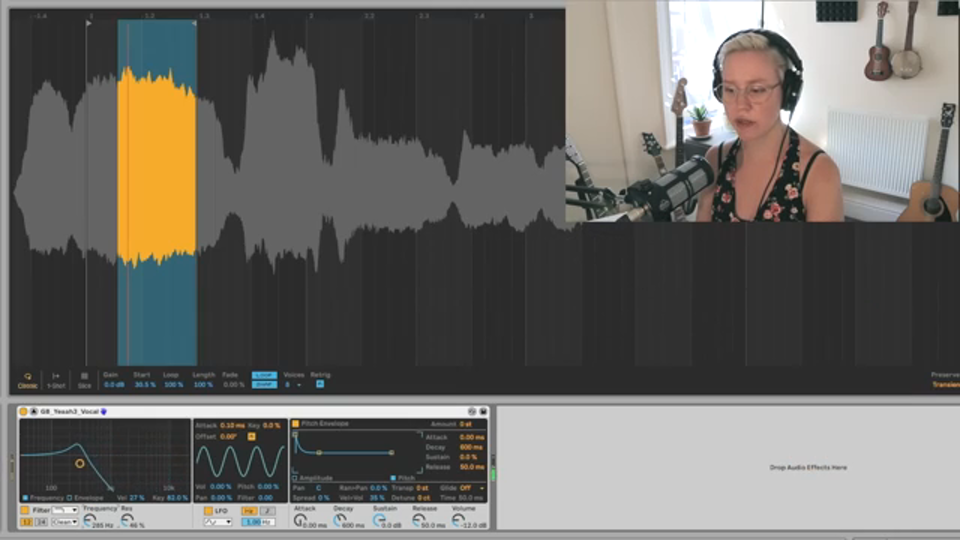
and if you look on the controls here you see that they're all the same controls as on a subtractive synthesizer so it works just the same as a subtractive synthesizer in that there's an oscillator that goes into a filter that goes into an amplifier except the oscillator has now been replaced with my voice