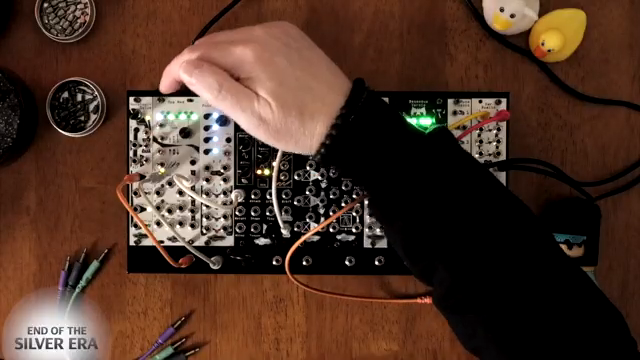
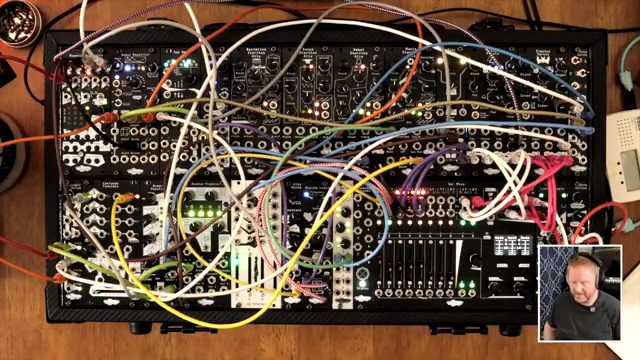
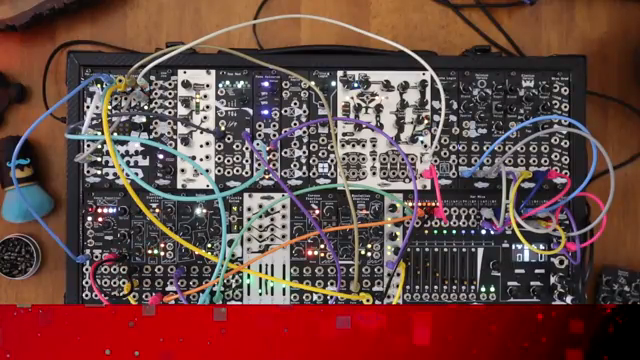
Noise Engineering waves goodbye to their iconic silver-panel Eurorack modules with a clearance sale, marking the end of a visually distinctive era. In this video, the LA-based boutique brand offers a rapid-fire demo tour of choice modules—from arpeggiators and clock dividers to clever utility boxes—each showcased with practical patch ideas. Expect a brisk, hands-on overview that spotlights the raw, immediate workflows Noise Engineering is known for. For modular enthusiasts, this is both a nostalgic nod and a last call to snag these characterful modules for your rack.
3. June 2026
MILES
Noise Engineering’s Silver Era Farewell: Patchable Classics on Final Sale
Farewell to Silver: The Last Call
Noise Engineering is officially retiring its line of silver-panel Eurorack modules, closing the chapter on a look that’s become something of a cult favourite in many racks. The company is clearing out the last of its silver-panel stock with hefty discounts, offering up to half off while supplies last. This is a rare opportunity for those who appreciate the visual and tactile feel of these modules to pick up a piece of Noise Engineering history before they vanish from the shelves.
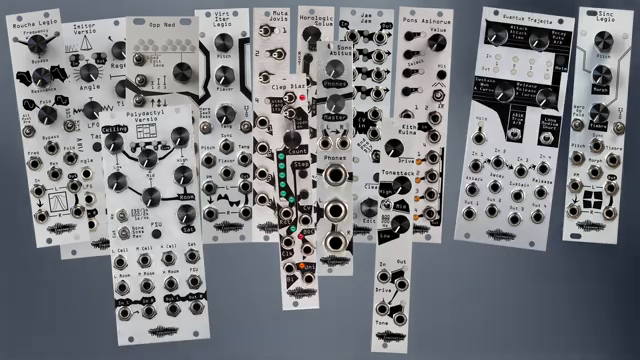
"We're clearing out the remaining silver panel inventory with discounts above the 50% off while supplies last."
© Screenshot/Quote: Noiseengineering (YouTube)
Op-Ned: Arpeggiators Unleashed
"You can also change how the pattern behaves using the switches. Set the octave range, the direction of the arpeggio, and how the notes play back with options like sequential, zigzag, or random patterns."
© Screenshot/Quote: Noiseengineering (YouTube)
The video gives Op-Ned the spotlight as an arpeggiator module designed for modular musicians who want more than just basic up-down patterns. Users can select or create arpeggiated sequences, triggering them via input one and patching output one into their oscillator’s pitch CV. With every trigger, the arpeggio advances, offering new melodic material at each step. Pattern behaviour is further refined with dedicated switches for octave range, direction, and playback style—including sequential, zigzag, and random modes—giving plenty of room for customisation.
Where Op-Ned truly stretches its wings is through its four independent outputs. This design enables users to layer melodies or drive several voices simultaneously, all derived from a single arpeggiator pattern. Transposition is handled simply via a dedicated CV input, making it easy to inject variation or live manipulation. The approach here is classic Noise Engineering: tightly focused on creative routing and immediate musical results, with minimal menu-diving.
Horologic Solum: Clockwork for the Modular Masses
Horologic Solum arrives as a compact but flexible clock generator and divider, perfect for keeping multiple parts of a patch in sync. The module can operate from its own internal clock or sync to an external source, with a reset input for precise timing resets. The user can select internal clocking, then adjust tempo using a switch and knob combination for hands-on speed control.
A standout feature is the clock division options: divisions by powers of two, odd numbers, or powers of four are all accessible via a simple switch. With four dedicated clock outputs, a single Horologic Solum can drive multiple sequencers or rhythm modules at independently set speeds. This makes it a practical hub for anyone wanting to keep complex modular rhythms coordinated without fuss.
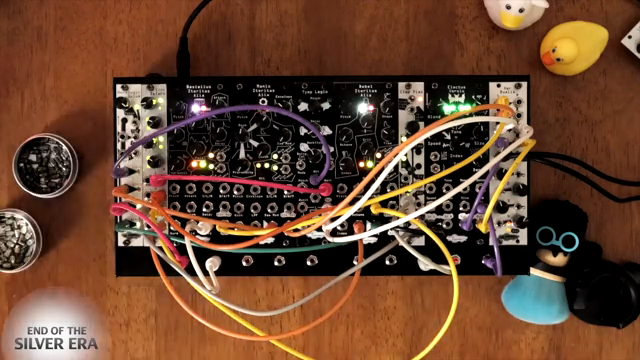
"Because there are four clock outputs, you can drive multiple sequencers or rhythmic modules at different speeds from the same clock."
© Screenshot/Quote: Noiseengineering (YouTube)
Pons Asinorum: Four Envelopes, Modular Mayhem
Pons Asinorum is Noise Engineering’s compact solution for envelope and LFO generation, packing four channels into an impressively small footprint. The module is demonstrated sending envelopes to a VCA for classic amplitude shaping and to an oscillator’s CV input for timbral modulation, showing how one box can animate multiple patch parameters in parallel. Envelope length is adjustable via the encoder, allowing sharp percussive bursts or longer, evolving modulations.
Beyond envelopes, each channel can be switched into LFO mode, broadening the module’s creative scope. The video shows how multiple envelopes or LFOs can be patched simultaneously, making complex modulation a straightforward affair. For those who like patches that move and shift, Pons Asinorum offers a versatile, hands-on approach to multi-point control.
NIVGRAD & Jam Jam: Levels, Triggers, and Rhythmic Tricks
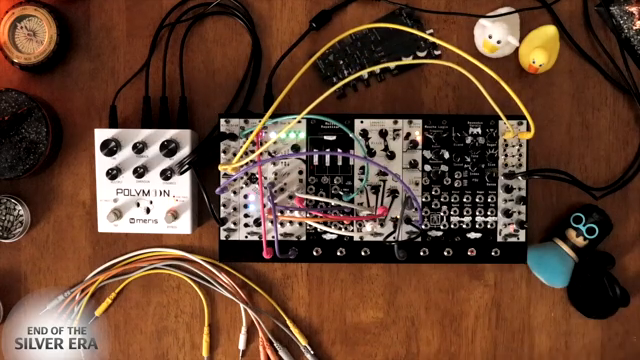
"The +24 dB output brings the signal back up to modular level so you can continue patching inside your system."
© Screenshot/Quote: Noiseengineering (YouTube)
NIVGRAD is introduced as a level shifter, providing a bridge between the modular realm and external gear—such as pedals, drum machines, or line-level instruments. With -24 dB and +24 dB outputs, it’s quick to attenuate modular signals for pedal inputs or boost external signals to modular levels. The dual-channel design means you can handle stereo paths or two mono signals at once, which is a thoughtful touch for more complex routing needs.
The demo then shifts to Jam Jam, a four-channel trigger and gate processor that excels at rhythmic manipulation. Three modes are highlighted: random (for probability-based skipping of triggers), clock phase (for shifting timing and introducing phase drift), and gate delay (allowing anything from subtle offsets to long, drawn-out delays of up to 15 seconds). Each channel can be independently controlled, and CV inputs mean rhythmic changes can be modulated in real time.
Together, NIVGRAD and Jam Jam open up a host of creative possibilities—whether you’re integrating outboard kit, or injecting evolving, unpredictable patterns into a patch. The focus remains on performable, patchable results, making these utilities ideal for both studio exploration and live chaos.
This article is also available in German. Read it here: https://synthmagazin.at/noise-engineerings-silver-era-abschied-patchbare-klassiker-im-ausverkauf/
More articles about these products:
Watch on YouTube:
Latest articles
Watch on YouTube:
Visit the channel:
https://www.youtube.com/NoiseEngineering
https://www.youtube.com/NoiseEngineering
Links from NoiseEngineering:
website: https://noiseengineering.us
instagram: https://instagram.com/noiseeng
twitter: https://x.com/noiseeng
facebook: https://facebook.com/noiseeng
reason: https://bit.ly/noiseeng-reason
Sponsored links:
If you purchase via these links, we may earn a small commission – at no extra cost to you. The link opens an Amazon keyword search, and results may vary depending on availability.
Horologic Solum
🔗 Check price on Amazon
🔗 Check price on Amazon
Jam Jam
🔗 Check price on Amazon
🔗 Check price on Amazon
NIVGRAD
🔗 Check price on Amazon
🔗 Check price on Amazon
Op Ned
🔗 Check price on Amazon
🔗 Check price on Amazon
Pons Asinorum
🔗 Check price on Amazon
🔗 Check price on Amazon