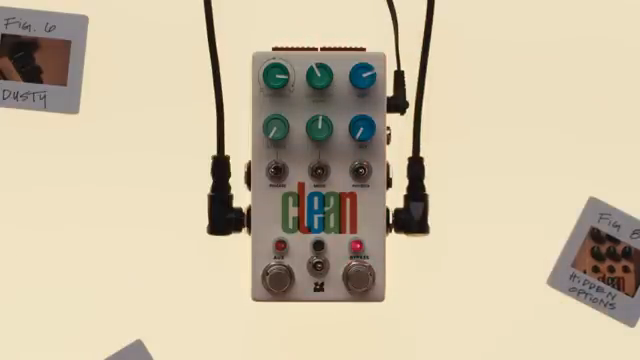
Chase Bliss, the Minnesota pedal wizards, have a knack for taking classic effects and nudging them into uncharted territory. Their latest offering, Clean, is a stereo analogue two-stage compressor that’s anything but pedestrian. In this detailed video manual, Chase Bliss walks through Clean’s dynamic features, from nuanced compression and EQ sculpting to hidden dip switch options and the delightfully unpredictable Dusty mode. For anyone who thinks compression is just about squashing peaks, Clean proves there’s a whole world of interactive, patchable sound design lurking beneath the surface.
5. November 2024
MILES
Chase Bliss Clean: Analogue Compression with a Twist of Curiosity
A Compressor with Character: Clean’s Analogue Heart
Chase Bliss introduces Clean as a stereo analogue two-stage compressor, but it’s clear from the outset that this isn’t your run-of-the-mill utility box. The pedal was born from a question: can the lively, interactive qualities of distortion pedals be brought to a clean instrument signal? According to the creators, the answer is a resounding yes. Clean is designed to reward the dynamics of your playing, shaping a signal that’s both lively and responsive.
Rather than simply flattening peaks, Clean aims to create a shifting, animated version of your input, whether that’s guitar, synth, or anything else you care to run through it. The video manual sets the stage for a device that’s as much about exploration as it is about control, promising a compressor that responds to your touch and encourages creative patching.
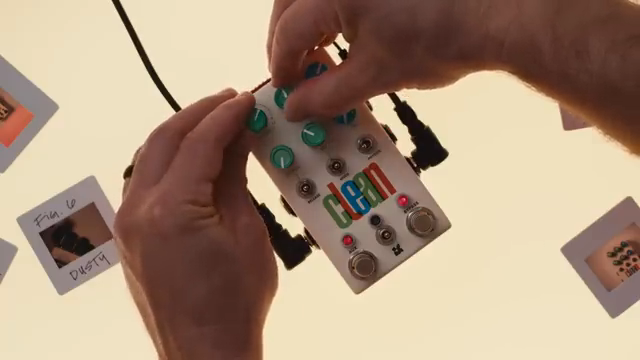
"Clean rewards your instrument's dynamics, creating a lively, shifting version of whatever you play."
© Screenshot/Quote: Chaseblissaudio (YouTube)
Knobs, LEDs, and the Art of Compression
"Clean transitions into a state that simulates an overloaded tube."
© Screenshot/Quote: Chaseblissaudio (YouTube)
Clean’s front panel offers a suite of controls that go well beyond basic compression. The sensitivity knob sets the threshold—turn it up for more responsive action, or dial it back for subtlety. The dynamics knob is where things get interesting: from 7 o’clock to noon, you get classic compression ratios, but push past noon and Clean morphs into a hard limiter, even simulating the sputter of an overloaded tube at the extremes. This isn’t just about squashing signals; it’s about finding the sweet spot between smooth and snappy.
Both wet and dry knobs are present, allowing for parallel compression and healthy gain boosts. The left LED acts as a visual guide, glowing brighter as more compression is applied. Attack and release controls offer further sculpting, with attack times from a snappy 0.5ms to a languid 300ms, and release ranging from 50ms up to 1.5 seconds. There’s even a physics toggle to introduce instability or keep things steady, letting you dial in everything from subtle wobble to twitchy, unpredictable movement.
EQ, Swell, and Secret Paths: Creative Tools for Sonic Shaping
Clean’s EQ section is deceptively simple, with a single knob and a three-way toggle. Depending on the mode, you can sweep highs or lows, shift the EQ dynamically in response to your playing, or introduce modulation for evolving textures. The attack and release controls influence how quickly these EQ changes occur, making the pedal as reactive as you want it to be. At noon, the EQ is neutral, but the real fun starts when you explore the Shifty and modulated modes for motion-driven tone shaping.
The auxiliary footswitch unlocks a swell effect, with both dynamic and manual modes. In dynamic mode, swells are triggered by playing above the sensitivity threshold; in manual mode, you can trigger them with the footswitch, either by holding or tapping. Swell times are adjustable via hidden options, ranging from 100ms to four seconds, and a green LED tracks the rise and fall of your swells. There’s also a latch dip switch to change the behaviour from momentary to latching, making this more than just a basic volume swell—it’s a performance tool in its own right.
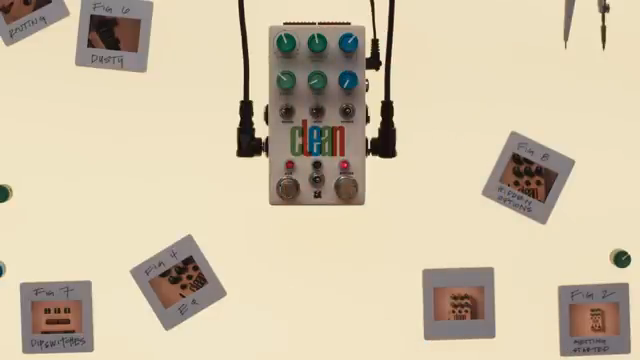
"Whenever an input signal passes the sensitivity threshold, the EQ will move away from the setting of the EQ knob and towards full frequency."
© Screenshot/Quote: Chaseblissaudio (YouTube)
Dusty Mode: When Clean Gets Dirty
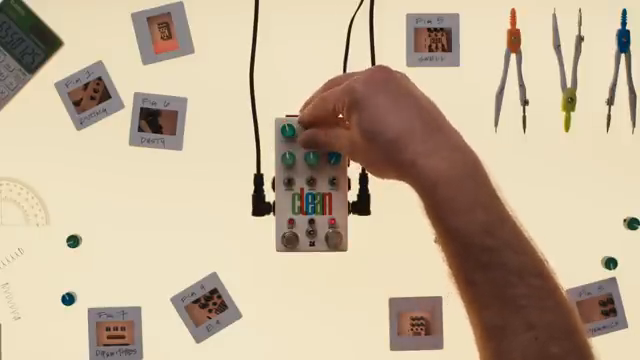
"It sets the end of chain limiter loose, transforming clean into a tactile overdrive with soft edges and a crumbly decay."
© Screenshot/Quote: Chaseblissaudio (YouTube)
For those who crave a bit of grit, Clean hides a secret: Dusty mode. Engaged via a dip switch, this mode loosens the end-of-chain limiter, transforming Clean into a tactile overdrive with soft edges and a crumbly decay. What’s clever is that Dusty mode interacts with the rest of the pedal’s controls—compressor, EQ, and mixer settings all influence the resulting sound, and even the dry signal isn’t immune. It’s a playful nod to the unpredictable, offering a taste of chaos within an otherwise controlled environment.
Dip Switches and Hidden Tricks: Advanced Modulation and Control
Chase Bliss is known for packing their pedals with dip switches, and Clean is no exception. Beyond the obvious controls, users can access side chaining for external signal control—ideal for ducking synths to drums or other instruments. The noise gate dip switch mutes the input when you’re not playing, with hidden options for threshold and release time, helping to keep unwanted hum at bay after heavy compression.
Motion mode is another standout, modulating the amount of compression for a dynamic tremolo effect, with depth and rate set by the dynamics and attack knobs. Hidden options abound: you can select between analogue and adaptive envelope followers, assign stereo spread independently to EQ or volume effects, and even filter the envelope follower to respond only to higher frequencies. Resetting all hidden options is as simple as a preset toggle dance and a double footswitch press. It’s a deep, interactive playground for those who like to tweak, modulate, and push their signal chain into new territory.
This article is also available in German. Read it here: https://synthmagazin.at/chase-bliss-clean-analoge-kompression-mit-einer-prise-neugier/
More articles about these products:

Watch on YouTube:
Latest articles
Watch on YouTube:
Visit the channel:
https://www.youtube.com/ChaseBlissAudio
https://www.youtube.com/ChaseBlissAudio
Links from ChaseBlissAudio:
website: https://www.chasebliss.com
instagram: https://www.instagram.com/chasebliss
facebook: https://www.facebook.com/chasebliss
twitter: https://twitter.com/chaseblissaudio
discord: https://discord.gg/chasebliss
Sponsored links:
If you purchase via these links, we may earn a small commission – at no extra cost to you. The link opens an Amazon keyword search, and results may vary depending on availability.
Chase Bliss Clean
🔗 Check price on Amazon
🔗 Check price on Amazon