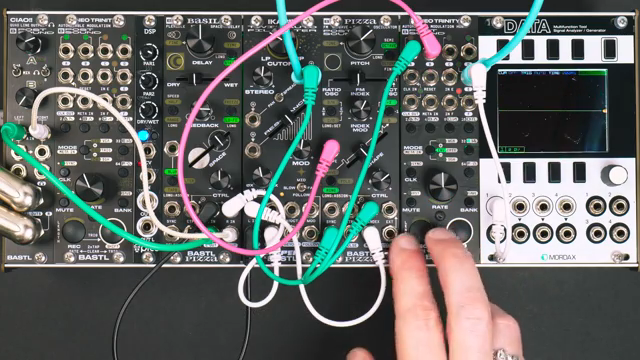
Bastl Instruments, the Czech modular mavericks, return with a deep dive into the envelope mode of their NEO TRINITY modulation hub. This video, led by Václav, explores how the NEO TRINITY merges rhythmic generation and envelope control, blurring the lines between triggers, gates, and dynamic modulation in a Eurorack context. Expect a hands-on demonstration of automation, envelope shaping, and polyrhythmic patching, all delivered with Bastl’s signature blend of utility and sonic mischief. If you’re after a modulation brain that thrives on complexity and performance, this one’s worth a closer look.
8. May 2024
MILES
Bastl Instruments NEO TRINITY: Envelopes and Rhythmic Alchemy in Eurorack
Merging Triggers and Envelopes: The NEO TRINITY Approach
The video opens with Václav introducing the NEO TRINITY as a modulation hub that rethinks how rhythm and envelope generation interact in Eurorack. Traditionally, rhythm in modular setups is built from triggers and gates, which are then routed to envelopes for shaping sound. Bastl’s NEO TRINITY, however, fuses these concepts, allowing users to generate rhythms and envelopes from a single interface.
This integration means you’re not just firing off envelopes with external triggers—you’re sculpting both the timing and the contour of your modulation in one go. The rate knob becomes central, letting you adjust envelope lengths on the fly, while the system’s architecture encourages experimentation with rhythmic complexity and envelope automation. It’s a design that invites patchers to think beyond the usual trigger-to-envelope workflow.
"We created a very powerful rhythm generator where you can also automate the envelope lands and create very dynamic sequences."
© Screenshot/Quote: Bastlinstruments (YouTube)
Automation and Trigger Manipulation: Effortless Rhythmic Tweaks
"So now the sequence is quantized to the clock it's playing 16th notes."
© Screenshot/Quote: Bastlinstruments (YouTube)
Automation in the NEO TRINITY is split between trigger recording and rate knob modulation, giving users hands-on control over rhythmic patterns. Recording triggers is as simple as holding the rec button and pressing shift, instantly looping your input. If you need to tidy up, selectively erasing or clearing entire sequences is just a button combo away.
Quantization can be toggled, allowing sequences to lock tightly to the clock or drift into more human, groovy territory. There’s also a trigger generator with multiple algorithms—Euclidean, Divider, and preset banks for kicks, snares, and hi-hats—plus a random mode for unpredictable results. The rate knob determines the density of triggers, making it easy to dial in anything from sparse pulses to frantic bursts.
Envelope Shapes and Automation: Sculpting Rhythmic Nuance
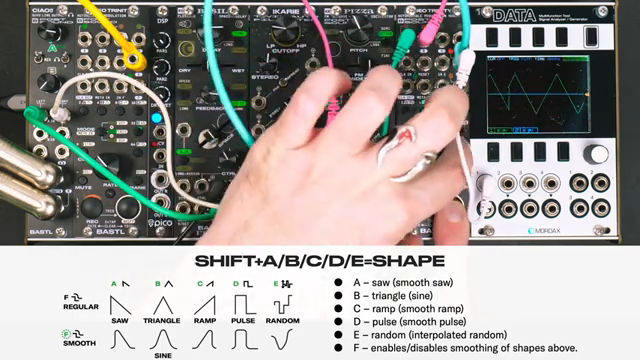
Envelope shaping on the NEO TRINITY is both flexible and immediate. Four main shapes are available: simple decay, variable shape (with attack and decay), attack-only, and a pulse mode. Each can be selected via shift and the channel buttons, with the rate knob adjusting decay, attack, or pulse width depending on the mode. The variable shape stands out, offering everything from short pulses to reversed envelopes, and all shapes can be automated for evolving modulation.
Re-triggering can be enabled or disabled, affecting whether envelopes complete their cycle before restarting—ideal for creating rhythm variations by simply lengthening or shortening the envelope. The slew mode (attack-hold-release) responds to gate durations, holding the envelope as long as the gate is high, which is perfect for durational tones or slides. This mode also doubles as a slew limiter, letting you process external voltages and introduce glide or lag into your modulation paths.
Input modes further expand the envelope’s behaviour. Feeding external CV into the envelope channel and adjusting the input mode allows for envelope inversion, logarithmic or exponential shaping, and even using the envelope as a trigger-to-gate converter. The video demonstrates how patching the envelope output back into its input can morph the contour from exponential to logarithmic, while attenuated and inverted modes offer even more nuanced control for percussive or evolving sounds.
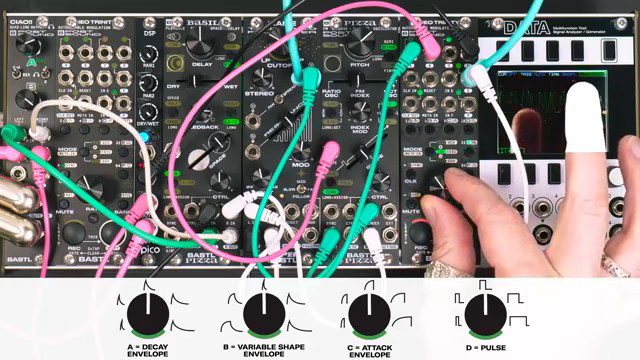
"This is very interesting because you can automate short pulses, longer envelopes, and then sort of like reversed type shapes."
© Screenshot/Quote: Bastlinstruments (YouTube)
Patching Polyrhythms and External Inputs: Neo Trinity in Action
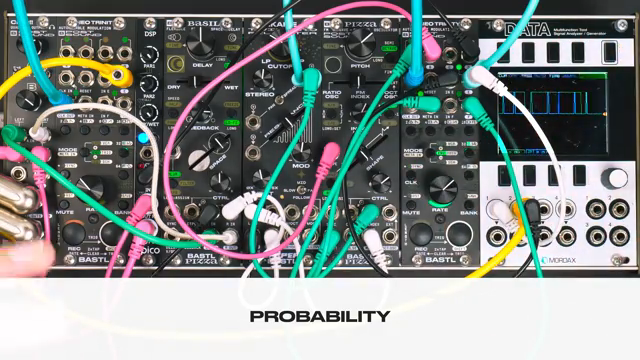
"So this is how you can do probability on the Neo Trinity."
© Screenshot/Quote: Bastlinstruments (YouTube)
The NEO TRINITY’s versatility shines in the patch examples, where polyrhythms and external CV sources are brought into play. Václav demonstrates how to set different sequence lengths on separate channels, creating interlocking patterns and shifting downbeats. Sequences can be rotated, muted, and layered, making it easy to build complex, performative rhythms on the fly.
External CV inputs are used to modulate envelope behaviour, with meta inputs allowing for randomisation and probability effects. By patching random voltages into the meta input and adjusting its mode, the rate knob can be influenced for evolving gate lengths and skipped triggers. This opens up a world of generative possibilities, from subtle groove variations to wild, unpredictable modulation.
A Modulation Powerhouse for Dynamic Modular Setups
The video wraps up by positioning the NEO TRINITY as a formidable tool for anyone seeking intricate rhythmic modulation and envelope control in Eurorack. Its blend of trigger sequencing, envelope shaping, and automation—plus the ability to process external CV—makes it a true modulation brain for complex patches.
Bastl Instruments’ open, community-driven ethos is evident in the module’s design, encouraging users to experiment, perform, and push the boundaries of what’s possible in a modular setup. For those who crave dynamic soundscapes and rhythmic intricacy, the NEO TRINITY stands out as a uniquely flexible and inspiring addition to the rack.
This article is also available in German. Read it here: https://synthmagazin.at/bastl-instruments-neo-trinity-huellkurven-und-rhythmische-alchemie-im-eurorack/
More articles about these products:
Watch on YouTube:
Latest articles
Watch on YouTube:
Visit the channel:
https://www.youtube.com/bastlinstruments
https://www.youtube.com/bastlinstruments
Links from bastlinstruments:
linkinbio: https://linkin.bio/bastlinstruments
instagram: https://instagram.com/bastlinstruments
facebook: https://facebook.com/bastlinstruments
twitter: https://twitter.com/bastlinstrument
soundcloud: https://soundcloud.com/bastl-instruments
Sponsored links:
If you purchase via these links, we may earn a small commission – at no extra cost to you. The link opens an Amazon keyword search, and results may vary depending on availability.
Bastl Instruments NEO TRINITY
🔗 Check price on Amazon
🔗 Check price on Amazon