Yamaha Synths Official brings us a deep dive into the Montage M8X, a flagship keyboard that aims to capture the spirit of analog synthesis using virtual analog technology. In this video, sound designer Michael Feiner walks through his process for sculpting rich, layered analog sounds, highlighting the instrument’s oscillator flexibility, filter options, and expressive performance features. For those of us who grew up patching real circuits, it’s a revealing look at how Yamaha’s digital engine tries to channel classic analog workflows—complete with polyphonic aftertouch, stereo spread, and even a nod to FM. If you’re curious about how the Montage M8X stacks up for hands-on sound design, this is a manufacturer walkthrough worth a close listen.
8. May 2026
MILES
Yamaha Synths Official Delivers: Analog-Style Soundcraft with the Montage M8X
First Impressions: Virtual Analog Ambitions
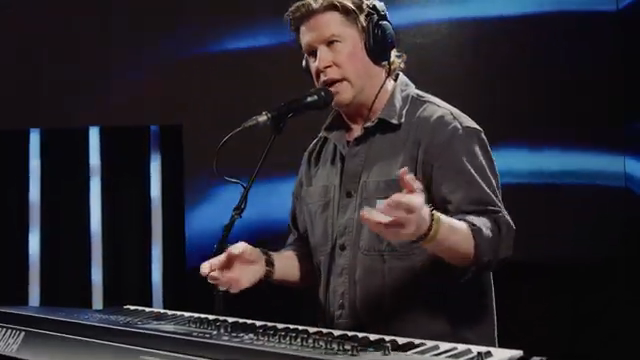
The video opens with Michael Feiner introducing the Yamaha Montage M8X, positioning it as a virtual analog powerhouse. Right from the outset, the emphasis is on the instrument’s ability to produce convincing analog sounds, despite its digital heart. Feiner’s approach is methodical: he always starts from an initialized patch, a blank sonic canvas that’s as uninspiring as it gets—intentionally so. This sets the stage for a journey from basic waveforms to complex, evolving textures.
Yamaha Synths Official’s presentation style is, as ever, focused on practical sound design rather than marketing gloss. The Montage M8X is framed as a tool for those who want to build sounds from scratch, not just browse presets. The video promises a hands-on exploration of what the engine can do when pushed towards classic analog territory, with Feiner acting as both guide and sonic architect.

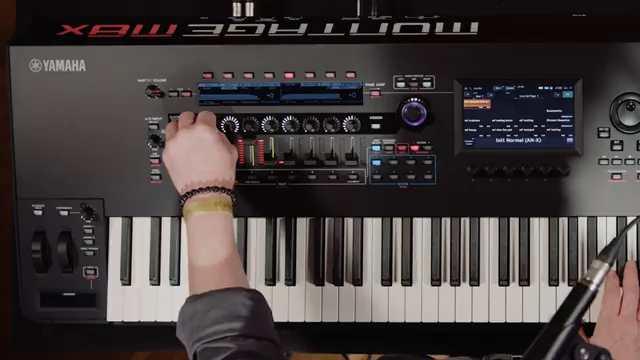
"It's got a very, very powerful engine."
© Screenshot/Quote: Yamahasynthsofficial (YouTube)
Oscillator Playground: Layering, PWM, and Sub Bass
"It's got three oscillators."
© Screenshot/Quote: Yamahasynthsofficial (YouTube)
Feiner quickly dives into the oscillator section, demonstrating how the Montage M8X offers three oscillators per voice. He starts by layering a second oscillator and detuning it for a thicker sound—a classic trick for adding movement and width. The interface allows for easy muting and blending of oscillators using dedicated faders, which is a welcome nod to hands-on analog workflows.
Pulse width modulation (PWM) is brought into play on the second oscillator, with Feiner adjusting the speed for subtle or dramatic effect. He then introduces a sub oscillator, set an octave down and configured as a pulse wave, to reinforce the low end. The result is a rich, harmonically complex tone that’s immediately reminiscent of classic analog synth layering. The workflow here is direct and tactile, echoing the best of both digital convenience and analog tradition.
Filters with Bite: Shaping Sound and Driving Polyphony
With oscillators stacked, Feiner moves on to the filter section, highlighting the Montage M8X’s generous selection of filter types. He opts for a 12 dB low-pass filter, shaping the sound with a carefully tweaked envelope. The filter section isn’t just about static tone control—it’s responsive to velocity, allowing dynamic interaction between playing style and timbre.
A standout feature is the pre-filter drive, which Feiner singles out as particularly special. This allows the user to push the signal into gentle saturation before filtering, adding harmonic richness without the unruly fuzz of a guitar pedal. Importantly, the drive is polyphonic, so chords retain their clarity even as they gain edge. The video makes it clear that Yamaha has designed this section for nuanced, musical distortion rather than brute force.
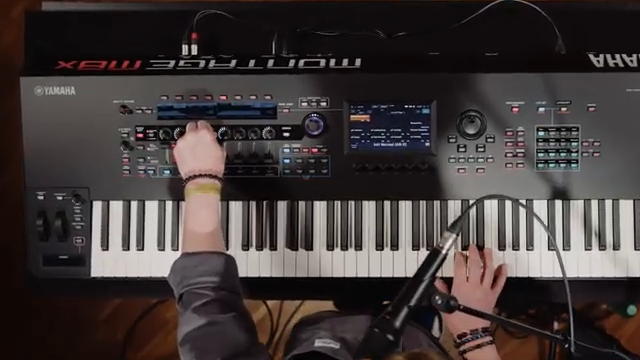
"You have filter drive, pre-filter drive, which I think is amazing because we can sort of drive the sound a little bit harder."
© Screenshot/Quote: Yamahasynthsofficial (YouTube)
Performance Power: Aftertouch and Stereo Spread
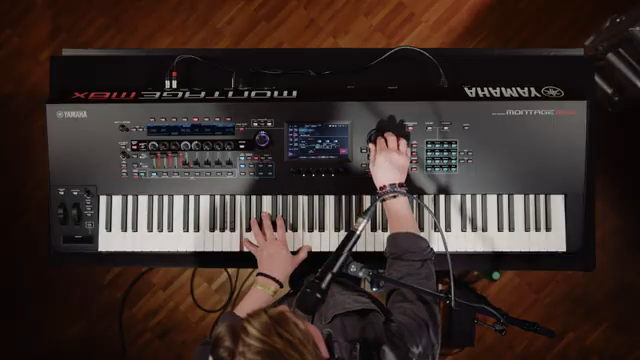
"I can do this individually on any notes, bring in the modulation of the key of that note of vibrato, but the other ones are untouched."
© Screenshot/Quote: Yamahasynthsofficial (YouTube)
Feiner shifts focus to the Montage M8X’s performance features, starting with its 88 weighted keys and polyphonic aftertouch. This expressive control lets players modulate pitch, vibrato, or other parameters on a per-note basis—echoing the legendary CS-80 and opening up a world of dynamic articulation. The demonstration shows how vibrato can be introduced to individual notes, leaving others untouched, for truly nuanced playing.
The video also explores stereo spreading and unison modes. By engaging two-note polyphony in unison, Feiner effectively deploys six oscillators at once, detuning and panning them for a massive, wide sound. Noise can be blended in for extra texture, and all of this is achieved before any effects are added. The Montage M8X is shown to be as much a performance instrument as a sound designer’s tool, with features that reward both subtlety and excess.
Beyond Analog: Effects and FM for Sonic Exploration
With the core analog-style sound established, Feiner turns to the Montage M8X’s effects section. He demonstrates adding reverb and chorus, noting the quality and flexibility of the onboard effects. The instrument’s architecture allows for effects to be applied per part, enabling lush pads or plucky textures with just a few tweaks. Flanger is also on offer, expanding the palette further.
Perhaps most intriguing is the inclusion of FM capabilities within the virtual analog engine. Feiner resets to a simple sine wave and uses oscillator 3 to modulate oscillator 1’s frequency, producing classic FM tones and more experimental textures. This hybrid approach means the Montage M8X isn’t limited to subtractive synthesis—it can venture into metallic, bell-like, or downright strange territory, all within the same workflow.
The video closes with a reminder of the instrument’s versatility: from lush, evolving pads to sharp, modulated effects, the Montage M8X is positioned as a true chameleon. Yamaha Synths Official’s walkthrough is thorough, but also leaves plenty of room for users to discover their own favourite tricks—especially those who enjoy pushing digital engines to behave like their analog ancestors.
More articles about these products:
 Jon Makes Beats & Dawson: FL Studio Gets a Streetwise Upgrade
 Jon Makes Beats: Why the MPC XL Is the Streetwise DAW You Didn’t Know You Needed
 Yamaha Synths Official Unveils Montage M8x: A Deep Dive into Expressive Power and Sound Design
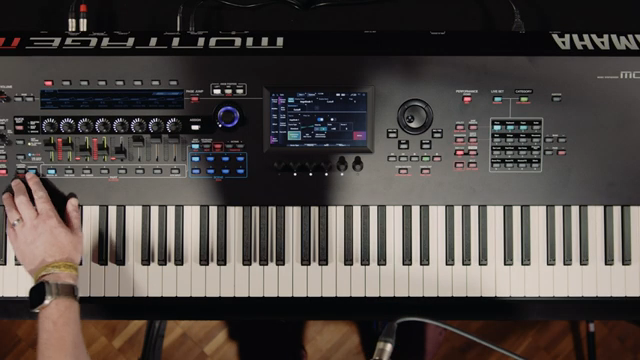 Yamaha Synths Official Delivers: Montage M8x as a Digital Performance Powerhouse
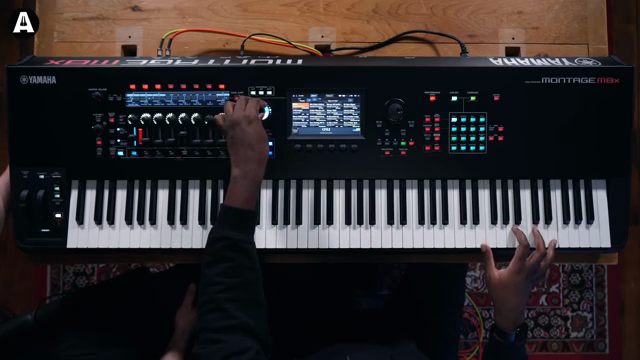 AndertonsKeyboardDept Brings the Noise with Yamaha Montage 2.1 Update
 Yamaha Synths Official: CP-70 Heritage Meets MONTAGE M8x Innovation
Watch on YouTube:
Latest articles
Watch on YouTube:
https://www.youtube.com/YamahaSynthsOfficial
Links from YamahaSynthsOfficial:
Sponsored links:
If you purchase via these links, we may earn a small commission – at no extra cost to you. The link opens an Amazon keyword search, and results may vary depending on availability.
🔗 Check price on Amazon