Verbos Electronics pulls back the curtain on the Haas Zone Processor in a technical sit-down with Mark Verbos and Colin Fraser of Sequentix. The duo dissect the module’s design philosophy and signal flow, before diving into its unique approach to stereo field manipulation. Rounding off with a hands-on patch session, the video gives a taste of how this module might weave into a modular rack, sparking ideas for experimental sound sculptors and live performers alike.
12. November 2026
MILES
Verbos Electronics: Inside the Haas Zone Processor – Design, Function and Patchcraft
Design Philosophy and Technical Underpinnings
Kicking off in true Verbos style, Mark Verbos and Colin Fraser gather around the Haas Zone Processor for a candid discussion about its raison d’être. The conversation gravitates immediately towards core design choices—why this module exists and how its architecture serves the needs of modular users, particularly those chasing flexible stereo imaging in Eurorack. Both highlight that the module isn’t just a digital delay, but a purpose-built tool for shaping the perception of space and position.
There’s a clear emphasis on signal integrity and modular compatibility, with Mark referencing the importance of clean panel layouts and tactile controls—a Verbos hallmark. Colin, meanwhile, teases out some of the subtleties behind the circuit, noting that the module is engineered for seamless integration into existing rigs. They touch on skiff-friendly dimensions and construction choices, underlining their Berlin-based, in-house approach to design and assembly. It’s less about cramming in features, more about refining exactly what’s needed for thoughtful patching.
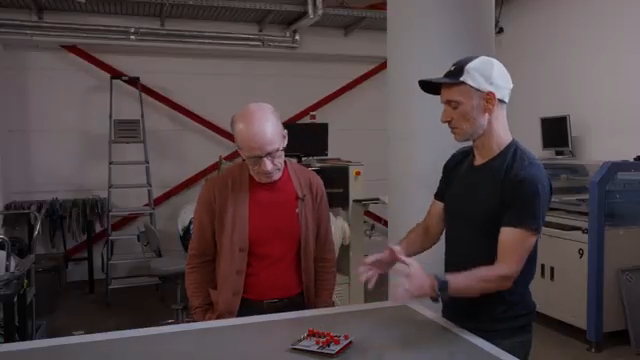
"It's not just a delay—it's about positioning sounds in space."
© Screenshot/Quote: Verboselectronicsgmbh (YouTube)
Unique Features: Beyond Conventional Delay
"You can really push the stereo image without making it sound artificial."
© Screenshot/Quote: Verboselectronicsgmbh (YouTube)
The dialogue shifts to what sets the Haas Zone Processor apart from more run-of-the-mill delay modules. Mark and Colin focus on the psychoacoustic effects achieved through precise manipulation of delay times, exploiting the Haas effect to sculpt stereo width and perceived location—without resorting to artificial reverb or detuning tricks. The module’s ability to carve and animate the soundstage is presented as its signature move.
Another highlight is the real-time modulation capability: CV control over parameters allows users to push the module into dynamic, evolving territory. The conversation points out that the Haas Zone Processor can be subtle or extreme, serving everything from gentle stereo enhancement to radical, phasey sound design. There’s a sense that it’s as much a performance instrument as a studio tool, rewarding those who approach it with curiosity and an appetite for experimentation.
Patch Session: Exploring the Sonic Frontier
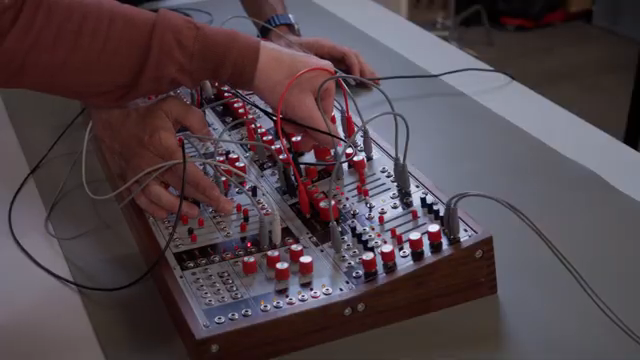
The last segment is all about practical exploration—Verbos and Fraser rolling up their sleeves for a patch session that puts theory into practice. They demonstrate the Haas Zone Processor in a live modular context, feeding it both mono and stereo sources and showing how quick tweaks and CV injection can dramatically shift the image and depth of a patch. The hands-on approach reveals how the module responds musically to real-world signals, not just test tones or isolated blips.
Listeners are treated to a spectrum of results, from delicately widened leads to full-on stereo warping. The workflow encourages experimentation: small changes in patching or modulation yield surprising and sometimes dramatic results. The session closes with both creators reflecting on the creative potential unlocked by the module, hinting at its role as a go-to utility for adventurous patchers eager to shape their soundstage in new ways.
"When you start modulating, the whole patch comes alive."
© Screenshot/Quote: Verboselectronicsgmbh (YouTube)
This article is also available in German. Read it here: https://synthmagazin.at/verbos-electronics-einblick-in-den-haas-zone-processor-design-funktion-und-patchkunst/
More articles about these products:

Watch on YouTube:
Latest articles
Watch on YouTube:
Visit the channel:
https://www.youtube.com/VerbosElectronicsGmbH
https://www.youtube.com/VerbosElectronicsGmbH
Links from VerbosElectronicsGmbH:
website: https://www.verboselectronics.com
tech_cards: https://www.verboselectronics.com/tech-cards
instagram: https://www.instagram.com/verboselectronics
Sponsored links:
If you purchase via these links, we may earn a small commission – at no extra cost to you. The link opens an Amazon keyword search, and results may vary depending on availability.
Complex Oscillator
🔗 Check price on Amazon
🔗 Check price on Amazon
Unknown Marshall Time Modulator
🔗 Check price on Amazon
🔗 Check price on Amazon