UDO DMNO: From drone to synth-pop, without borders
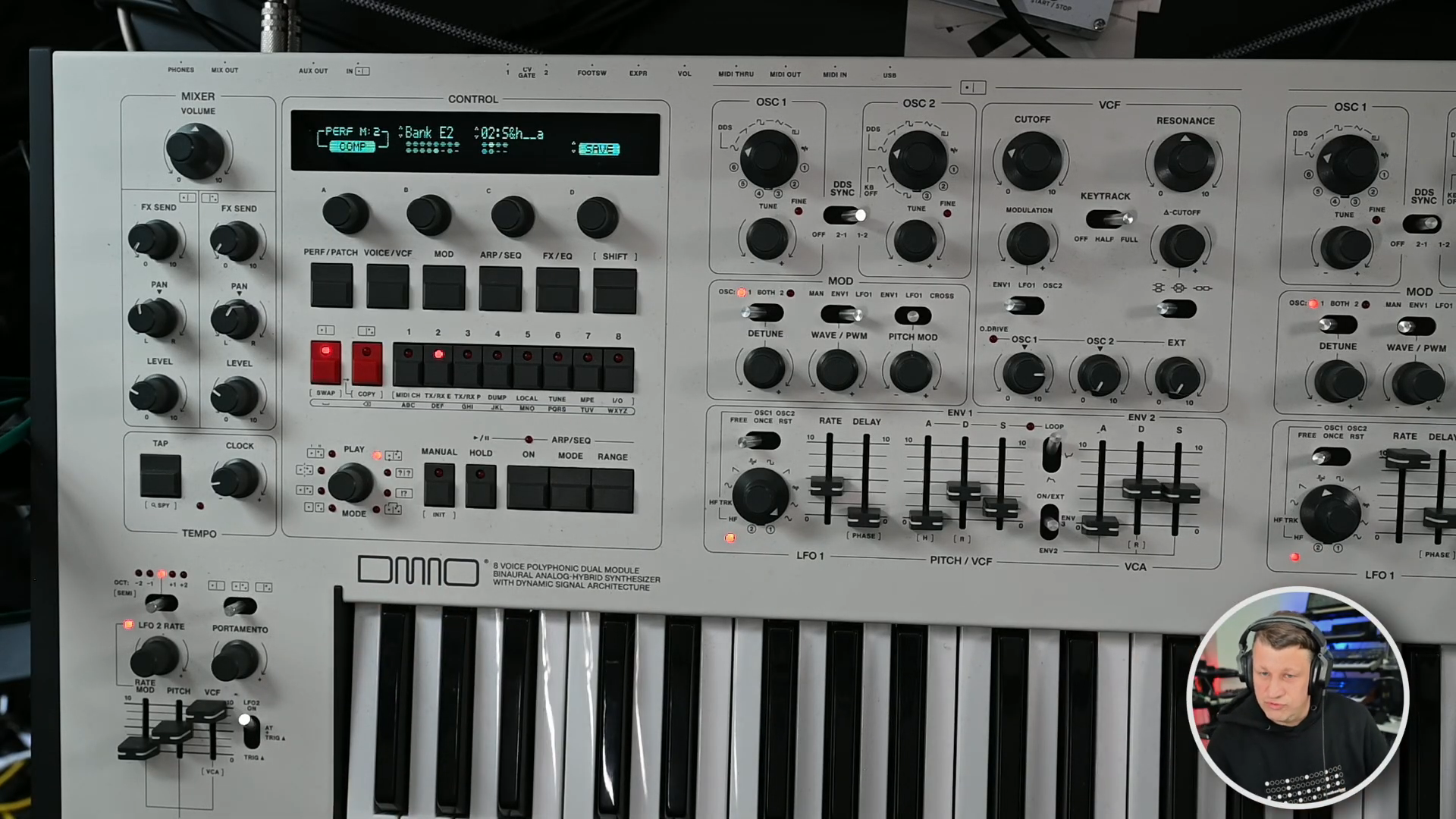
The UDO DMNO is a polyphonic synthesizer with two sound sides. The four creator quotes explore its stylistic range, the creative potential one reviewer discovered, and how to work with the filter: oscillator level alone can substantially change its resonance character, while excessive input can overdrive it.
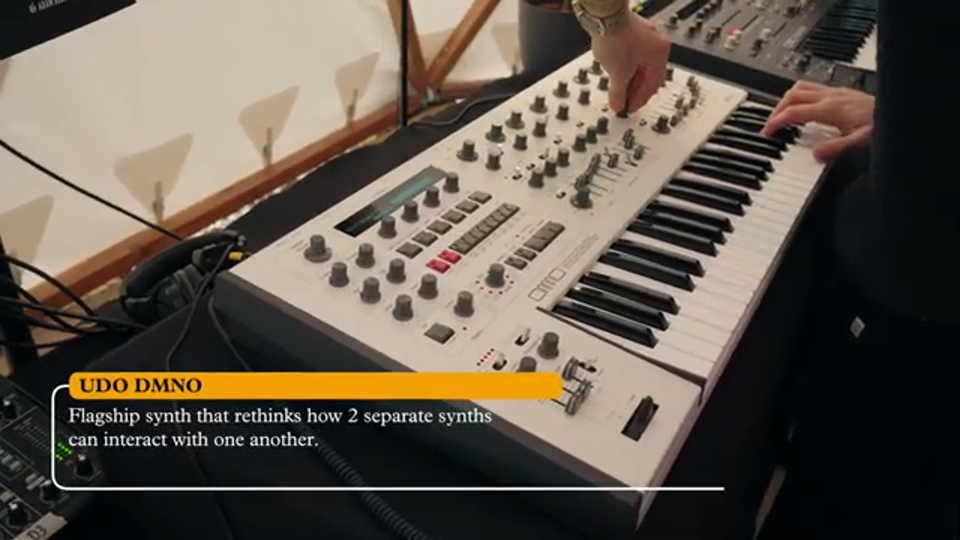
One sound can become a sustained texture; the next, a song. For SequencerTalk’s Moogulator, that stylistic openness is a key part of the instrument’s appeal.
SequencerTalk
„You can do things like that here. It’s a really great drone, pads, event synthesizer, if that’s what you want. But you can also just make rock ’n’ roll or something like that with it, or synth-pop.“
Solche Sachen kann man hier machen. Es ist ein super guter Drone, Flächen, Ereignissynthesizer, wenn man das möchte. Man kann aber auch einfach nur Rock'n'Roll oder so was damit machen oder eben Synthiepop.
Devin Belanger says he only realised how much creative potential the instrument held after trying it. That impression explains why he ranked it ahead of other synthesizers in his selection.
„the reason why this wins over the Magnolia, over the Katla, over anything else on this list is because I didn't realize how much potential there is in this synthesizer.“
Alex Ball demonstrates that, in his experience, the level of an oscillator feeding the filter can dramatically change its resonance character. He says the wide ranges offer room to explore, but also call for control.
„Now I've completely blown out the filter because it's got such a wide range. So if we listen to it, can you hear the resonance character changing dramatically with something as simple as the volume of one oscillator into the filter, and that's something that carries across the synth.“
Martin Stürtzer notes that the oscillators can easily overdrive the filter. He therefore brings them up carefully for the sound he wants—a practical reminder to set oscillator levels and filter together.
Read the full statement
„it's very easy to completely overdrive the filter for the sake of demonstration I will put both to maximum and then it sounds like this for the typical sound that I want to make this is nothing that we want so I will very carefully bring in the two oscillators“
Reddit – r/synthesizersFour resonance peaks make it speak
Four resonant band-pass filters, hard-panned stereo sides and an expression pedal: one player builds a distinctly vocal sound. Replies quickly raise the concern that the instrument might always sound this way. The creator explains how deliberately they shaped that character.
+
A DMNO player presents a patch built around four resonant band-pass filters. The two sound sources are hard-panned left and right, while an expression pedal controls the filter cutoff. The vocal result prompts mixed reactions: one interested listener welcomes an alternative to static, voice-like wavetables, while another questions their pre-order because of the pronounced vocal character.
The creator explains the sound choice: the four resonance peaks are deliberate elements of this patch, and they intentionally pushed its voice-like quality. For more conventional sounds, they point to using less resonance or the second resonance type. One side of the instrument alone may also be enough for that. The disagreement, then, starts with a deliberately exaggerated sound example: what delights one listener with its formants makes another doubt the instrument’s overall tonal palette. The reply brings the discussion back to the specific filter settings.
For detuned EBM basses, a DMNO player disliked the uniform oscillator start. Their workaround: raise the amplifier envelope’s decay and sustain, then shape the sound with the filter. A reply suggested ENV3; the creator later confirmed that approach worked too.
+
In a September 2026 discussion, a DMNO player looks for detuned sawtooth sounds for EBM bass lines and short accents. With the instrument as it was at the time, they dislike that the waveforms restart at the zero crossing with each key press. The resulting phase relationships do not suit these sounds.
While experimenting, they find a workaround: turn ENV2’s decay and sustain all the way up in the VCA section. To their ears, the detuned sawtooth waves then behave much like free-running oscillators. They report useful results in mono, poly and binaural modes. The trade-off is that ENV2 is no longer available for its usual sound shaping, so they use the filter envelope instead. Someone suggests trying ENV3 as an alternative. The player tests it and confirms that it works too. That makes it a second, explicitly tried approach to achieving the same desired beating effect.
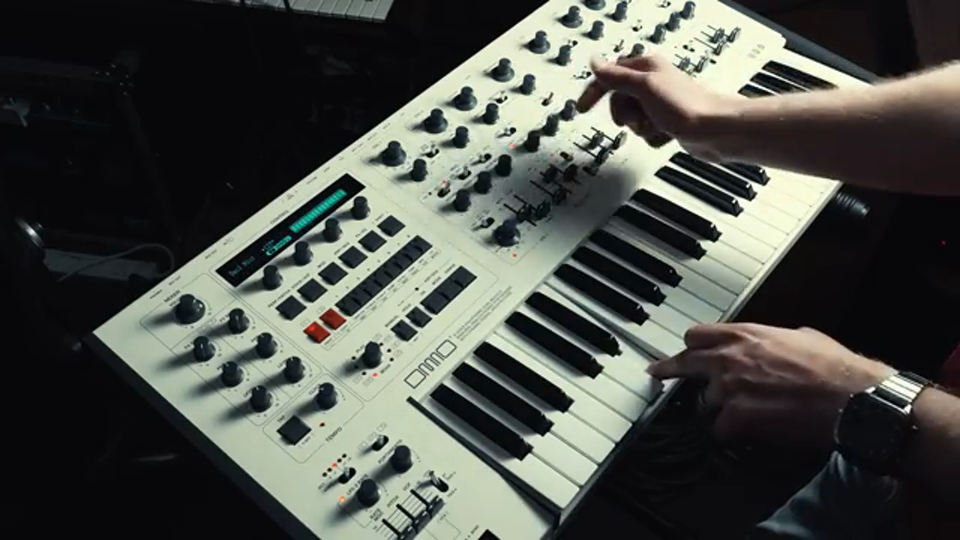
I don't think it's a one-trick pony, because you'll also get your kind of really beautiful, just sort of cinematic sounds as well, which I gravitate to.
So it is an eight-voice polysynth, but there's only one particular setup you can have, where you can play all eight voices discreetly, which is in stereo with binaural off.
my first impressions were that the presets were slightly less catered to my tastes, but the thing that I've always loved about Udair synths is they boot up in an init patch, kind of almost implying you should be making a new sound every time you turn it on, which I really like. And when I started to mess around with the sound engine, I was like, oh, this sounds really, really good.
From: Signal Flow Podcast Ep3: Playing live with Serge & GRM Tools Atelier (in quad)
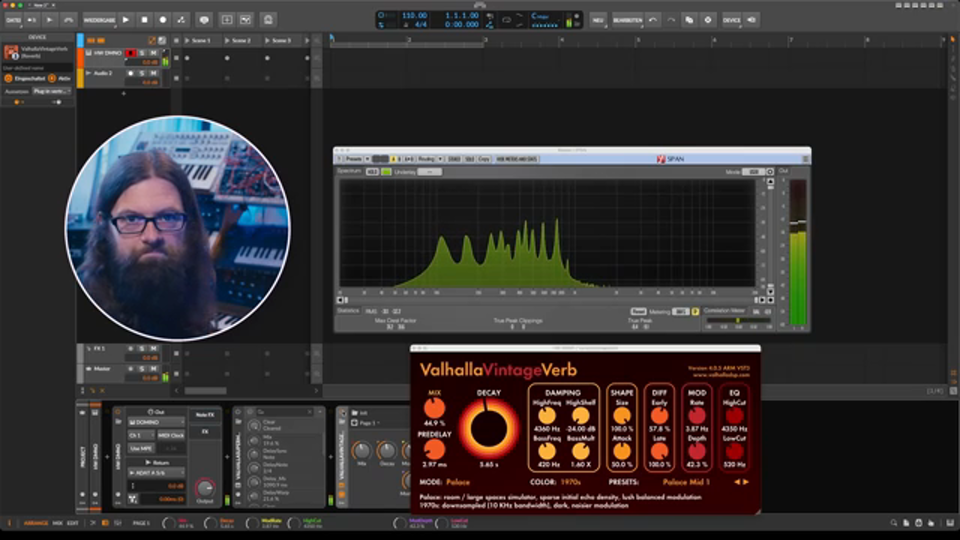
What I like about this synthesizer is that you can use this with any of the waveforms super saw is very common in synthesizers but I could also go to the sine waves and use it over here this is something that I really like for lush pad sounds
From: Sound design and track walkthrough with UDO DMNO