A retrigger doesn’t always have to repeat the same sound. In Elektron’s tutorial on subtracks and the multisample editor, released November 25, 2026, the sample changes during such a drum roll, controlled by a velocity curve. A small detail with quite unruly potential. The manufacturer’s video for Tonverk OS 1.5.0 demonstrates not just more options for the drum kit: it shows how a programmed rhythm can become a sequence of different sonic choices.
One Kit, Different Paths
© Screenshot: Elektron (YouTube)
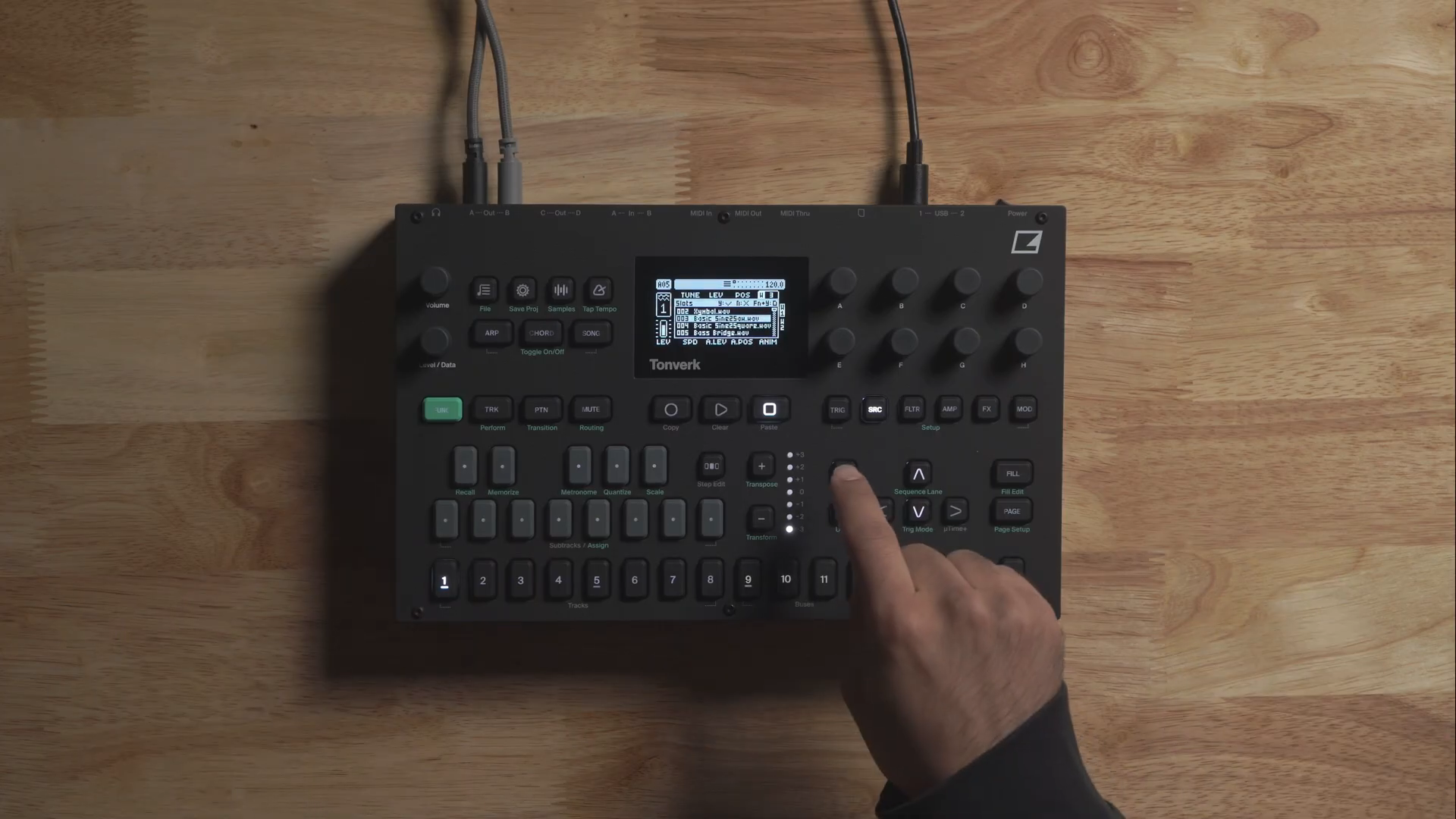
“round robin playback, and individual FX routing for each subtract.”
© Quote: Elektron (YouTube)
Elektron starts with a factory kit and its effect routing. The concise statement:
On the additional FX page, send levels can be set per subtrack without affecting the others. The path through the available inserts is also selectable: through both, only the second, or bypassing both. Particularly interesting for textures is the off setting: then only the signal sent to the send effects remains from that subtrack. Reverb and delay can thus stand alone without the dry signal.
Group processing doesn’t disappear. Elektron explains the lower FX page as a kind of bus, where the subtracks are summed after their individual settings. Letting individual sounds break away while still treating the kit as a group: musically, that’s more productive than just adding more effect everywhere.
Elektron Tonverk – Amazon keyword search
Search for this product on Amazon →
This link opens an Amazon keyword search. Depending on availability, other results may be shown.
Advertising – affiliate link. If you buy through this link, we may earn a commission – at no extra cost to you.
The Hi-Hat Can Surprise
Elektron demonstrates how quickly repetition loses its rigid character by using three clap samples in a single velocity layer. The samples alternate with each trigger. Besides the forward order, the tutorial also shows ping-pong and random without immediate repeat. At first, this requires neither additional velocity zones nor complicated step programming.
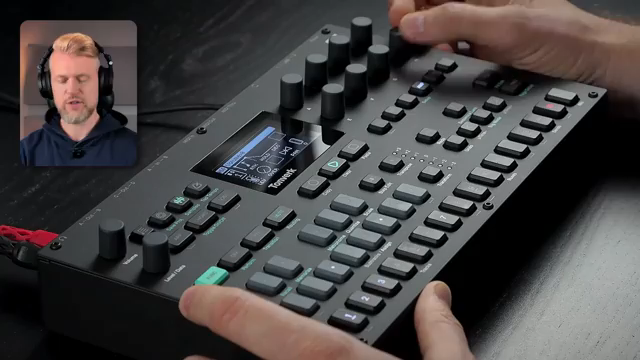
Sineway, in his video on his seven favorite features of version 1.5, also released on November 25, takes a similarly direct approach. First, he adds some reverb to the snare, then he adds several round robin samples to the hi-hats. He deliberately skips extra velocity layers at this point. Whether the selected hats fit together, he doesn’t know in advance:
But he doesn’t leave the result entirely to chance. He edits the amp envelope so that the rather different hi-hats sound more similar. That’s the solid craft behind the experiment: letting timbres change without renegotiating the pattern’s identity on every hit.
© Screenshot: Sineway (YouTube)
“I don't know how this is going to sound with these in this combination, but that's also the fun of it.”
© Quote: Sineway (YouTube)
Velocity Can Do More Than Louder
© Screenshot: Elektron (YouTube)
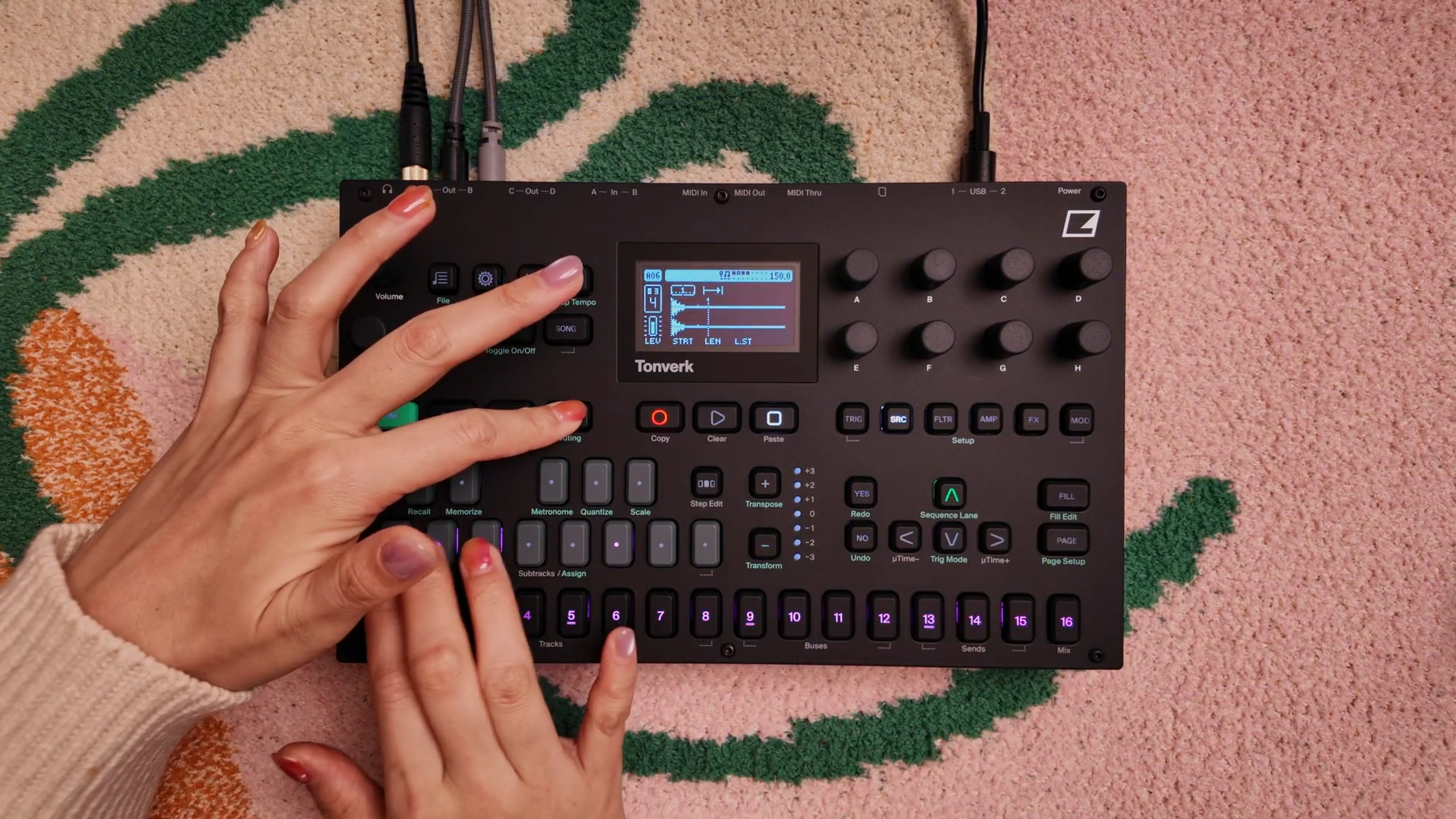
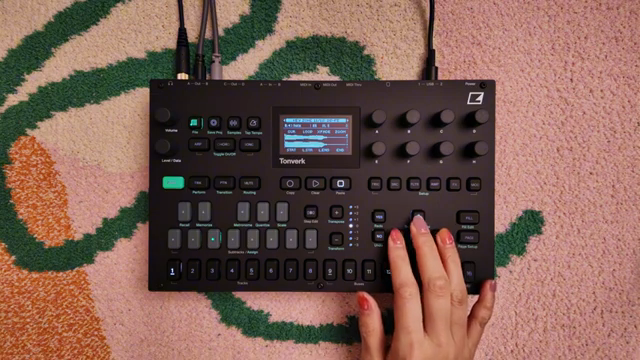
“Also on this step, I've enabled retrig, and with the velocity curve, the sample changes during the retrigger, which I find really fun to play with.”
© Quote: Elektron (YouTube)
Elektron then demonstrates how different bass drum samples are distributed across separate velocity zones. Which variant sounds can be played live, set by parameter lock, or organized with the transform function using random values and ramps. If you only want to use velocity for sample selection, you can disable its influence on volume.
In a prepared sketch, Elektron spreads five layers across a rising velocity ramp over four sequencer pages. With retrigger additionally enabled, the velocity curve even changes the sample within the retrigger sequence. The comment from the manufacturer tutorial sounds refreshingly playful:
There’s also the connection with routing: according to the tutorial, up to four parameters per subtrack can be modulated via velocity. Delay and reverb sends for a single subtrack are demonstrated. Thus, velocity becomes a controller for sound selection and space, instead of just making the same hit louder or softer.
The Unfitting Sample Gets to Stay
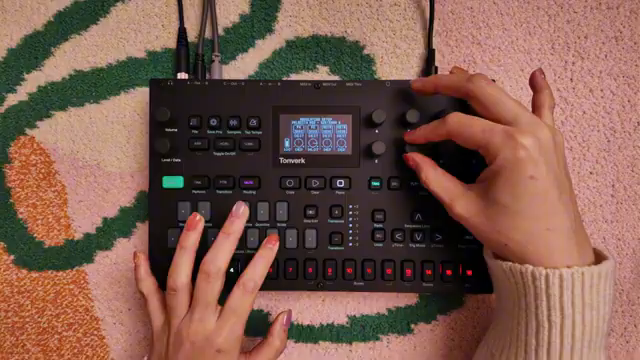
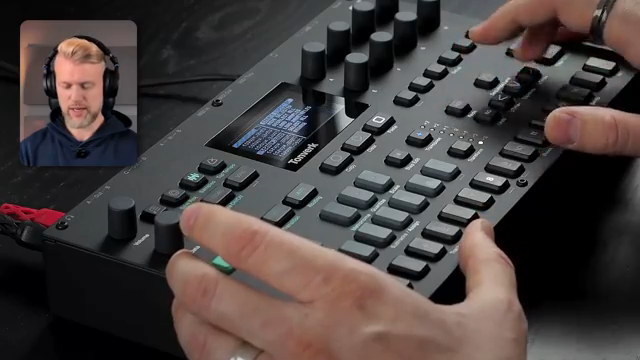
Sineway takes the experiment in another direction. He chooses a drum loop that, in his opinion, initially doesn’t fit the music at all, adapts it with the stretcher machine, and processes it with transient control, among other things. Instead of permanently occupying track eight, he records the result as a four-bar loop:
The recording then replaces an unused sample slot in his drum track. The foreign loop becomes a controllable ingredient in the existing kit. This isn’t another round robin trick, but a different musical decision: not every interesting sound needs a starring role or its own track.
© Screenshot: Sineway (YouTube)
“Yeah, I'm going to sample it, because I don't want to waste the full track with this. This is just meant to add a bit of texture on the drums.”
© Quote: Sineway (YouTube)
The most exciting freedom in these examples isn’t about imitating a real drummer as convincingly as possible. It’s about being able to treat repetitions differently—and deciding for yourself which differences belong together. A bit of disorder is welcome. The amp envelope still gets a say.
Elektron Tonverk – Amazon keyword search
Search for this product on Amazon →
This link opens an Amazon keyword search. Depending on availability, other results may be shown.
Advertising – affiliate link. If you buy through this link, we may earn a commission – at no extra cost to you.
Videos for this article
All other articles featuring the Elektron Tonverk
All YouTube videos featuring the Elektron Tonverk
Primary – main topic (21)
 Tonverk 1.5 Is More Synth Than Ever: My Top 7 Updates
 Tonverk Tutorial // Improved Subtracks and Multisample Editor on OS 1.5.0
 Tonverk screen repair - Firmware 1.5.0 first look #nice
 How to Make a Kick Drum with Wavefinder | Tonverk
 I went to Japan
 Elektron´s Best In A While! Tonverk First Impressions
 Headless Horseman + Tonverk
 Elektron Tonverk: No Manual Challenge – Can we make a track in 10 minutes? (No, but we can try!)
Show all (13 more)
 Elektron Toneverk – Hands-On First Look
 Long-Form Melodic Jam on TONVERK
 Dub Techno with Elektron Tonverk (Music and track walkthrough)
 Jamuary 2026 - Three, Jamming and learning Tonverk #jamuary2026
 Tonverk Multi Sampling Deep Dive - Mega Hangout
 Tonverk Granular: Beats from Scratch
 Elektron Tonverk - Experimental Sound Design
 Elektron Tonverk - Bristronica 25
 Rambling About: Elektron Toneverk First Impressions with tafony
 Tonverk Tutorial: Subtracks Machine
 Elektron Tonverk Review // vs Digitakt/Octatrack // 10 tips to make the most of it // Tutorial
 more LEAKED INFO on the ELEKTRON TONVERK!
 the NEW Elektron TONVERK just LEAKED!