Building a kick and ending up with a snare-like hit: In “How to Make a Kick Drum with Wavefinder | Tonverk,” published on November 20, 2026, Elektron's demonstrator shows exactly this path. The starting point is not a finished drum sample, but Wavefinder. The manufacturer demo becomes interesting where it makes the sonic decision transparent: what should bite at the beginning, what should punch afterwards—and what can be done with it in the pattern?
First the Bite, Then the Sine
© Screenshot: Elektron (YouTube)
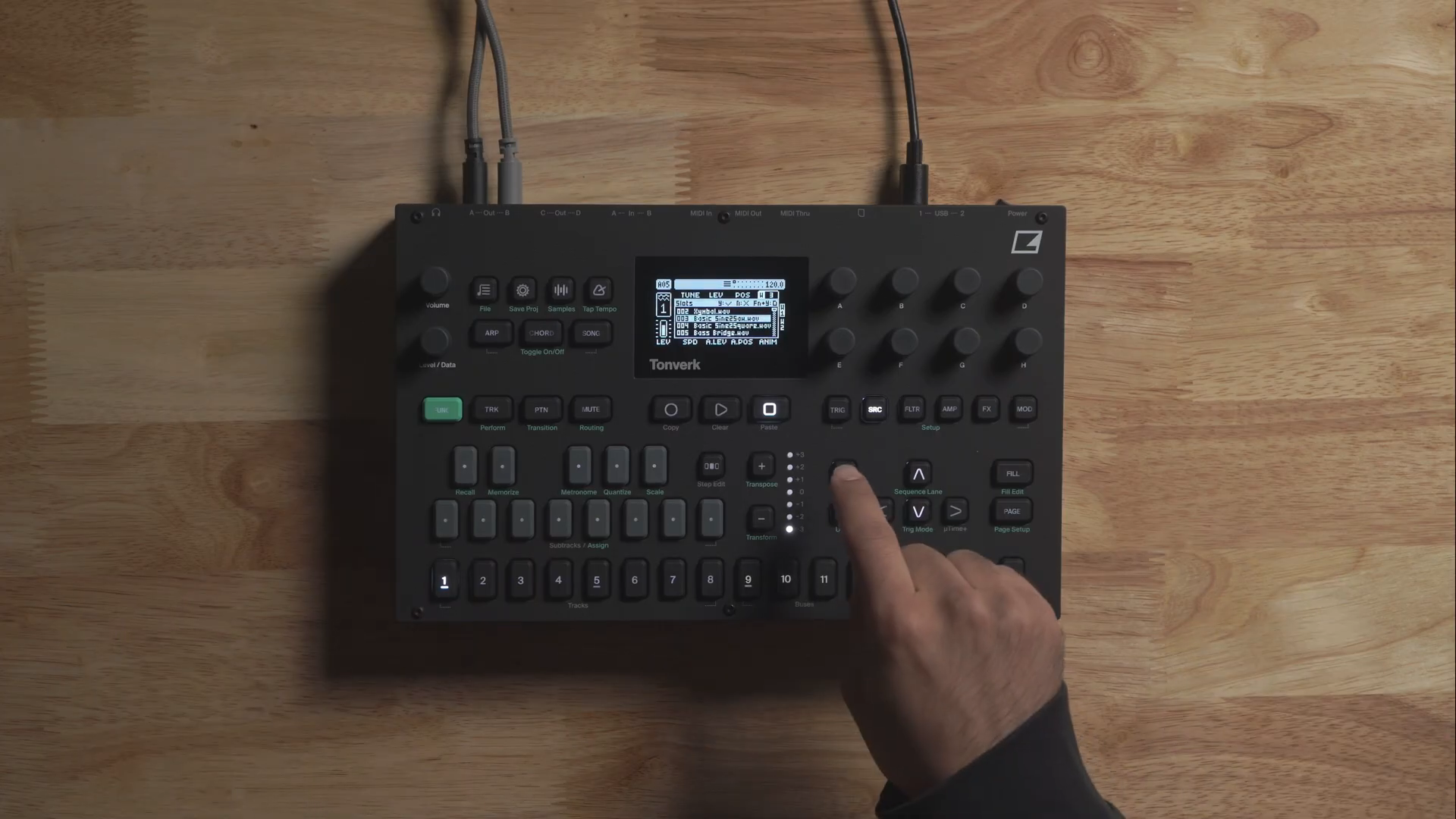
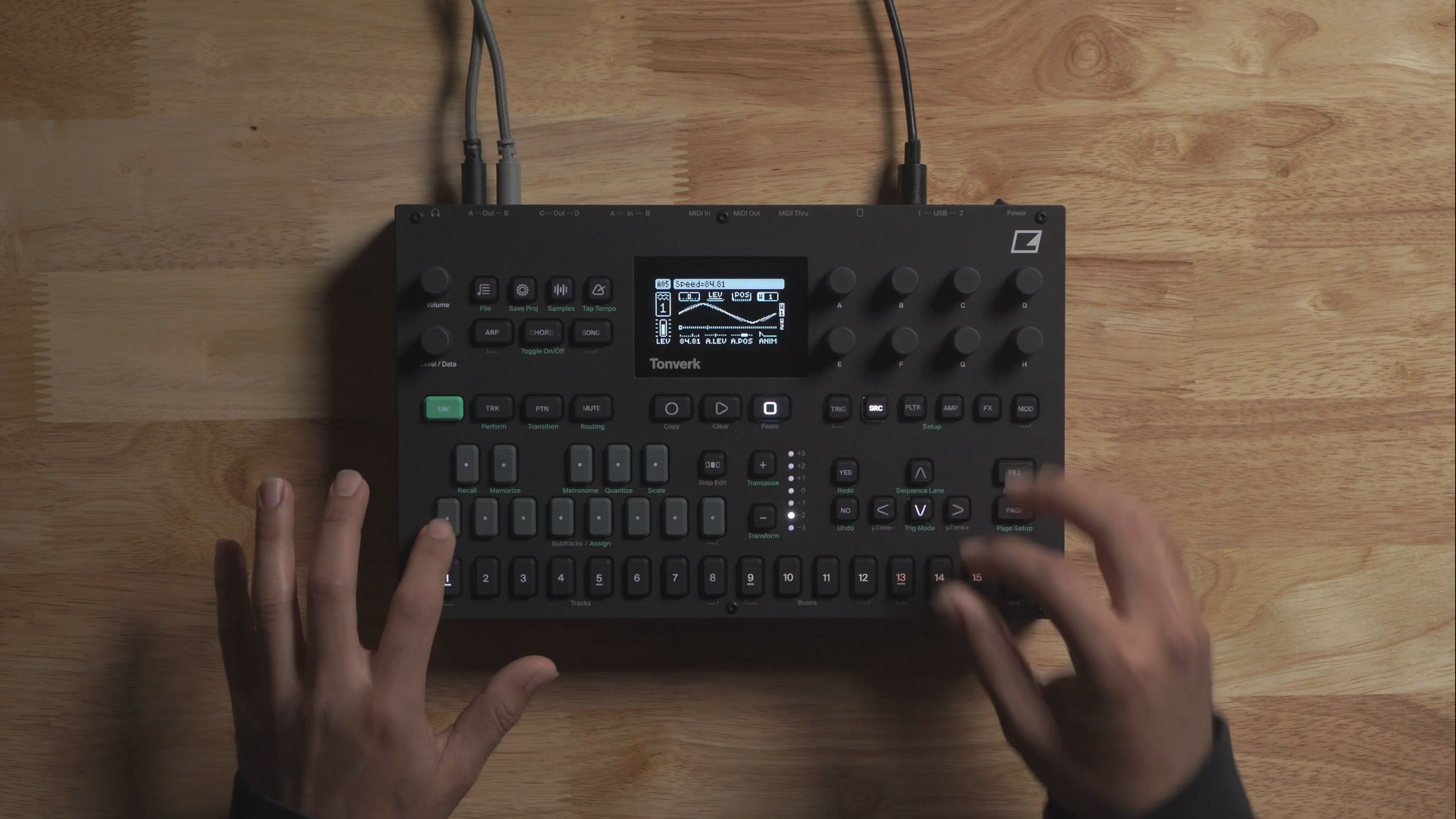
“So let's hear how that sounds. So you can hear at the beginning, you're getting that bite and it's going down to the sine wave. I'm going to speed it up a bit to kind of get that initial attack.”
© Quote: Elektron (YouTube)
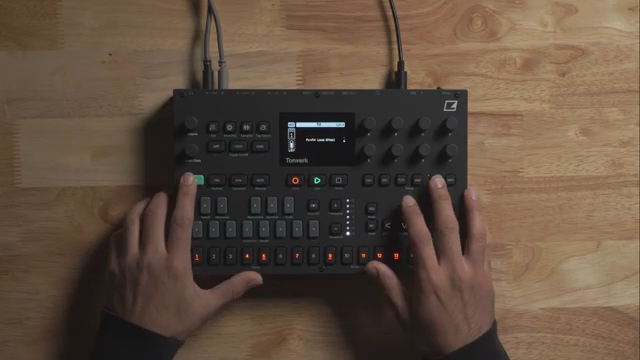
The start is refreshingly unspectacular: Wavefinder is loaded on track one, the octave is lowered, and the track is set to mono. Only one note should play at a time. Then comes the crucial move: the demonstrator activates position animation and selects 'Ramp Down.' The movement through the wavetable thus becomes a tool for shaping the sound over time.
Elektron describes the result as an initial bite that transitions into a sine wave. Instead of immediately adding the next sound ingredient, the demonstrator first changes the speed: faster, according to his explanation, gives a shorter hit; slower, the timbral change becomes more pronounced. In the example, he keeps the speed at about 76. The attack here is not just present—it can be precisely dosed.
Elektron Tonverk – Amazon keyword search
Search for this product on Amazon →
This link opens an Amazon keyword search. Depending on availability, other results may be shown.
Advertising – affiliate link. If you buy through this link, we may earn a commission – at no extra cost to you.
More Punch, Without Ingredient Roulette
For more punch, the demonstrator adds a pitch envelope. On the modulation page, he turns on reset and assigns the envelope to the tune parameter of oscillator one. This addresses a different layer than before: the wavetable movement shapes the described bite, the additional pitch modulation is meant to give the kick more thrust.
Next comes a high-pass filter. Elektron dials it in at the fundamental frequency of the played note and modulates the filter frequency with another envelope to achieve more punch. The demonstrator explicitly enables key tracking beforehand: when he changes the note, the filter frequency should follow. It's precisely this explained decision that makes the demo useful—it doesn't just show which knob is being turned, but why.
© Screenshot: Elektron (YouTube)
“And because I added key tracking, when I change the note, the frequency is going to follow that key.”
© Quote: Elektron (YouTube)
The Next Hit Can Be Different
© Screenshot: MusicRadar Tech (YouTube)
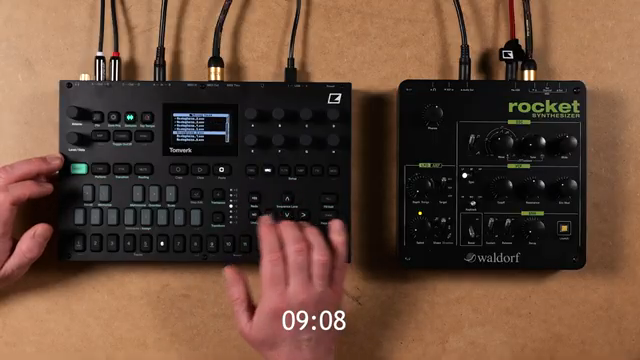
“Let's put the probability and velocity down on that.”
© Quote: MusicRadar Tech (YouTube)
Elektron doesn't stop at the isolated kick. The demonstrator sets trigs and changes individual steps with parameter locks. He describes one hit as snare-like, copies it to other places, removes lows via the filter frequency, and changes the envelope. From a single sound approach, different rhythmic material emerges on the same track. Musically, this is the more interesting step than endlessly polishing a single hit.
MusicRadar Tech, in their 'No Manual Challenge' published on April 10, 2026, takes a different starting point: ten minutes, no manual, but prior experience with other Elektron devices. The operator searches the factory library for a drum sound, sets up a four-on-the-floor kick, and shortens its amp envelope. For an additional kick hit, he then lowers probability and velocity. Here, variation doesn't come from a new sound source, but from a quieter, only occasionally appearing hit. His concrete decision:
Before Adding Yet Another Envelope
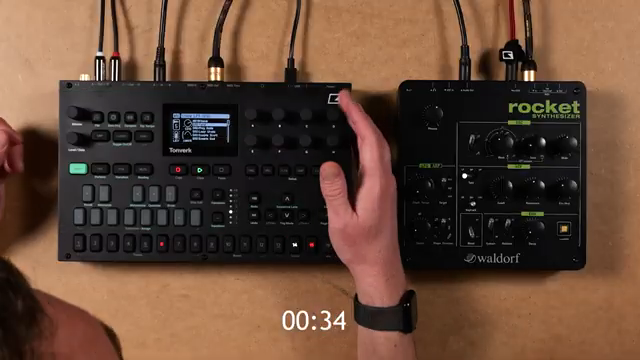
The challenge also delivers a pleasantly unheroic studio moment. MusicRadar Tech multi-samples a Waldorf Rocket; the clock is paused for the automatic sampling run. Later, the operator briefly wonders if his kick is still there. It is: he had just turned it down. He then also reduces the level of the multi-sample instrument, which he describes as too loud or noisy compared to the kick. After all the sound shaping, you end up with a pretty down-to-earth control: the volume balance.
© Screenshot: MusicRadar Tech (YouTube)
“Have I still got my kick drum? There we go. I just had it turned down”
© Quote: MusicRadar Tech (YouTube)
In Elektron's example, Wavefinder doesn't just make a kick possible, but makes each individual decision tangible. It gets interesting when a pattern grows from it. And before adding the next modulation path, it's worth taking a look at the level. Even a well-built belly needs space.
Elektron Tonverk – Amazon keyword search
Search for this product on Amazon →
This link opens an Amazon keyword search. Depending on availability, other results may be shown.
Advertising – affiliate link. If you buy through this link, we may earn a commission – at no extra cost to you.
Videos for this article
All YouTube videos featuring the Elektron Tonverk
Primary – main topic (18)
 How to Make a Kick Drum with Wavefinder | Tonverk
 I went to Japan
 Elektron´s Best In A While! Tonverk First Impressions
 Headless Horseman + Tonverk
 Elektron Tonverk: No Manual Challenge – Can we make a track in 10 minutes? (No, but we can try!)
 Elektron Toneverk – Hands-On First Look
 Long-Form Melodic Jam on TONVERK
 Dub Techno with Elektron Tonverk (Music and track walkthrough)
Show all (10 more)
 Jamuary 2026 - Three, Jamming and learning Tonverk #jamuary2026
 Tonverk Multi Sampling Deep Dive - Mega Hangout
 Tonverk Granular: Beats from Scratch
 Elektron Tonverk - Experimental Sound Design
 Elektron Tonverk - Bristronica 25
 Rambling About: Elektron Toneverk First Impressions with tafony
 Tonverk Tutorial: Subtracks Machine
 Elektron Tonverk Review // vs Digitakt/Octatrack // 10 tips to make the most of it // Tutorial
 more LEAKED INFO on the ELEKTRON TONVERK!
 the NEW Elektron TONVERK just LEAKED!