When Starsky Carr puts the Behringer JN80 side by side with the legendary Roland Juno 60, you know it’s not just a polite comparison—it’s a synth street fight. He dives deep into the raw, unfiltered sound of both machines, poking and prodding for differences that would make or break a late-night session. If you want to know whether Behringer’s clone can truly hang with the classic, or if it’s just an empty shell in a shiny box, this showdown pulls no punches and leaves no filter unturned.
19. October 2026
SPARKY
Starsky Carr’s JN80 vs Juno 60: Battle of the Budget Bangers
Face-Off: Plastic vs. Legend
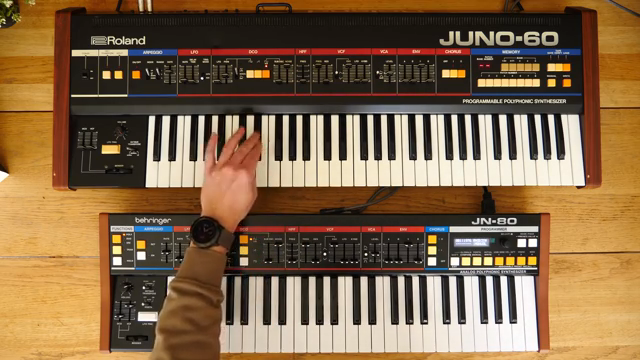
Starsky Carr doesn’t waste time with pleasantries—he slams the Behringer JN80 right up against his own beloved Juno 60, giving us the head-to-head we’ve all been craving. The JN80 cuts a smaller figure—four octaves to the Juno’s five—but it’s not here to posture; it’s here to prove itself. With both synths side by side, it’s a visual and sonic match-up that’s as much about attitude as it is about tone.
The real question: does the JN80 sound anything like the Juno 60, or is it all smoke and mirrors? Starsky dials up the classic sawtooth, slaps on some chorus, and gets straight to the point. Spoiler: at first listen, these two are closer than most siblings after a big inheritance. If you’re only here for the raw sonic grit, this is the moment you’ve been waiting for.
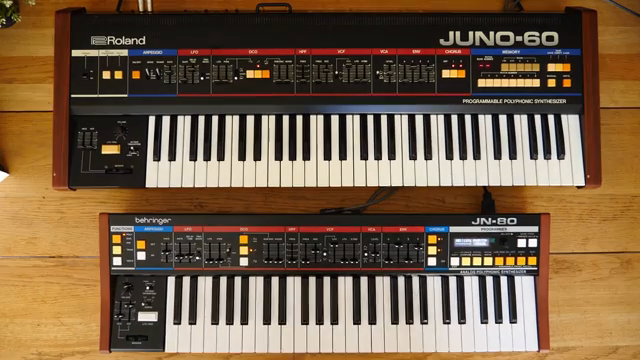
"They sounded very, very close. Well, the same to me really."
© Screenshot/Quote: Starskycarr (YouTube)
Oscillator Games and Chorus Showdowns
"Again, so as far as I'm concerned, that's the same oscillator. You wouldn't know one from the other, would you?"
© Screenshot/Quote: Starskycarr (YouTube)
Starsky takes us through the classic building blocks: sawtooth, pulse, sub oscillators, and noise. The JN80 doesn’t just stand its ground—it almost dares you to tell the difference. Sawtooth and pulse waves are nearly identical, right down to the oscilloscope’s smug agreement. Even the PWM via LFO is a dead ringer, and the sub and noise? Practically indistinguishable—your dancefloor won’t know the difference, and neither will your dog.
When it’s time for the chorus to strut, the JN80 shows it’s not just a cheap copy. The Juno 60’s chorus brings a small volume lift, while the JN80’s is more reserved, but both churn out that lush, beating stereo field. The only giveaway is a slightly slower pulse on the Behringer. Starsky notes you wouldn’t notice unless you’ve got both synths chained together in a rave bunker. Even the quirks in how the chorus buttons work don’t spoil the party.
Envelopes and Filters: Not Quite Mirror Images
Filters are the soul of any analog beast, and Starsky goes forensic on both machines. The JN80’s high-pass filter is smoother, while the Juno 60’s classic notched cut eats more low end. On the main 24dB low-pass VCF, the JN80 loses more bass as resonance climbs, but you can patch around it with a volume tweak. These are differences you’ll only care about if you’re tweaking patches for hours in a dark studio, and honestly, we respect that level of obsession.
The envelopes, though, are where the JN80 steps out of line. Attack times are much longer (think slow-motion rave), and decay is noticeably shorter. Starsky even does a little science, showing the timings aren’t just “kind of” different—they’re night and day. It’s not a deal-breaker, but anyone after exact Juno 60 behaviour might raise an eyebrow. Maybe this is Behringer’s secret nod to the Juno 106, or maybe it’s just a quirk. Either way, it gives the JN80 its own flavour—love it or hate it.
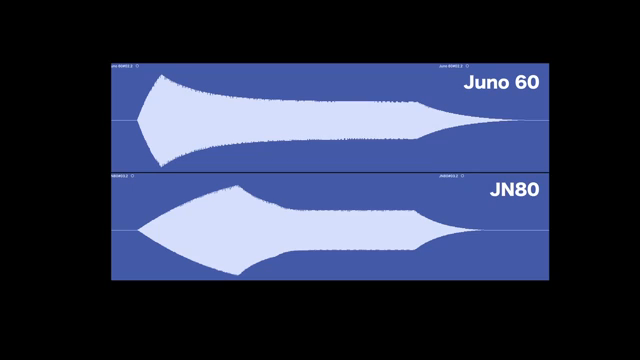
"You can see that there's distinctly different timings going on there."
© Screenshot/Quote: Starskycarr (YouTube)
The Curious Case of the Clicky Transients
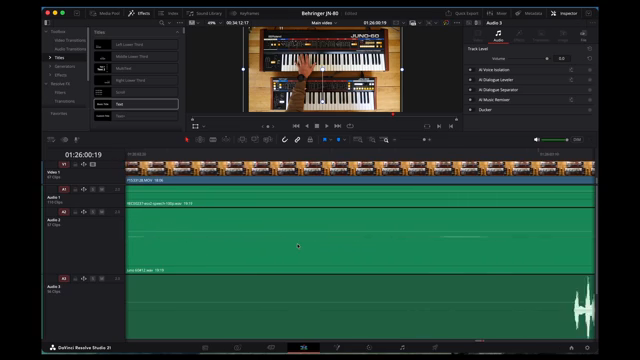
"And then if you come down to the bottom here, here's the click. Something is happening."
© Screenshot/Quote: Starskycarr (YouTube)
Just when you think the JN80 is a perfect clone, Starsky hits a wall. While dialling in the iconic Mr Fingers bass, a sneaky click on the attack shows up—like a gremlin living inside the circuitry. He’s not talking the good kind of analog ‘snap’, either. This is an actual artefact, clear as day in Logic’s waveform view. It doesn’t show up on every note, but when it does, it’s impossible to ignore.
Starsky goes full detective, zooming in on the transients and testing different waves. The culprit? Possibly a double-trigger or just this particular B-stock unit acting up. He’s honest: maybe it’s just this one, maybe it’s a bigger problem. Either way, he throws down a challenge—if you’ve got a JN80, try his settings and see if yours does the same. This is synth journalism at its grittiest, and the kind of honesty you only get from Starsky Carr.
Verdict: Clone, Contender, or Pretender?
After all the shootouts, poking, and waveform zooming, where does the JN80 stand? Starsky’s verdict lands somewhere between impressed and cautious. For most practical purposes and classic tones, the JN80 is shockingly close—close enough for gigs, jams, and late-night patch sessions. But that clicky transient issue? That’s a wild card. It might be a one-off, or it might be a reason to hold out for a firmware fix—or a miracle.
In the end, Starsky hands the final call to the community: if your JN80 behaves differently, shout about it. The video leaves plenty of nitty-gritty details for you to dig into yourself—especially if you want to hear the nuances and see the scope in action. The JN80 might not dethrone the Juno 60, but it’s a serious contender for anyone who wants classic vibes without the classic price tag.
This article is also available in German. Read it here: https://synthmagazin.at/starsky-carrs-jn80-vs-juno-60-battle-der-budget-boliden/
More articles about these products:
 Behringer’s Thriller Remake: Affordable Synths, Legendary Grooves
 Tonepusher’s Industrial Synth Arsenal: Five Sounds That’ll Smash Your Speakers
 Starsky Carr’s Synth Bunker: Vintage Heat Meets Modern Muscle
 Bolo Da Producer Digs Into Behringer’s JN-80: Budget Juno or Just Hype?
 NAMM 2026: Molten Music Technology Drops the Gear Gauntlet
 A Sonic Pilgrimage: Inside BT’s Cave with CROW HILL
 Starsky Carr’s Gridlock II Review: MIDI Mayhem, Sorted
 Tonepusher’s FOURM Frenzy: Is Sequential’s New Beast the Next Industrial Street Weapon?
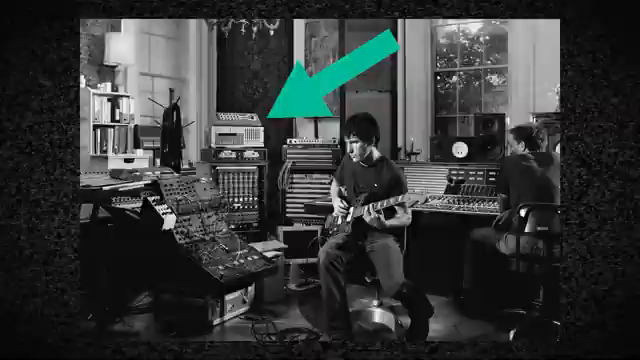 Tonepusher’s Industrial Synth Arsenal Unleashed
Watch on YouTube:
Latest articles
Watch on YouTube:
Visit the channel:
https://www.youtube.com/StarskyCarr
https://www.youtube.com/StarskyCarr
Links from StarskyCarr:
Patreon: https://patreon.com/starskycarr
Instagram: https://instagram.com/starskycarr
Facebook: https://facebook.com/StarskyCarrOfficial
Sponsored links:
If you purchase via these links, we may earn a small commission – at no extra cost to you. The link opens an Amazon keyword search, and results may vary depending on availability.
Behringer JN80
🔗 Check price on Amazon
🔗 Check price on Amazon
Roland Juno-60
🔗 Check price on Amazon
🔗 Check price on Amazon