In the spectral glow between frame and feeling, CROW HILL guides us deep into the heart of television scoring. Here, Christian Henson’s approach becomes less a method and more an act of delicate cartography—mapping emotion, technology, and intuition across shifting landscapes. Each tool and phrase is a brushstroke, each preparation a lantern in the fog. This video is not just about writing for TV, but about breathing life into stories through soundwaves that shimmer and haunt.
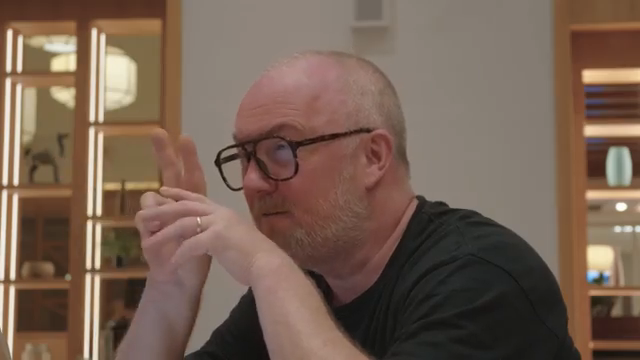
Mapping the Invisible: Henson’s Approach to TV Scoring
Television music, in the hands of Christian Henson, becomes a living mist—one that drifts, intertwines, and adapts with each unfolding narrative. His approach is a hybrid dance of the technical and the ineffable, a practice that requires as much intuition as precision. As Henson opens his process, we witness him balancing the humming machinery of modern laptops with the subtler frequencies of human imagination.
The boundaries blur: every cue is an act of translation between the raw pulse of technology and the whispering ghosts of story. In Henson’s world, composing is not just about notes and frames—it is about sculpting sonic atmospheres that both anchor and unsettle, creating a resonance that lingers long after the screen has faded to black.
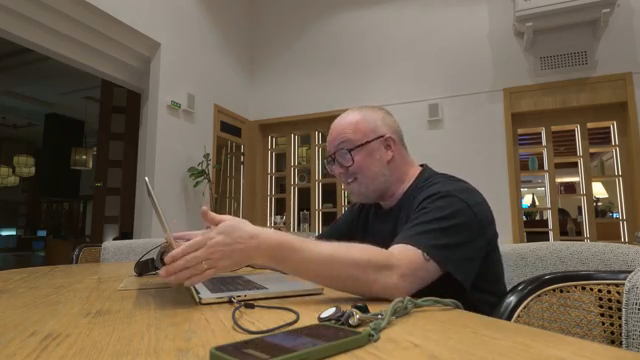
"Laptops are really important, particularly if you're making music for people who make film, TV, and work in media."
© Screenshot/Quote: Thecrowhillco (YouTube)
Blueprints in the Fog: The Power of Preparation
"If you try and work to a textbook about how you score TV music, it just doesn't work like that."
© Screenshot/Quote: Thecrowhillco (YouTube)
Preparation, for Henson, is the silent architecture beneath the score. Each decision—every mapped-out cue, instrument choice, and technical setup—forms the scaffolding upon which emotion can safely unfold. He reminds us that meticulous groundwork is not the enemy of creativity, but its most loyal companion. By planning with care, Henson crafts the conditions where happy accidents and magnetic resonance can bloom.
Yet, this preparation isn’t clinical—it is a living, shifting structure, allowing the music to move organically as the images demand. Henson illustrates how, in the labyrinth of deadlines and technical expectations, it is the composer’s invisible blueprints that let the music breathe, shimmer, and ultimately serve the story.
Tools of Resonance: Harps, Samples, and the Sonic Palette
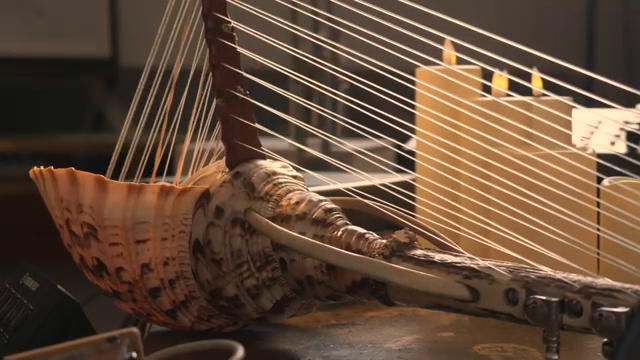
Sound libraries, for Henson, are not just collections—they are portals. At the center of his arsenal sits a harp library, its tones flickering with the light and shadow of distant woodlands. This is no mere utility; it is a character in itself, its strings weaving through the score like silken threads of memory. The harp’s resonance becomes a way to paint delicacy or tension, summoning atmospheres that stretch beyond the visible frame.
Alongside the harp, Henson draws upon a constellation of samples—pianos, strings, mandolins, and electric textures—each selected for the color and emotional grain it brings. The interplay of these tools is where technical mastery meets sonic storytelling, allowing Henson’s scores to exhale fog and fractured light across every cue.
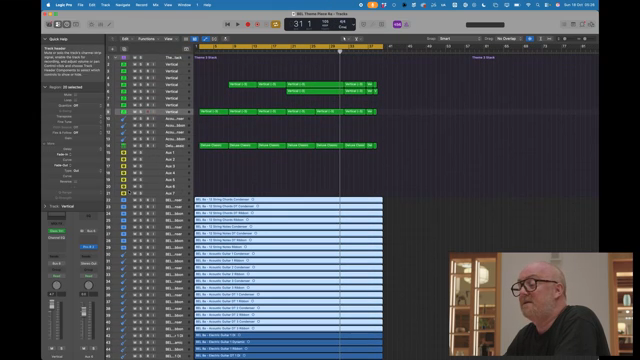
"We have pianos, strings, any sample I've made of the bass, and then we have the harp and the harp and the nobel."
© Screenshot/Quote: Thecrowhillco (YouTube)
Shifting Currents: Adapting to the New Era of TV Music
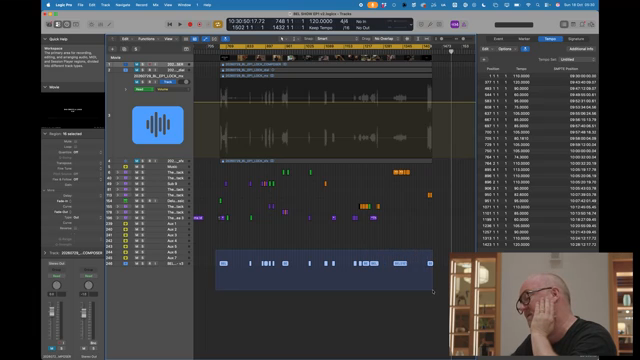
"It's quite a thing to, maybe, in two points to BBC, half hour, which is 28, 29 minutes."
© Screenshot/Quote: Thecrowhillco (YouTube)
The landscape of TV music is in flux, and Henson is acutely aware of the tides. With new technologies and evolving audience expectations, the composer’s role becomes both navigator and alchemist. Henson reflects on how formats, durations, and even the very language of scoring shift beneath our feet, demanding a flexibility that is both technical and emotional.
To thrive, one must listen as much to the changing world as to the instruments themselves. Henson’s process is a meditation on adaptation—on letting the music remain porous, ready to morph with the narrative’s needs and the era’s demands. The result is a sound that feels alive, responsive, and tuned to the secret frequencies of the times.
Step Inside the Lantern: Watch, Listen, Feel
The true alchemy of Henson’s scoring cannot be fully distilled into words alone. There are techniques, gestures, and moments within the video—subtle as a change in atmospheric pressure—that reveal the soul of his craft. To understand how these sonic ghosts are conjured, we must step inside the lantern with him: watch the demonstrations, listen to the interplay of tool and intuition, and allow ourselves to feel the resonance that only emerges in motion.
This article is also available in German. Read it here: https://synthmagazin.at/crow-hill-tv-scoring-2026-die-klanglaterne-eines-komponisten/
More articles about these products:
Watch on YouTube:
Latest articles
Watch on YouTube:
Visit the channel:
https://www.youtube.com/TheCrowHillCo
https://www.youtube.com/TheCrowHillCo
Links from TheCrowHillCo:
Website: https://thecrowhillcompany.com
Socials: https://linktr.ee/thecrowhillcompany
Podcast & Extras: https://youtube.com/@crowhillxtras
Facebook: https://facebook.com/TheCrowHillCompany/
Instagram: https://www.instagram.com/thecrowhillcompany
Sponsored links:
If you purchase via these links, we may earn a small commission – at no extra cost to you. The link opens an Amazon keyword search, and results may vary depending on availability.
Forest Harps
🔗 Check price on Amazon
🔗 Check price on Amazon