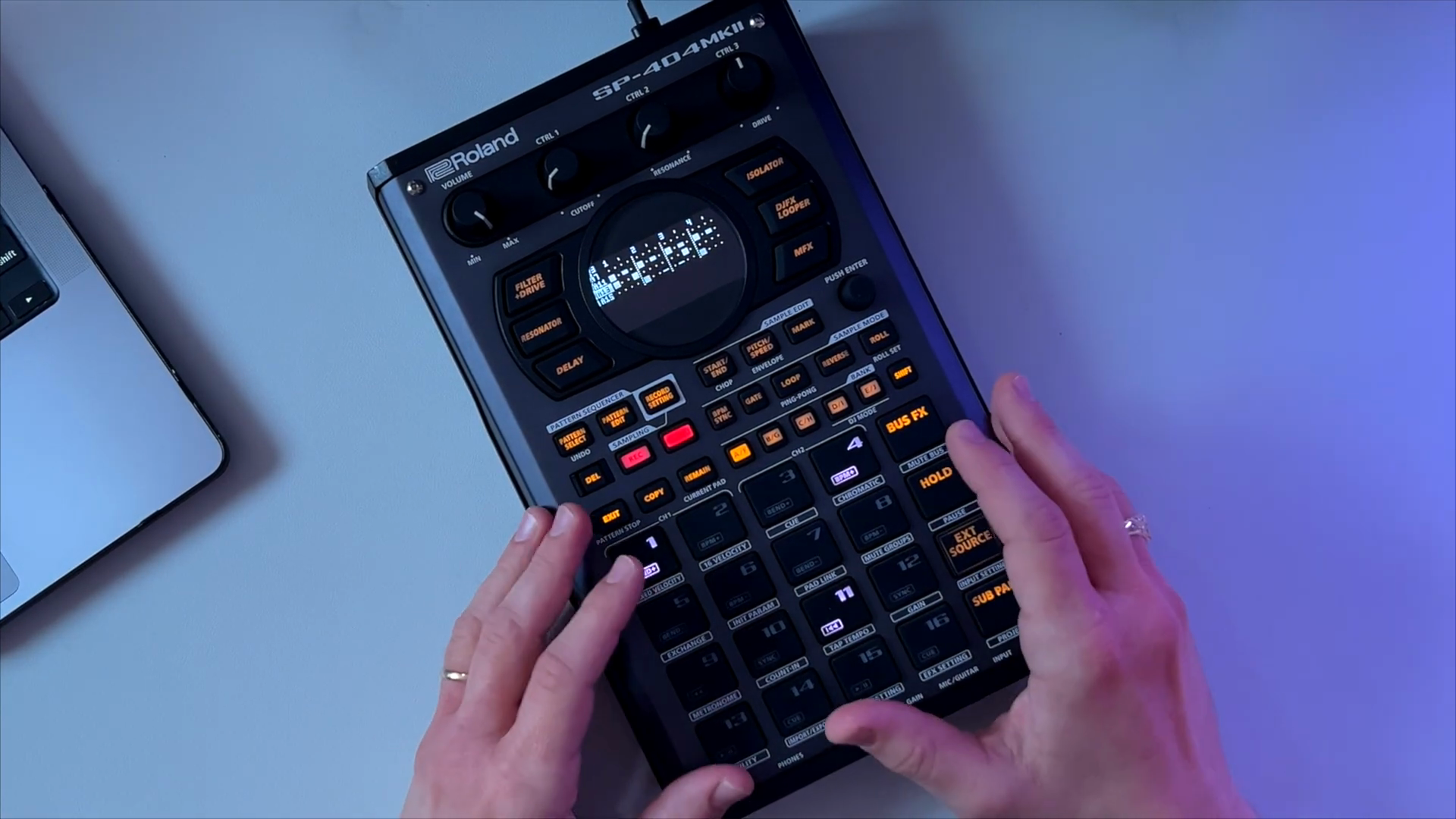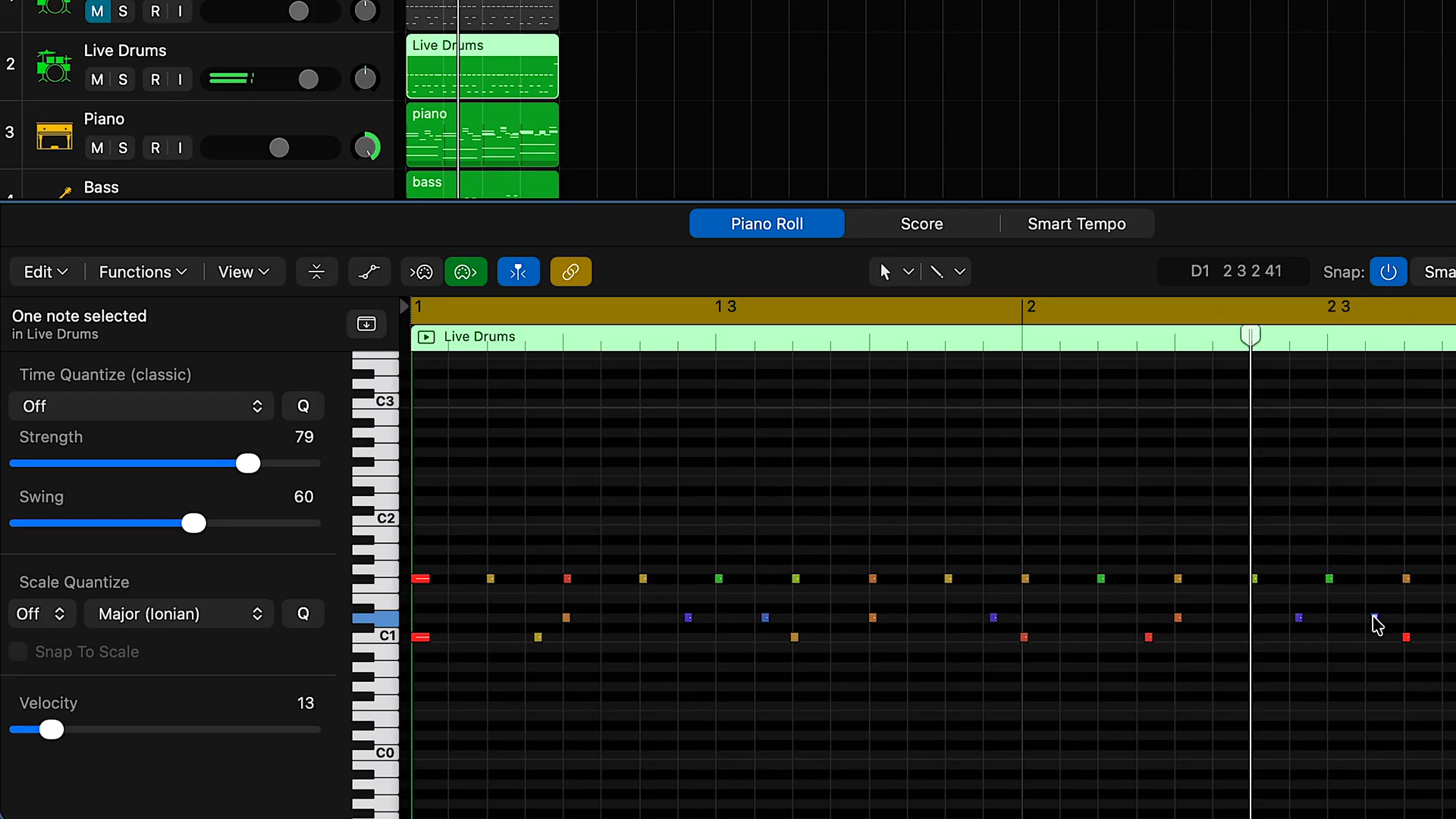
The kick sits in the box, the snare too. So why does the beat still feel different? In his video published on November 28, 2026, sunwarper uses his own drum performance as a template and reconstructs its rhythm on the Roland SP-404MKII. Then he sends the MIDI data to the computer for comparison. The interesting part: he’s not looking for a magical humanize button, but instead examines his own deviations. For the subsequent work on the sampler, he uses the pattern sequencer of the custom firmware Doom OS. According to him, the displayed grid is explicitly not part of the stock operating system.
Not Every Hit Needs to Be Up Front
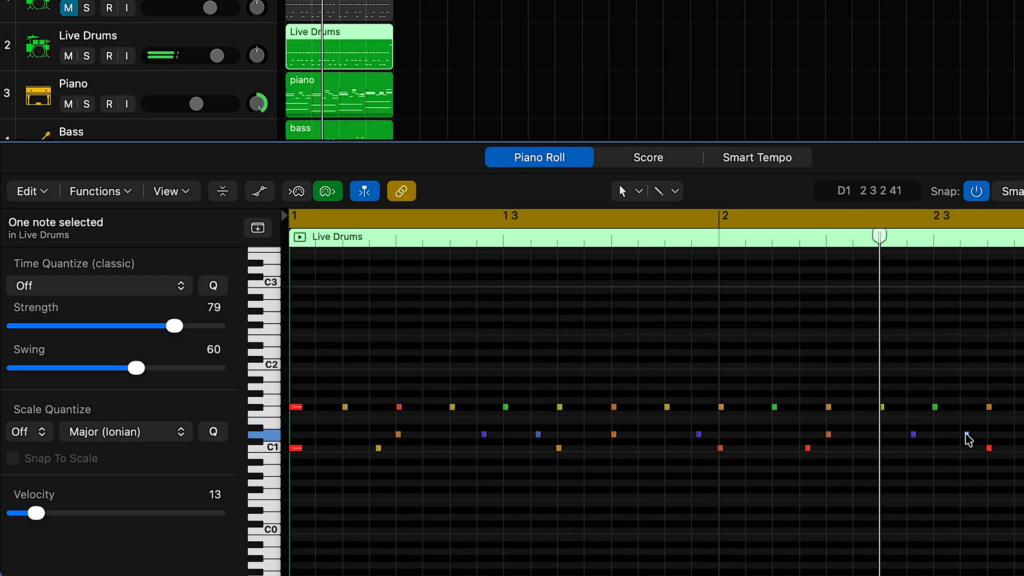
© Screenshot: sunwarper (YouTube)
“It's all those little imperfections that seem to add up.”
© Quote: sunwarper (YouTube)
In Logic, the first thing that stands out is the velocity: the steps of his programmed base version all have maximum velocity. The live performance, on the other hand, distributes its accents. This is especially clear with the snare: alongside the backbeats on two and four with values around 100, there are tiny hits with velocity 6 or 13. These ghost notes aren’t additional main actors. They move the rhythm precisely by holding back.
sunwarper goes back to the SP because he finds working there more fun. He lowers hi-hats and individual snares instead of meticulously copying every nuance of the template. For him, the quiet snares already make a big difference. But in the next comparison, something still feels stiff. Only a zoomed-out MIDI view reveals the next construction site: kick, hi-hat, and ghost notes don’t always hit together or exactly on the grid. His observation on this:
Roland SP-404MKII – Price & availability
Check price & availability on Amazon →
Advertising – affiliate link. If you buy through this link, we may earn a commission – at no extra cost to you.
Swing Isn’t the Whole Story
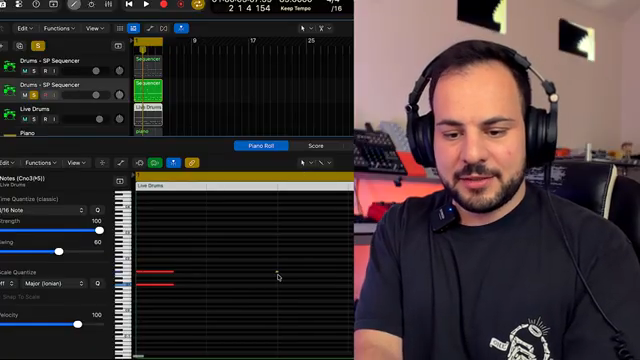
Now, recreating turns into a musical decision. sunwarper wants to keep the main snares locked in, but lets the ghost notes drift off the grid. He shifts individual positions and again compares with the live recording and the rigid base version. This repeated A/B listening makes the experiment fruitful: each editing round must measure up to the played original. His interim conclusion gives timing particular weight:
© Screenshot: sunwarper (YouTube)
“I think the microtiming is maybe a bigger difference than the velocity, because as soon as you get those things moving off the grid, it starts to sound a little more human.”
© Quote: sunwarper (YouTube)
He then examines swing separately. In Logic, he increases the value to about 60 and demonstrates how certain notes are shifted. For him, this creates movement and shuffle, but doesn’t capture all the deviations of his performance—such as those at the start of the second bar. That’s why he ultimately combines individual shifts with sixteenth-note swing and the dynamic changes.
This doesn’t result in a clear winner. Later, sunwarper counts the ghost notes as one of the biggest changes; in his conclusion, he names velocity and microtiming as decisive together. This is a musical self-experiment, not an isolated parameter test. And his goal remains explicitly optional: if you’re after an industrial-robotic sound, locked steps might be just right.
Good Pads, Many Modes
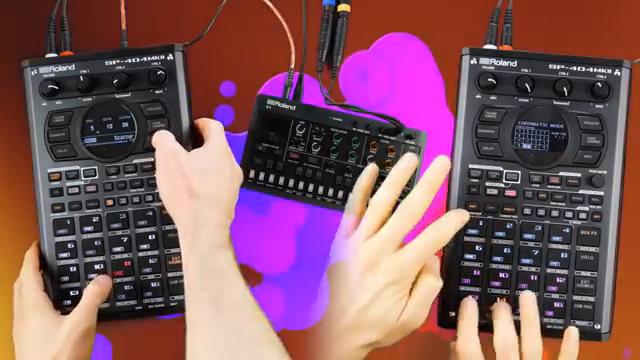
© Screenshot: AudioPilz (YouTube)
“These might be the second best pads I've ever played, but there's a lot of switching between operation modes.”
© Quote: AudioPilz (YouTube)
How much editing can playability handle? In his Bad Gear episode on the SP-404MKII from November 10, 2023, AudioPilz describes exactly this friction. He works with samples, effects, and overdubs, praising the feel of the pads but not every mode switch. His verdict on the pads brings both together:
Or Just Keep the Perfect Moment
The Midlife Synthesist demonstrates a different approach in his Skip Back video from May 22, 2022. Sound elements exported from Ableton form the basis, then he plays additional drums on the pads. Instead of recreating a successful passage, he recalls it using Mark and Skip Back, trims it by waveform, and assigns it to a pad.
The difference from sunwarper’s detailed work is productive: here, the interplay is preserved as a recording; there, its components become individually editable. The Midlife Synthesist therefore emphasizes the audio side of Skip Back:
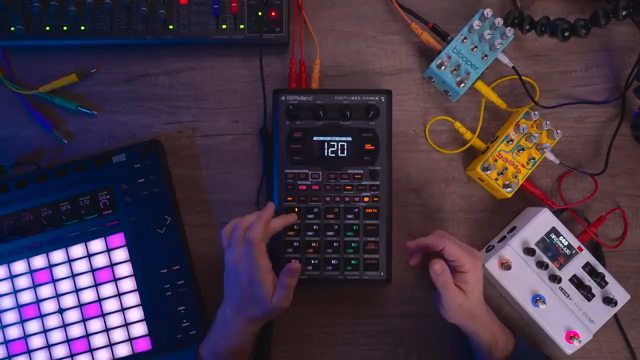
© Screenshot: The Midlife Synthesist (YouTube)
“This records audio and that makes all the difference, honestly.”
© Quote: The Midlife Synthesist (YouTube)
The most appealing idea here isn’t that every beat should be a little less precise. It’s the freedom to decide for yourself which quirks are allowed to stay. sunwarper reconstructs them hit by hit; The Midlife Synthesist captures them while playing. The grid can remain a tool. It just doesn’t always have to have the last word.
Roland SP-404MKII – View product
Check price & availability on Amazon →
Advertising – affiliate link. If you buy through this link, we may earn a commission – at no extra cost to you.
Videos for this article
All other articles featuring the Roland SP-404MKII
 SP-404MKII: Pattern Instead of Looper – Keeping the Beat Flexible
 Verysickbeats Flips Madlib’s India Formula on the SP-404MKII: A Beatmaker’s Field Guide
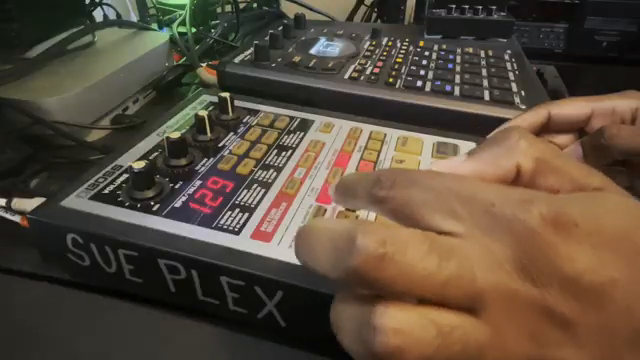 Verysickbeats Proves Old Gear Still Smacks: SP-303 vs SP-404MKII Beat Session
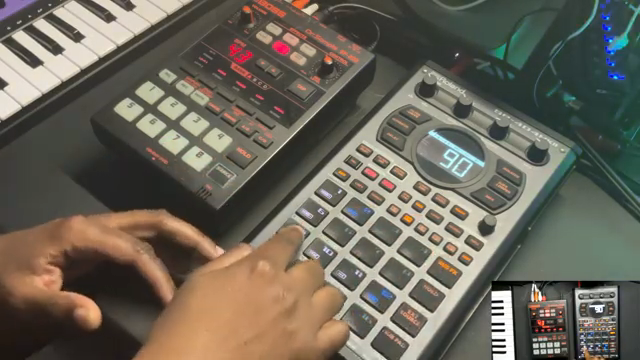 Verysickbeats Flips Dilla Bass Magic on the SP404MKII
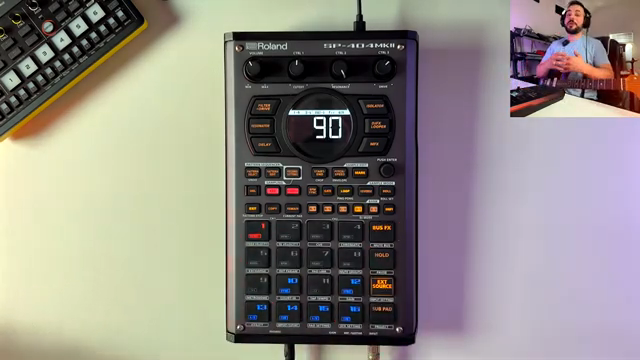 sunwarper vs. Six Strings: Guitar Abuse with the SP404 MK2
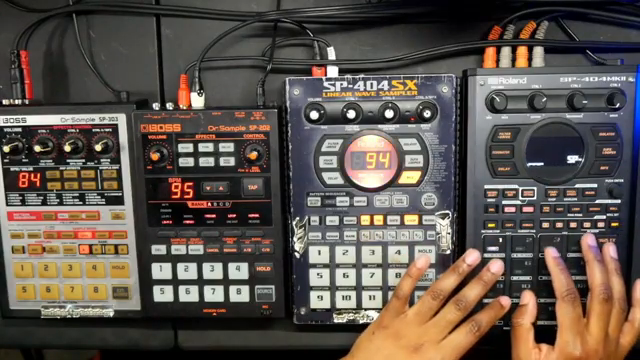 Verysickbeats Calls Out the SP-404MKII: What’s Still Missing in 2026?
 sunwarper’s SP404 MK2: Five Years Deep and Still the Studio Chameleon?
 Chris Laps Unleashes Sidechain Mayhem: SP-404 MkII Gets the Ducking It Deserves
 RolandChannel Delivers: SP-404MKII V5.50 and the Art of Side Chain Compression
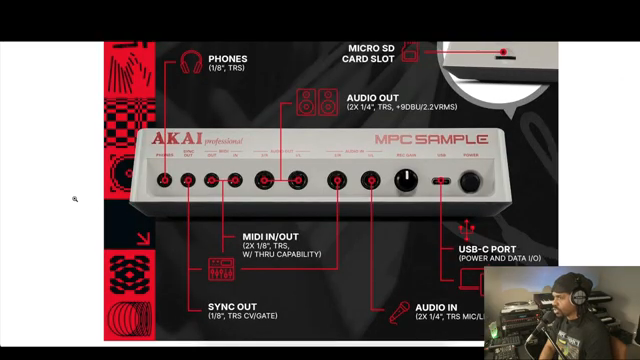 Verysickbeats Drops the Real on the MPC Sample: No Hype, Just Facts
 TAETRO’s MPC Sample: Workflow Weapon or Missed Beat?
 SON WU Digs Into the MPC Sample Leak: Classic Vibes, Modern Tricks
 Verysickbeats Flips Psychedelic Rock: SP-202 & SP-404MKII Go DAWless and Dirty
 Free Beat Turns the SP-404MKII Into a Groovebox Monster
 Free Beat Unleashes the SP-404MKII DJ Mode: More Than Just Decks and Drops
 Free Beat’s Drum Sampling Mayhem: SP-404MKII Unleashed
 Verysickbeats Digs Into Pete Rock’s Genius: Basslines, Boom-Bap, and Beat Science
 Free Beat’s Deep Dive on the SP-404MKII: Is It the Right Kick-Off for Music Newbies?
 Free Beat’s Fireball & SP-404mkII: One Sound to Rule the Rave
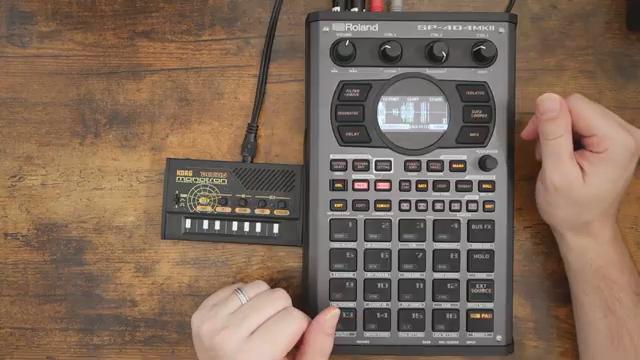 Free Beat’s SP-404MKII: The Sonic Swiss Army Knife You Actually Want
 Soulbrixofficial’s Dream Live Set – The Dawless Adventure
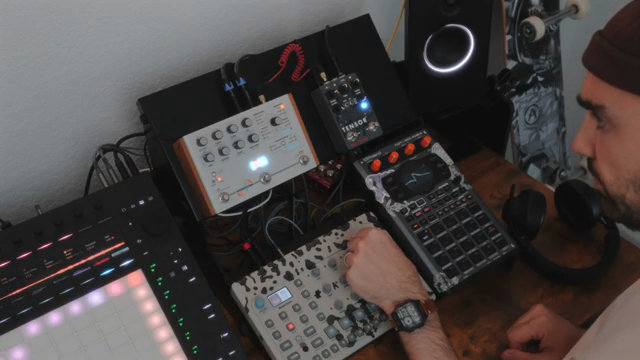 Taetro’s Synth Setup: The Streetwise Groove Machine
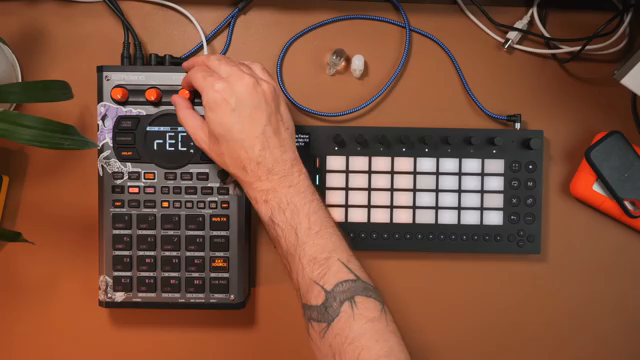 Taetro’s Masterclass: Ableton Move Meets SP404mk2
 Taetro’s Groovebox Run: From Subwoofers to Street Beats
 RolandChannel’s SP-404MKII V5 Update: A Hybrid Workflow Powerhouse for DJs and Producers
 RolandChannel Unveils SP-404MKII v4.04: Workflow Upgrades for the Modern Beatmaker
All YouTube videos featuring the Roland SP-404MKII
Primary – main topic (215)
 The Big Problem With Programmed Drums (and How I Fixed Mine)
 SP 202 + SP 404MKII : Proof You Don’t Need New Gear To Make Fire Beats
 Does the SP404 MK2 Need Fixing? DOOM OS and the Rise of Custom Firmware
 SP‑303 vs SP‑404MKII: The Grit Test (No Talking)
 J Dilla Inspired Techniques: The 3 Sound Formula
 Madlib Inspired Techniques: The India Formula on the SP‑404MKII
 Logic Pro Synced SP‑404MKII + Realistic Instrument X Strings (Instrument X)
 SP404 MK2 Live Set! Performing My New EP Using Just a Sampler
Show all (207 more)
 How Kev Brown Made Spazzz Hit Hard With Almost Nothing
 Producers Don’t Realize You Can Make DJ Scratches With the SP‑404MKII
 I Finally Flipped the Transformers Theme Song | Beatmaking Sample Flip
 What Happens When You Only Have a Guitar and a Sampler?
 Why I Make More Music On This Than Any DAW
 This Technique Slaps (SP‑404MKII FX + TR‑REC Beat Build)
 3 Sidechain Tricks Every SP‑404MKII User Should Know
 SIDECHAIN COMPRESSSION!! Roland SP-404 MkII Version 5.50 Update!
 What To Do When You’re Not Inspired (SP‑404MKII Beat Session)
 I Forgot I Had This Record… and the Sample Is INSANE (SP‑404MKII Flip)
 ROLAND SP-404 MKII Sampler | Unboxing / Tutorial / Demo
 The SP-404MKII is an Indispensable Tool!
 SP-404MKII Works with Anything!
 A Sampler and a Groovebox Are All You Need to Make Beats | SP404 MK2 + SEQTRAK
 SP404 MK2 Beatmaking: the Insane Possibilities of Sample Chopping
 The SP-404mk2 is So Much Fun! (Sunday Sessions #205)
 Is Returning to the SP-404mk2 Difficult?
 SP404 MK2 Bus Effects Explained! (Routing Tips + My Go-To Setup)
 The Ultimate Swing Hack on SP404MKII (Step-by-Step Tutorial)
 Why you need Rza Cheatcode for Boom Bap Beat Making | Sp 404MKII Rza Inspired 9
 Ranking Every Sampler I Own in 2025 // Standalone Power, Portability and Price
 Why you need Fredro Starr's Cheatcode for Boom Bap Beat Making | Sp 404MKII Step Sequencer Edition
 How I made the SP404 MK2 Looper WAY more useful with Logic for iPad
 10 SP404 MK2 Tips I Wish I Knew Sooner
 The GOAT Sampler Combo 🐐 // PO-33 + SP404 MK2 Cook Up
 SP-404 Mk2 Beginner's Guide (Part 3): Patterns, Real Time Recording, TR-Rec Mode & Chaining
 SP-404 Mk2 Beginner's Guide (Part 2): Effects, Busses, Routing, Resampling & Skipback
 SP-404 Mk2 Beginner's Guide (Part 1): Setup, Sampling, Recording & Chopping
 Why you need Fredro Starr's Cheatcode for Boom Bap Beat Making | Sp 404MKII
 5 Things I Wish I Knew Before Making Beats on the SP404 MK2
 Roland SP-404MKII Version 5 Update has serious BACKLASH!
 Sp404 mk2 Dawless Beatmaking | Super EASY Method
 An SP404MK2 Live Set for Late Nights
 SP404 inside of MPC with Q-LiNKS
 3 Sample Chopping Methods on the Roland SP-404 for Quick Easy Chops!
 I Built a Weird Live Rig… And It Might Actually Work
 New Gear is Great, but I Always Come Back to This Dawless Combo // SP404 MK2 & Digitakt Beatmaking
 Record, Edit, and Master Your Unfinished SP-404 Tracks To Be Release Ready!
 SP-404 Guide: Pitch Shifting, Time Stretching, and BPM Sync
 It’s More Powerful than you think.
 5 Features the SP404 MK2 Still Needs (Even After 5.0 Update)
 Essential Mixing Techniques on the SP-404 for Clean Beats that POP!!
 My "Simple" Setup in Action.
 How to Turn Patterns into Stems on the Roland SP-404 MkII
 Amazing Drum Chopping Technique on the Roland SP-404 Mk2!
 4 Dusty DAWless Beats from 2024 | SP404 MK2, Digitakt & Roland P6 Cook Ups
 Vinyl Challenge: SP404 MKii & Digitakt II
 5 SP404 MK2 Synth Recipes You Need to Try! // Sound Generator is a Sound Design Secret Weapon!
 Sunday Jam - "The Dream" - 27.10.2024 (Circuit Tracks + SP404 mk2 + TR-8)
 4 Dusty Beats on Roland P-6 with SP404 MK2 & Live Guitar | This Little Sampler Gets CRAZY!
 "Skipback" needs to be on everything... Tips and Tricks + How I use it!
 SP404 MK2 Pattern Sequencer Deep Dive | Creating Full Tracks and Performing Live Sets
 SP404 MK2 Live Set // Golden Hour Poolside Beats for the Last Rays of Summer
 INSANE Sound Design for the SP404 MK2 Sound Generator | Verysickbeats
 This is my Favorite Portable Beatmaking Setup, Here’s Why | Koala Sampler & SP404 MK2 Workflow
 4 Dreamy Koala Sampler & SP404 MK2 Beats | How I Made Them with Official Integration
 5 Must-Know Underrated Features in the SP404 MK2 4.04 Update // Going Beyond the Looper & Sound Gen
 This FREE app & SP404 MK2 Are An Ambient Soundscape Secret Weapon // Perfect for Sound Design
 Koala Sampler & SP404 MK2: This Beatmaking Combo Just Got Even Better with Official Integration
 SP404 MK2 Looper Changes Everything // 4 Ways To Use It In Your Beatmaking
 Casually comparing MPC vs. SP404mk2 to a new beatmaker
 is this standalone setup portable perfection?
 4 Dusty Koala Sampler & SP404 MK2 Beats (& How I Made Them)
 How To Make Drum Samples From Scratch | SP404-MK2 Sound Generator
 3 Ways to Make the Most of SP404MK2 Sound Generator for Sound Design
 The Roland SP-404 MK II DJ MODE Deep Dive tutorial guide
 Roland SP-404 MKII: What I Like & What I Don't Like about it
 A guide to SP-404 MK II Sampling tutorial guide
 5 Ways to Make Beats with the SP404 MK2 // Beatmaking Methods For Any Setup
 roland just added AWESOME features to the SP404mK2
 The Roland SP-404MKII v4.04 Update is Here! What’s New?
 Gear that the SP-404 MK2 can Easily REPLACE after Update 4.04
 Roland SP-404MKII 4.04 Update 2 Favs | Verysickbeats
 Roland SP-404MKII 4.04 Update: Explosive Possibilities That Change Everything
 Building My Perfect Dawless Setup for 2024 | It's Crazy Powerful... But There's a Catch
 Roland SP-404 MK II TR REC step sequencer tutorial guide
 Roland SP-404 MK II Sample Edit Tutorial Guide
 I think I'm Addicted to the SP-404 Mk2 | Made a Crazy Beat using One Shot Samples 🔥
 The Roland SP-404 MK II Deep Dive tutorial guide
 SP-404 MK2 "Trap Beat" Kitchen Cook Up
 SP404 MK2 ONLY Beatmaking From Vinyl Samples // Why Have I Never Tried This Before? (Full Workflow)
 10 MORE Ways to Perform Live Sets with SP404 MK2 | Live Set Guide/Workflow
 The PERFECT Dawless Pair? Let’s Make a Beat and Find Out // Digitakt & SP404 MKII Beatmaking
 SP404 MKII Live Set | Sonic Adventures of 2023 (Synthwave/IDM/Boom Bap)
 Elevate Your Beats with This amazing Setup mpc one, sp404 mk2, Vinyl player or sampling
 Made a dope beat with various samples | Verysickbeats
 DAW-less Interludes with the Roland SP-404 mk II and MC-101
 The BEST way to connect the Digitakt & SP404MKII // Dawless Midi Sync Beatmaking Tutorial
 TECHNO MACHINE // SP-404 MK2 Long Loop Playback + Performance Tips
 The End of Lofi (Bad Gear - SP-404 MK2)
 Me Rockin an MPC Live 2 & SP404 mk2 Beat Making Video
 The World of Battery-Powered Beatmaking (SP-404 mk 2, OP-1, UNIT-4)
 Serato Sample beat making with sp 404mk2 | WPKit #345 | Verysickbeats
 Can ChatGPT Make a Beat? // Making Dawless Synthwave with SP404 MK2, Circuit Tracks and ChatGPT
 Connecting MPC ONE & SP404 mk2 for Perfect Pair
 MPC ONE & SP404 mk2 Sampling Perfect Pair
 Serato Sample beat making with sp 404mk2 | WPKit #342 | Verysickbeats
 3 Dusty SP404 MK2 Beats
 Serato Sample beat making with sp 404mk2 | WPKit #341| Verysickbeats
 AudioKit Pro King of Bass Beatmakng Tutorial//A Dawless Secret Weapon for Massive Bass?
 How to Flip Samples and Finish Beats with Koala Sampler & SP404 MKII | Sampling Workflow Guide
 Bleass Voices Can Make Any Voice SING // SP404MKII Beatmaking with Vocal Harmonies
 Sampling Analog Gear with SP404 MK2 Skip Back - An Easier SP Sampling Workflow
 How to Chop and Flip Samples for Beat Making | WPKit #333 | Verysickbeats
 4 Ways to Use the SP404 MKII for Ambient Sound Design // A Secret Tool for Lush Soundscapes
 Koala Sampler and SP404 MKII Live Set | Dusty Sample Flips and Boom Bap Blips
 Analog Cases for MPC Live 2 & SP404 mk2
 I am become SP-404 MK2 Man.
 The Benefits of Different Samplers When Making Beats: Tone Shaping & Workflow//PO33 and SP404MKII
 How To Midi Sync Sp 404mk2 with Mpc 2000xl | Verysickbeats
 The Annoying & Addictive SP-404 Mk2: Making a Beat // Compact Creations
 404 day | SP-404MKII beat set 2023 | Verysickbeats
 Making Chill Lofi from Jazz Samples on the SP404 MKII//My Sample Only Workflow | 404 Day Flip
 I tried to learn the SP-404 MK2 in one sitting.
 5 Ways to Perform Live Sets with the SP404 MKII//A Portable But Powerful One Piece Dawless Setup
 How To Export Stems in Roland SP-404 MK2 | Verysickbeats
 Roland SP 404 mkii live beat making on instagram (arranging a beat)
 the SP404-MKII just got a LOT better
 Roland Sp404 mk2 3.0 Update: 5 features to speed up workflow
 SP-404 MK2 Update 3.0 // One step Closer to Ableton Live / Updated DJ Mode
 Roland SP-404MKII V3.0 Update Overview
 SP404 MKII Live Set | Music for Imagined Landscapes (Synthwave/IDM/Lofi)
 SP-404 MK2 + Model 1.4 // My Cleverest Hardware FX Routing Combo
 Groovebox Learning Curves RANKED! // Op-1 M8 Circuit Deluge Octatrack Tracker Sp404Mk2
 SP404MKII and Sinusedo iOS App: Ambient Sound Design with a Dawless Setup
 Comparing my sampler collection from best to worst // Deep Dive!
 Beats from 2022 | Circuit Tracks/SP404 MKII/Koala Sampler/PO33 (Continuous Mix)
 How To Rip Single Instruments from Samples with RipX DeepCreate | SP404 MKII Beat
 Dawless Ambient Breakdown - SP404 MKII and the free PaulXStretch App//Lush Ambience from any Sound
 BEST SYNTHS & MUSIC PRODUCTION GEAR 2022
 SP404 MKII Beat Breakdown | Boom Bap Blips and a Funky Flip
 MPC LIVE 2 & SP 404 mk2 | OutBoard Gear Workflow
 First Day with the SP-404 MKII
 SP-404 MK2 vs RMX-1000 FX Comparison // So similar yet so different
 i built the best music production desk setup
 Koala Sampler & SP404 MKII Beatmaking Workflow - Sample Chops/Arrangement/Mixing/Mastering
 3 Coolest NEW FX on the Sp404MK2 + GIVEAWAY!
 MPC Air Flavor Pro MPC LIVE MK2 - Vinyl Sim sp404
 A Portable Dawless Setup for Live Performance//How I Use the SP404 MKII and Circuit Tracks
 I Finally Bought the SP-404mkII For One Reason // But It has Latency..
 SP404 MKII and Circuit Tracks Live Set | Performing Tracks From My New Album: Radiant Visage
 SP-404 MK2 Live DJ Mode Set // Acid House n' Chill
 Synthfest UK 22: Roland SP-404 MK2 With 2.0 OS
 how I make money on youtube
 Circuit Tracks and SP404 Workflow//Creating Tracks With A Dawless Setup
 Sp-404mk2 Super Easy Live Performance Template
 Sp404 mk2 vs Sp404 sx vs Sp303 Reverse Feature | Who Wins?
 13 SYNTH & MUSIC TECH QUESTIONS: Desert Island Synth? How I Record my Synths, Circuit Pro Thoughts?
 Can the SP404 Work as a Synth? | Creating Synth Libraries using Analog Samples
 Sp404 mk2 Vocoder with Minimoog Model D App
 Sp404 mk2 Iconic Drum Pattern by Larry Smith
 I Sampled my PO-32 into Sp-404 mk2 | Sick Results!!
 SP-404 MK2 new FX Midi Mapping // Say goodbye to menu diving
 Sampling Analog Gear on the SP-404 | Building a Beat from Scratch (Volca Beats/Prophet08/SP-404MKII)
 Sp-404mk2 needs only 1 FX for Limitless Beats!
 Roland SP-404 MK2 : Ambient Workflows and Techniques for Relaxing Sonic Textures
 I ran an $80 Casio into $2000 of FX Pedals and Samplers - Ft. Blooper, Habit, Nightsky, Sp404Mk2
 Koala Beat Arranging & Sp404 mk2 FX
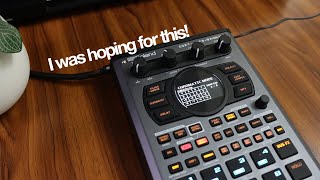 SP-404 MKII Update 2.0 - They did it!
 My Take on SP-404 MK2 Update 2.0 // Step Sequencer (!!!) + More
 SP-404 MK2 DJ Mode House n' Chill // + DAWLESS gear breakdown
 SP-404MK2 2.0 Update | My Top 5 Favorite
 Roland SP-404MKII Sampler Version 2.0 Update
 AMAZING CHANGES! SP404 mk2 Update Walkthrough + Step Sequencer Tutorial
 Sp404 mk2 Tutorial | How to Transfer Audio Between Projects
 Sp404 mk2 Tutorial | How to Play 1 Pad Chords
 Korg Volca FM 2 // Does it Ambient though? (Feat. SP-404 MK2)
 Ambient Sound Design on the SP-404MKII | Creating Soundscapes From Circuit Tracks and Korg Minilogue
 Home Studio Tour 2022 - A beat makers setup!
 New Sp404mk2 Workflow: Skip Back Changes EVERYTHING!
 SP-404 mk2 DJ Mode | Ultimate Beat Set Walk-Thru Tutorial
 Sp404 mk2 Chord Progressions Cheat Code!
 Sp404 mk2 Bassline Cheat Code!
 Sp404 mk2 beat making as a controller | WPKit #281
 Sp404 mk2 Vid for those still waiting
 Building My Live Stream Setup for Dawless Jams// 3 Ways to Play Live Sets Without a Computer
 Top 2 master FX on the Roland sp404 mk2 for HipHop Beats
 making a lofi house track on the sp404 mk2 using a new effect hack
 SP-404 MK2 Tekno Beat Making Breakdown // From Scratch
 SP-404 MK2 | Making my first beat on it (it’s hard lol)
 Top 5 SP404 MK2 Sampling Features / sp404mk2 sampling
 SP-404 MK2 / Tips on making beats that AREN’T lofi hip hop/boom bap
 Selecting the right Sample before chopping | mpc live 2 sp404 mk2
 SP-404 SX vs SP-404 MK2 // Which has better FX?
 Roland SP-404 MKII - Four Months Later
 MPC Live 2 Beatmaking Video with SP404 MK2 | Slow Burn Sample Pack
 Roland SP 404 MKII Workflow Demo (no talking)
 SP-404 MK2 DJ Mode // Live House/Tekno Set ☁️
 MPC Live 2 and SP404 MK2 Combo Setup for beatmaking
 Roland SP404 MK2 Sequencer | sp404 mk2 pattern Tutorial
 Roland sp404 mk2 Sampling and Chopping Samples Tutorial
 SP-404 MK2 DJ Mode Basics + NEW UPDATES // Perfect Gateway into DJing?
 Roland sp404 mk2 Sampler | Top 5 reasons why I purchase it.
 SP-404 MK2 + Side Chain Compression // There’s a hack
 SP-404 MK2 // Sampling a drum break into your own custom kit
 Roland SP-404 MK2 : EVERY. SINGLE. EFFECT.
 SP-404 MK2 vs MPC One // Are they on the same lvl now?
 My Favorite Synths & Music Tech 2021... so far!
 SP-404 MK2 + OP-Z // Live House Set + Chill
 SP-404 MK2 // How does it hold up with ambient music though?
 SP 404 Mk1: Still Worth Having, Or is it Time to Sell? Mk2 GAS-POCALYPSE
 Roland SP-404MKII - Beat Making Session In The Woods (with scratch, no talking)
 Roland SP-404MKII Linear Wave Sampler | First Impression
 Introducing the Roland SP-404MKII Creative Sampler and Effector
 SP-404 MK2 // Everything you need to get started with Multi FX
 Roland SP-404 MKII - Beatmaking + First impressions
 ALL SP-404 MK ii Multi FX // Consider this before buying?
Substantial coverage (37)
 10 More Underrated Beatmaking Channels (All Under 20K Subs)
 Roland: TR1000 firmware 1.2 - Superbooth 2026
 Lots of love & 2 new sequencers: Monk TMA vs. Tato Aline | ST275
 10 Underrated Beatmaking Channels You Need To Know
 Who I am, My Production Gear and Dawless Setup, Goals for the Future
 BEST SYNTHS & MUSIC PRODUCTION GEAR 2024
 A beat makers basement! - 2024 full studio tour
 NEW Roland AIRA P-6 Sampler!
Show all (29 more)
 GAS Remedy // These simple concepts will help you SAVE MONEY
 I Turned My Push 3 into an Sp404Mk2... But There ´s a Catch 👀 // ft: Dirtywave M8, Akai Midimix
 Logic Stem Split is Pure Sorcery, Here’s How to Make the Most of It for Sample Flips
 Korg Kaoss replay - Misunderstood but not useless!
 How To Tempo Match Samples To Your Drums: mpc one tutorial
 FaderFox PC-12 / The PERFECT Midi Controller for DAWLESS Set Ups
 major limitations of ableton push 3?
 5 Reasons Why the PO-33 KO is Still a Great Sampler // Making the Most of Your Gear
 Comparing the EP-133 to my other samplers / Do you really need it?
 Teenage Engineering EP 133 K.O II REVIEW – Does this $299 sampler live up to the HYPE?!
 Korg KAOSS REPLAY // Pros & cons vs the competition (SP404 MK2, MPC, Blackbox) // Tutorial
 Flex Beat in Standalone
 i bought an OP-1 Field // did I make a $2000 Mistake?!
 M2 Macbook Pro For Music Production in 2025 | Massive Power at a Cost (A Producer’s Honest Thoughts)
 the perfect music making setup with NO COMPUTER
 Using an AI Sampling Tool to LVL UP my Live / DAWLESS Set up
 Apple changes MUSIC PRODUCTION.
 DAWLESS Gear + Hardware I’ll NEVER Sell and Reasons why (pt. 2)
 Synth / DAWLESS Gear that i'm SELLING and reasons why (pt. 2)
 PO33 Lofi Beatmaking: Building a Dusty Beat Sampling Synths and Drums from an iPhone
 Why I Still Use These Boxes On My Beats
 What’s the difference between a synth/sampler/groovebox/sequencer?
 PO-33 Sample Beatmaking & Sequencer Tutorial // This Sampler Makes Everything LOFI
 Before I Print My Beats | MPC Live Track Mute
 the perfect music producer home studio | studio tour 2022
 Victim of GAS? // A Guide to mastering gear you already OWN
 Chat with JFilt My 1st Live Stream (replay)
 Model Samples // First Impression + Beat Walkthrough (Don't use 🎧 )
 10 Great Synth & Music Production Gifts under $150
Mentioned (21)
 4ms Podcast Ep.9: claire rousay
 10 minutes, no manual, no prep – Akai MPC Sample No Manual Challenge: Can we make a beat?
 Polyend Mess is an INSANE Value!
 Bad Gear - P-6
 The Roland P-6 After One Month of Traveling With The Sampler
 This App Puts the SP404 MK2 Vinyl Sim in Your Pocket… Is It Even Better?
 I Haven't Talked About This Synth (Modal Cobalt 5S)
 Made a Crazy Beat on the New Roland Fantom 7 EX Synthesizer 🔥
Show all (13 more)
 I almost returned the Yamaha SEQTRAK, but then I realized...
 Bad Gear - Synthesizer Plays You
 Teenage Engineering EP-133 KOII: 3 things we love... and 3 things we don't
 my mobile music production & creative travel bag
 How Synthstrom Made Deluge Immortal // Updates & Open Source Community Firmware 🔥
 MPC 2000xl & MPC LIVE 2 track out songs
 Is the OP-1 Field Worth $2000?!?
 Sonicware SmplTrek Sampler / Jack of many trades, does it master any? // SampleTrek Review, tutorial
 The Circuit Rhythm got a neat little update
 Is this what DAWLESS sets are missing? // RMX-1000 Builds + Drops
 TR-6S Update 1.5 // What's new about it + Beat from Scratch
 Akai MPK Mini Play MK3 | Should You Buy??
 AKAI MPK MINI PLAY WORTH IT IN 2022?