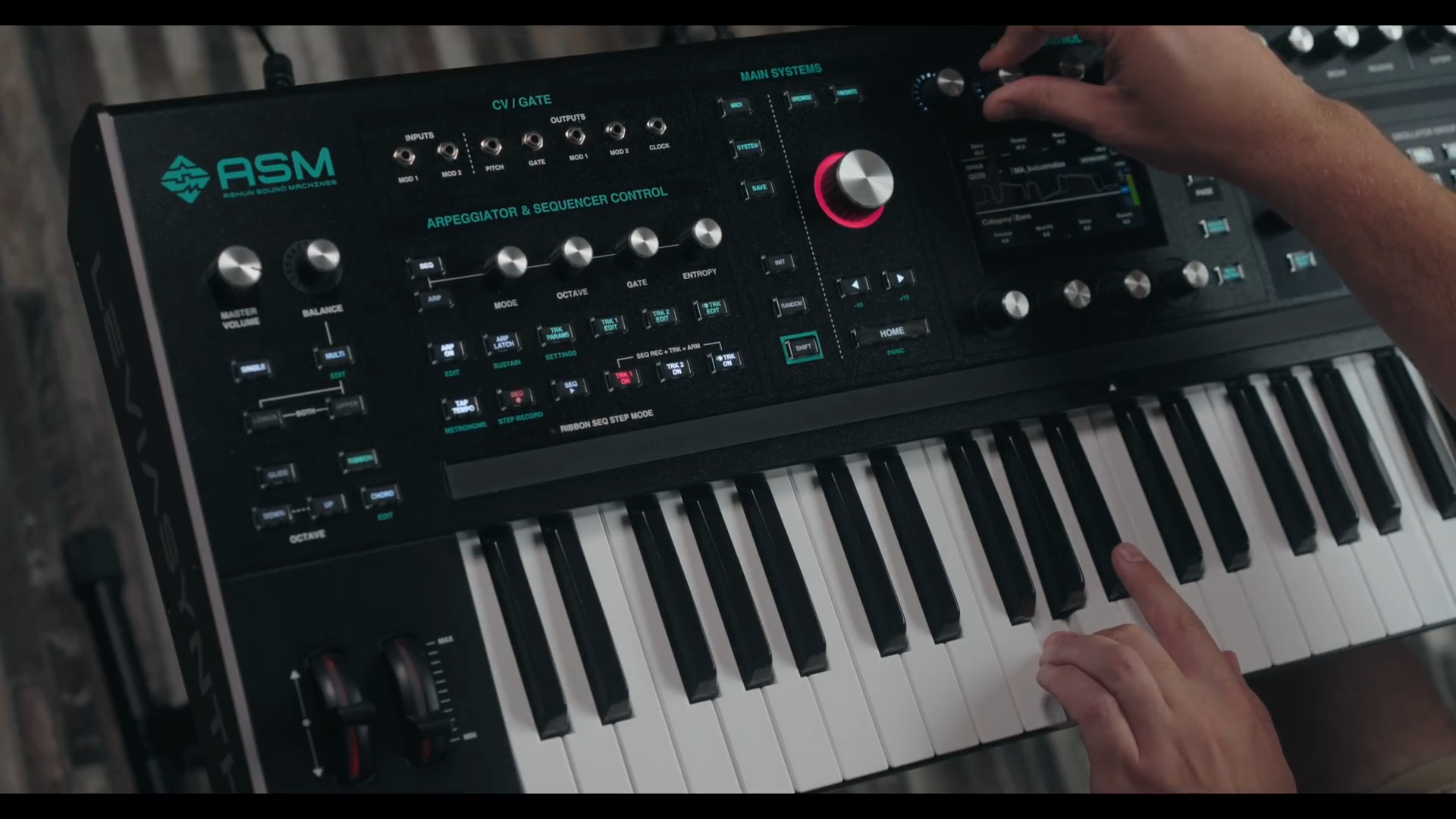
A synthesizer can offer more possibilities and still end up in fewer songs. This very tension makes Devin Belanger's comparison of Leviasynth, 3rd Wave, and UDO Super Gemini, published on November 28, 2026, so interesting. For him, the ASM wins in synthesis depth and value for money. But when a musical idea needs to take shape quickly, the greatest range of options isn't always the best companion.
A Lot of Value, Not an Automatic Favorite Sound
© Screenshot: Devin Belanger (YouTube)
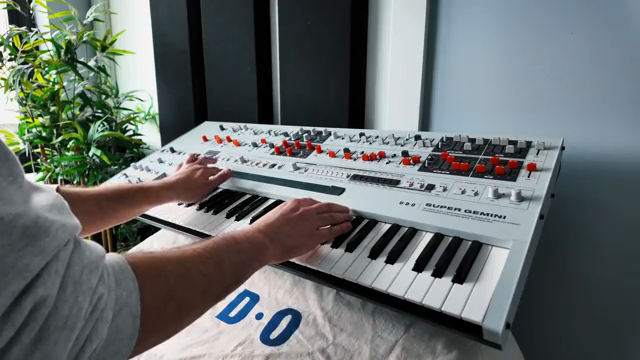
“It's just impossible to ignore how great the value is compared to these other two synthesizers,”
© Quote: Devin Belanger (YouTube)
Belanger describes the Leviasynth as largely a blank slate: less immediately distinctive in its basic sound, but especially malleable. In his comparison, eight oscillators per voice stand against three in the 3rd Wave and two in the Super Gemini. There are also extensive modulation options and control over the gain structure at the analog filter. He attributes the spontaneously warm vintage character more to the 3rd Wave, the wide binaural spaciousness to the Gemini. These are his listening impressions, not a ranking of musical expressiveness.
When it comes to money, his verdict is clearer. For the Leviasynth keyboard, he mentions frequent offers around $2,250 USD, and for the desktop version $1,600 USD without reduced voice count. This places the ASM at roughly half the price of the two main competitors. These are his US price indications, not verified Austrian retail prices. Belanger also refers to affiliate links and promotes his own patch banks in the video. Still, he leaves no doubt about the value:
ASM Leviasynth – Amazon keyword search
Search for this product on Amazon →
This link opens an Amazon keyword search. Depending on availability, other results may be shown.
Advertising – affiliate link. If you buy through this link, we may earn a commission – at no extra cost to you.
When Repetition Gets Gaps
What this depth can mean musically is demonstrated by Scott from Scott's Synth Stuff in his tutorial 'Unlocking the Full Power of the Leviasynth Sequencer,' released back in February. He starts with a multi-patch of bass and upper synth voice; with the bass, extra key pressure leads to wobble. Then he clears the existing sequence and builds a new one.
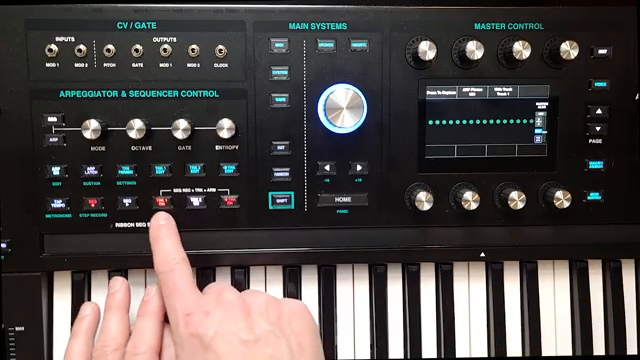
Scott records a bass figure in real time and explores its details. He scrolls through the recorded steps using the ribbon. He explains how to advance or delay notes for more groove and lowers the playback probability for individual notes. One gets only 37 percent. Thus, the loop doesn't become a completely different idea, but a figure whose gaps don't fall in the same place every time. Scott explains the setting:
© Screenshot: Scott's Synth Stuff (YouTube)
“And that will mean that this one here has only a 37% chance of playing each time”
© Quote: Scott's Synth Stuff (YouTube)
Movement Gets Its Own Track
© Screenshot: Scott's Synth Stuff (YouTube)
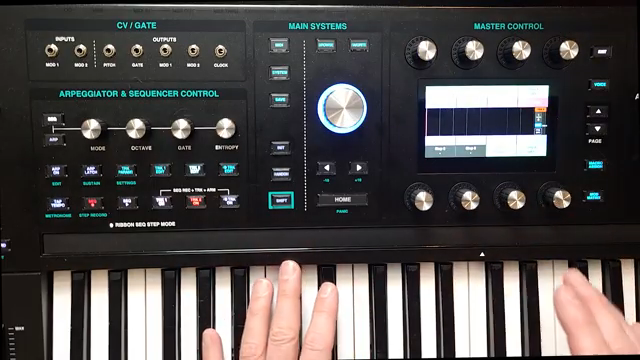
“There's that sequence that we created in the sequencer it's now an arpeggio”
© Quote: Scott's Synth Stuff (YouTube)
Scott's demonstration remains pleasantly hands-on. When the second recording doesn't sit rhythmically right, he deletes the track in question and re-enters the notes via step input. He then records macro movements on a dedicated track. During playback, he shows the continuous curve instead of mere value jumps. For evolving textures, that's the appealing point: not only does the note sequence repeat, but a shaped change in sound can also be recalled.
Scott builds a small performance from this by first bringing in a note track, then the second, and finally the macro track. To finish, he transfers a self-created sequence into a user phrase of the arpeggiator and calls it up via the keyboard. The programmed material thus becomes a playing gesture again:
Not Every Detour Is Wasted Time
Belanger's objection is therefore not aimed at expressive possibilities. He praises the Leviasynth for polyphonic aftertouch, ribbon, and macros, with which prepared presets can be extensively transformed. However, anyone setting up this expressive control themselves has to go through menus. He finds the Super Gemini more accessible for immediate playing; with the 3rd Wave, he appreciates the balance between depth and quick sound design.
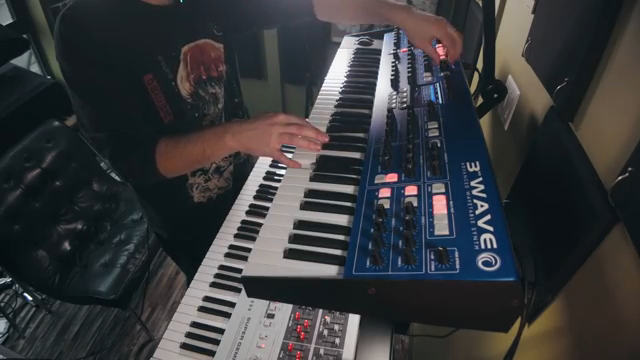
With the Leviasynth, he says, it's sometimes precisely the abundance of options that slows him down. Starting from the initialized sound, he uses it less often in everyday production. At the same time, he praises the patch management for prepared sounds and counters his own criticism with a decisive moment: he plays a patch that, for him, already provides the spark for a song.
© Screenshot: Devin Belanger (YouTube)
“sometimes I'll make a patch that's just so inspiring, it inspires a song all on its own like this one.”
© Quote: Devin Belanger (YouTube)
A cheaper purchase and a shorter path to music are not the same thing. But Scott's small variations show what can emerge on a longer path. What matters is whether you're looking for a sound to fit an existing song—or a sound that tells you what song it could become.
ASM Leviasynth – Amazon keyword search
Search for this product on Amazon →
This link opens an Amazon keyword search. Depending on availability, other results may be shown.
Advertising – affiliate link. If you buy through this link, we may earn a commission – at no extra cost to you.
Videos for this article
All other articles featuring the ASM Leviasynth
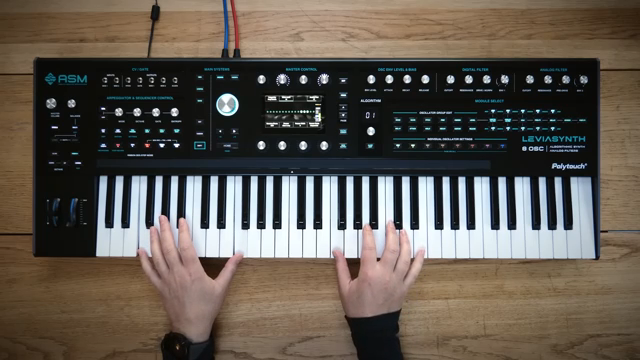
All YouTube videos featuring the ASM Leviasynth
Primary – main topic (24)
 One Megasynth To Rule Them All (Leviasynth vs 3rd Wave vs UDO Super Gemini)
 why ASM Leviasynth was made for ebm
 ASM Leviasynth - Sounds Only - Knobcon 2026
 Unboxing and First Impressions — ASM's Leviasynth.
 ASM Leviasynth and Groove Synthesis 3rd Wave Both Create Crazy Evolving Sounds
 ASM Leviasynth In Action — Unboxing & Walkthrough
 ASM Leviasynth Review: Are Synths Getting Too Powerful?
 ASM Leviasynth Custom Patches / No Talking (Analog, Experimental, Oberheim, Vintage, Ambient, Pop)
Show all (16 more)
 ASM Leviasynth — First Look at the Hydrasynth Successor
 ASM Leviasynth: The Most Ambitious Synth of 2026?
 ASM Leviasynth - Patch Reaction!
 Exploring the new ASM Leviasynth! // unboxing and first impressions
 Best Of Superbooth 2026 (my top 5 synths)
 Master the Leviasynth: Shortcuts, Hacks & Pro Techniques
 Why the Leviasynth Might Be the Last Synth You Ever Need
 Unlocking the Full Power of the Leviasynth Sequencer
 Best Leviasynth Bass + Leads: Best of 500+ Presets
 Best Leviasynth Plucks and Keys: Best of 500+ Presets
 NAMM 2026 - The Most Unique Synths & Keyboards
 Best Leviasynth Pads: Best of 500+ Presets
 ASM Leviasynth Revealed: This Revolutionary Synth Changes Everything!
 I Have Leviasynth And It's GLORIOUS
 ASM Leviasynth - It's A Beast - SonicLAB Review
 Leviasynth Journey with Dominic Au – Part 2: Soundtracks
