If you thought the Synclavier was a fossil from the Jurassic Park of digital synths, think again. Sonicstate dives into the Regen—a box that fuses classic 80s DNA with a kitchen-sink approach to synthesis. Additive, subtractive, FM, and sampling all pile in, and you can layer them like a rave sandwich. Don’t expect gentle nostalgia; this is a modern street weapon with enough multitimbrality to make your DAW sweat. And yes, sampling with a £20 USB mic actually slaps.
19. October 2026
SPARKY
Sonicstate Unleashes the Synclavier Regen: Old-School DNA, Modern Mayhem
Arturia Synclavier V, Knob controller, PSV-IO, Synclavier Go, Synclavier Regen
Legend Rewired: The Regen Story
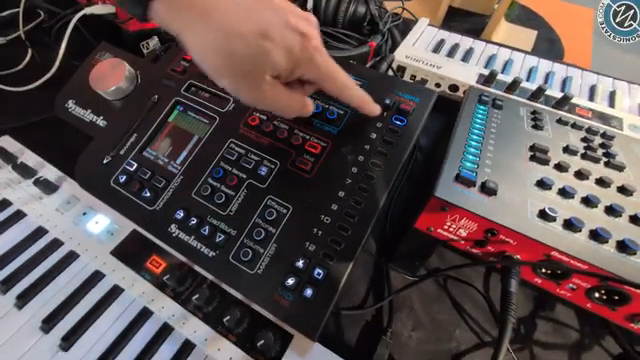
Sonicstate gets right into the guts of why the Synclavier name still rings out. The Regen isn’t just a retro cash-in; it’s the direct descendant of New England Digital’s beast, but now pumped up with modern muscle. Cameron Jones, the original mad scientist behind the code, kept the torch burning through the wilderness years, and now Regen is the hardware offspring that refuses to die quietly.
The Regen brings back that unmistakable Synclavier character, but forget about being chained to sine waves and dusty sample libraries. This box is loaded with digital and analog delays, direct sampling, and the promise of old-school R2R ladder DAC outputs via the upcoming PSV-IO. It’s not just about nostalgia—it’s about squeezing the weirdest, wildest sounds from a machine that’s both familiar and totally new.
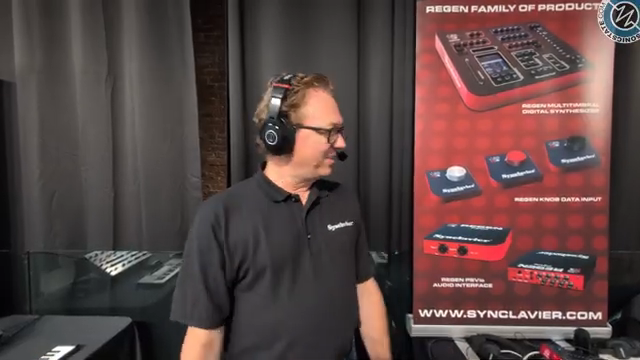
"It's got a sound, you know? And that's what we say, legendary sound, reborn, right?"
© Screenshot/Quote: Sonicstate (YouTube)
Layer Cake: 12-Part Multitimbral Mayhem
"Each timbre can be made up of up to 12 partials."
© Screenshot/Quote: Sonicstate (YouTube)
Here’s where things go from tasty to downright decadent. Regen serves up 12-part multi-timbrality: every part can be a different instrument—drums, bass, pads, leads—so you can basically perform a full warehouse set from a single box. Each timbre, in turn, can be stuffed with up to 12 partials, and every partial gets to choose its own adventure: additive, subtractive, sample-based, or FM.
You’re not just layering sounds, you’re stacking synthesis engines like a mad scientist in a rave bunker. Want a drum kit that morphs into a choir run through a supersaw, all modulated by harmonics you draw yourself? Go for it. The architecture is pure playground for anyone who’s ever dreamed of building their own sonic Frankenstein.
USB Mics & Sample Slicing: Regen Gets Dirty
Sampling doesn’t have to mean pristine studios and expensive gear. Regen’s direct sample-in with USB mics is gloriously low-fi—and it works. Plug in any cheap USB mic, hit record, and you’re off. The workflow is streamlined: pitch detection, normalisation, auto start/stop, looping, and even the ability to convert your sample into additive synthesis frames. The demo uses a bargain-bin mic, but the results are far from cheap.
Once sampled, you can twist and resynthesize the material into wild, evolving frames, loop it to infinity, pan, detune, and layer until your sound is unrecognisable. It’s the kind of creative chaos that makes you want to sample the nearest toaster and see what happens. Some of the magic is visual—and the best moments are better heard than described, so watch the video if you want to see Regen’s sampling workflow in action.
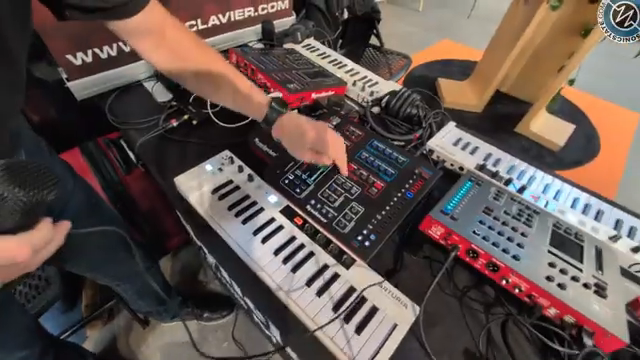
"Yeah, this is just an inexpensive USB mic that I got off of Amazon, just for demonstration purposes."
© Screenshot/Quote: Sonicstate (YouTube)
Sonic Gymnastics: Additive, FM & Beyond
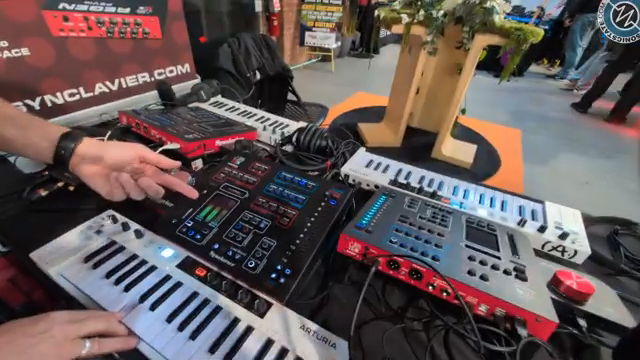
"It does FM synthesis."
© Screenshot/Quote: Sonicstate (YouTube)
The demo is a rapid-fire masterclass in sonic bending. Sonicstate walks through basic FM (yeah, you can still do DX-style clangs), but then goes off-script with additive harmonic editing—literally drawing new timbres by stacking harmonics on both carrier and modulator. The result? FM that isn’t chained to sine waves, giving you metallic, glassy, or just plain bonkers textures.
Then comes stereo detuning (old-school chorus without the cheese), supersaw layers, and blending subtractive with additive and sampled elements. This isn’t your grandad’s synth; it’s a compositional playground. There’s a reason the video leaves some features unexplained—half the fun is seeing and hearing how these techniques mutate in real time.
Premium Price, Premium Playground
At $2,499, the Regen isn’t for casual dabblers. This is a serious slab for sonic explorers, pro producers, and anyone who wants to build entire tracks inside a single box. If you’re after cheap thrills, look elsewhere—but if you want a synth that brings the Synclavier’s legacy screaming into the now, this thing delivers. The price stings, but the versatility and attitude more than justify it for the right crowd.
This article is also available in German. Read it here: https://synthmagazin.at/sonicstate-entfesselt-den-synclavier-regen-old-school-dna-moderner-wahnsinn/
Watch on YouTube:
Latest articles
Watch on YouTube:
Visit the channel:
https://www.youtube.com/sonicstate
https://www.youtube.com/sonicstate
Links from sonicstate:
Website: https://sonicstate.com/
Instagram: https://www.instagram.com/sonicstate/
Linktree: https://linktr.ee/sonicstate
Patreon: https://www.patreon.com/sonicstate
Facebook: https://www.facebook.com/wwwsonicstate
Twitch: https://www.twitch.tv/sonicstate
Sponsored links:
If you purchase via these links, we may earn a small commission – at no extra cost to you. The link opens an Amazon keyword search, and results may vary depending on availability.
Arturia Synclavier V
🔗 Check price on Amazon
🔗 Check price on Amazon
Knob controller
🔗 Check price on Amazon
🔗 Check price on Amazon
PSV-IO
🔗 Check price on Amazon
🔗 Check price on Amazon
Synclavier Go
🔗 Check price on Amazon
🔗 Check price on Amazon
Synclavier Regen
🔗 Check price on Amazon
🔗 Check price on Amazon