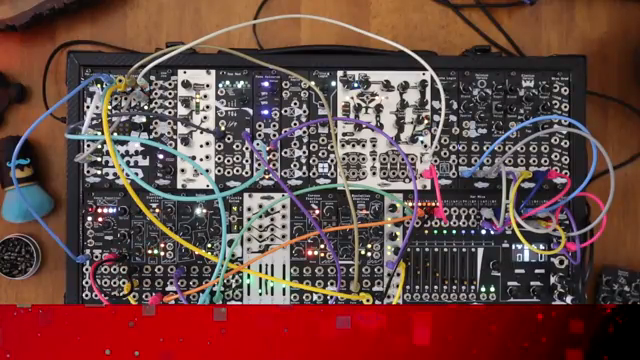
Noise Engineering, the LA-based purveyors of modular mayhem, present the Gamut Repetitor—a four-channel random quantized voltage generator built for generative melodic sequences and much more. In this official video, the team walks through five modules that pair especially well with Gamut, showing how to wrangle unpredictable voltages into musical, evolving patterns. Expect a hands-on demonstration of patching techniques, clever trigger manipulation, and the kind of creative workflows that make Noise Engineering’s approach so appealing to Eurorack tinkerers. If you’re curious about how Gamut Repetitor fits into a real-world rack, this is a must-watch.
4. August 2024
MILES
Noise Engineering’s Gamut Repetitor: Five Patchmates for Random Voltage Adventures
Gamut Repetitor, Jam Jam, Melotus Versio, Mimetic Digitalis, Op Ned, Zularic Repetitor
Meet the Gamut Repetitor: Randomness with Purpose
Noise Engineering introduces the Gamut Repetitor as a four-channel quantized random voltage generator, designed to inject both unpredictability and musicality into your Eurorack patches. The module is positioned as a tool for generative melodic sequences, but the video quickly hints that its talents extend beyond simple note generation. With four independent channels, each capable of being clocked separately or together, Gamut is clearly aimed at those who want to build complex, evolving soundscapes without sacrificing control.
The presentation style is classic Noise Engineering: direct, a bit nerdy, and focused on practical patching rather than abstract theory. The team wastes no time getting into hands-on demonstrations, underscoring that Gamut Repetitor is as much about real-time experimentation as it is about structured sequencing. This approach will appeal to anyone who prefers to discover a module’s quirks in the middle of a patching session rather than by reading spec sheets.
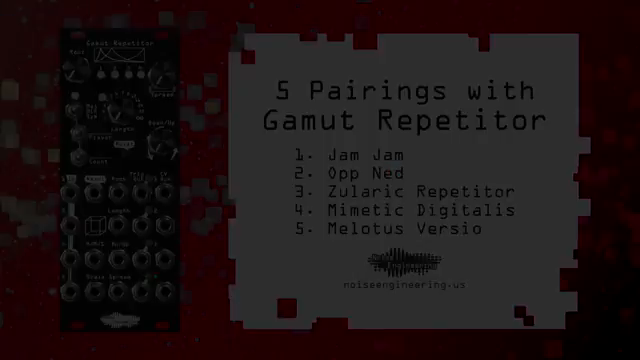
"If you're looking for ways to create random trigger patterns with looped melodies, there are two ways to do this with Gamut Repetitor."
© Screenshot/Quote: Noiseengineering (YouTube)
Looping, Ranges, and Triggers: The Core Feature Set
Central to Gamut Repetitor’s appeal are its looping, range, key, and scale settings, all of which are demonstrated in the video. The module offers 27 built-in scales, arranged for easy jamming and musical transitions. Looping is handled by holding down the reset, which toggles a 50% pass-through on the trigger outputs—an elegant way to introduce or tame randomness in a sequence. This pass-through can be adjusted further by external modules, as shown later in the video.
The ability to randomize triggers while still passing them through opens up a wealth of rhythmic possibilities. With all parameters fully CV-controllable, Gamut Repetitor invites creative routing and modulation, making it a versatile centrepiece for generative or semi-random patches. The focus here is on hands-on control and immediate results, rather than menu-diving or preset browsing.
Five Patch Companions: Extending Gamut’s Reach
"Gamut Repetitor is designed to be a comprehensive generative sequencer, whereas Op-Ned is an arpeggiator that can be pre-programmed and saved."
© Screenshot/Quote: Noiseengineering (YouTube)
The heart of the video is a tour through five modules that pair especially well with Gamut Repetitor. First up is Jam Jam, which is patched between the clock and Gamut to further refine how many triggers pass through. By setting Jam Jam to random mode and tweaking the encoder, you can dial in anything from sparse to frenetic trigger streams—ideal for shaping rhythmic density on the fly.
Next, the Op-Ned Arpeggiator is introduced as both a complement and a contrast to Gamut. While Op-Ned excels at pre-programmed, savable arpeggios, Gamut brings generative unpredictability. The video demonstrates layering a saved Op-Ned bassline with a slower, looped Gamut pattern, resulting in interlocking melodic lines that highlight the strengths of both modules.
The Zularic Repetitor also gets a spotlight, with its four trigger outputs driving Gamut’s four trigger inputs. This setup allows for intricate, polyrhythmic patterns, especially when each Gamut channel is routed to a different oscillator. The demonstration includes sending outputs to modules like Debell, Inkus, Loquellica Terratas Precido, and BIA, showcasing how these combinations can yield a patch that’s both structured and unpredictable.
Creative Workflows: Sequencers, Triggers, and Melodies
The video highlights how integrating Gamut Repetitor with other Repetitor modules and external sequencers can lead to rich, evolving patches. By clocking Zularic Repetitor and sending its patterns into Gamut, you effectively layer rhythmic logic with melodic randomness. Each trigger and CV output can be sent to different voices, allowing for multi-timbral, generative compositions that remain musically coherent.
A particularly clever workflow involves using Mimetic Digitalis to modulate Gamut’s CV inputs. By routing stepped CV patterns from Mimetic into Gamut’s down-up, length, and scale controls, you can sculpt random yet looped sequences that feel both organic and intentional. The ability to zero out steps, shred them, or load saved patterns on Mimetic adds another layer of controlled chaos.
Throughout, the focus remains on patching flexibility and hands-on exploration. The video avoids rigid song structures, instead encouraging viewers to experiment with clock divisions, trigger routings, and parameter modulations to discover new musical territory.
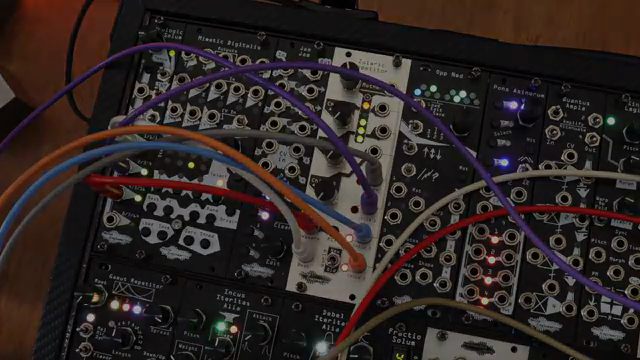
"The Mimetic Digitalis and Gamut Repetitor go together in so many ways."
© Screenshot/Quote: Noiseengineering (YouTube)
Ambient Textures and Evolving Patches: Gamut with Melotus Versio
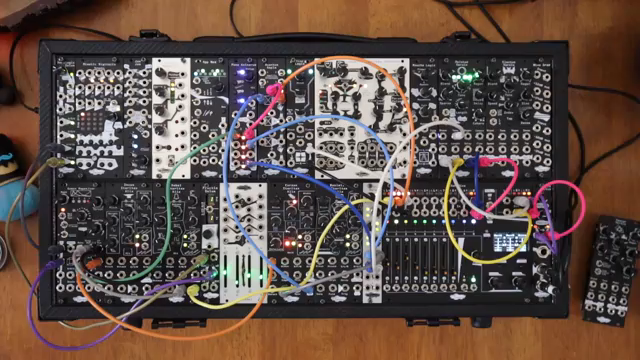
"In this patch, we're sending a slow clock signal to Gamut Repetitor and creating a dark chord progression with an infinite length to generate patterns over a two-octave spread."
© Screenshot/Quote: Noiseengineering (YouTube)
The final pairing demonstrates Gamut Repetitor’s adaptability in ambient and textural applications, particularly when combined with Melotus Versio. Here, a slow clock feeds Gamut, generating a dark chord progression stretched over two octaves. By dividing the clock and assigning channels to different voices—including a dedicated drone—the patch builds a lush, evolving soundscape.
Melotus Versio’s stereo granular processing is then brought into the mix, transforming the already generative patterns into shimmering, long-form ambient textures. The result is a patch that can evolve for hours, perfect for those who favour immersive, hands-off sound design. This example underscores Gamut’s role not just as a melodic sequencer, but as a catalyst for complex, evolving sonic environments.
The video closes by reminding viewers that these five modules are just starting points—Gamut Repetitor’s open-ended design means it can slot into almost any creative workflow, limited only by the user’s imagination and patch cable supply.
This article is also available in German. Read it here: https://synthmagazin.at/noise-engineering-gamut-repetitor-fuenf-patch-partner-fuer-zufaellige-spannungsabenteuer/
Watch on YouTube:
Latest articles
Watch on YouTube:
Visit the channel:
https://www.youtube.com/NoiseEngineering
https://www.youtube.com/NoiseEngineering
Links from NoiseEngineering:
website: https://noiseengineering.us
instagram: https://instagram.com/noiseeng
twitter: https://x.com/noiseeng
facebook: https://facebook.com/noiseeng
reason: https://bit.ly/noiseeng-reason
Sponsored links:
If you purchase via these links, we may earn a small commission – at no extra cost to you. The link opens an Amazon keyword search, and results may vary depending on availability.
Gamut Repetitor
🔗 Check price on Amazon
🔗 Check price on Amazon
Jam Jam
🔗 Check price on Amazon
🔗 Check price on Amazon
Melotus Versio
🔗 Check price on Amazon
🔗 Check price on Amazon
Mimetic Digitalis
🔗 Check price on Amazon
🔗 Check price on Amazon
Op Ned
🔗 Check price on Amazon
🔗 Check price on Amazon
Zularic Repetitor
🔗 Check price on Amazon
🔗 Check price on Amazon