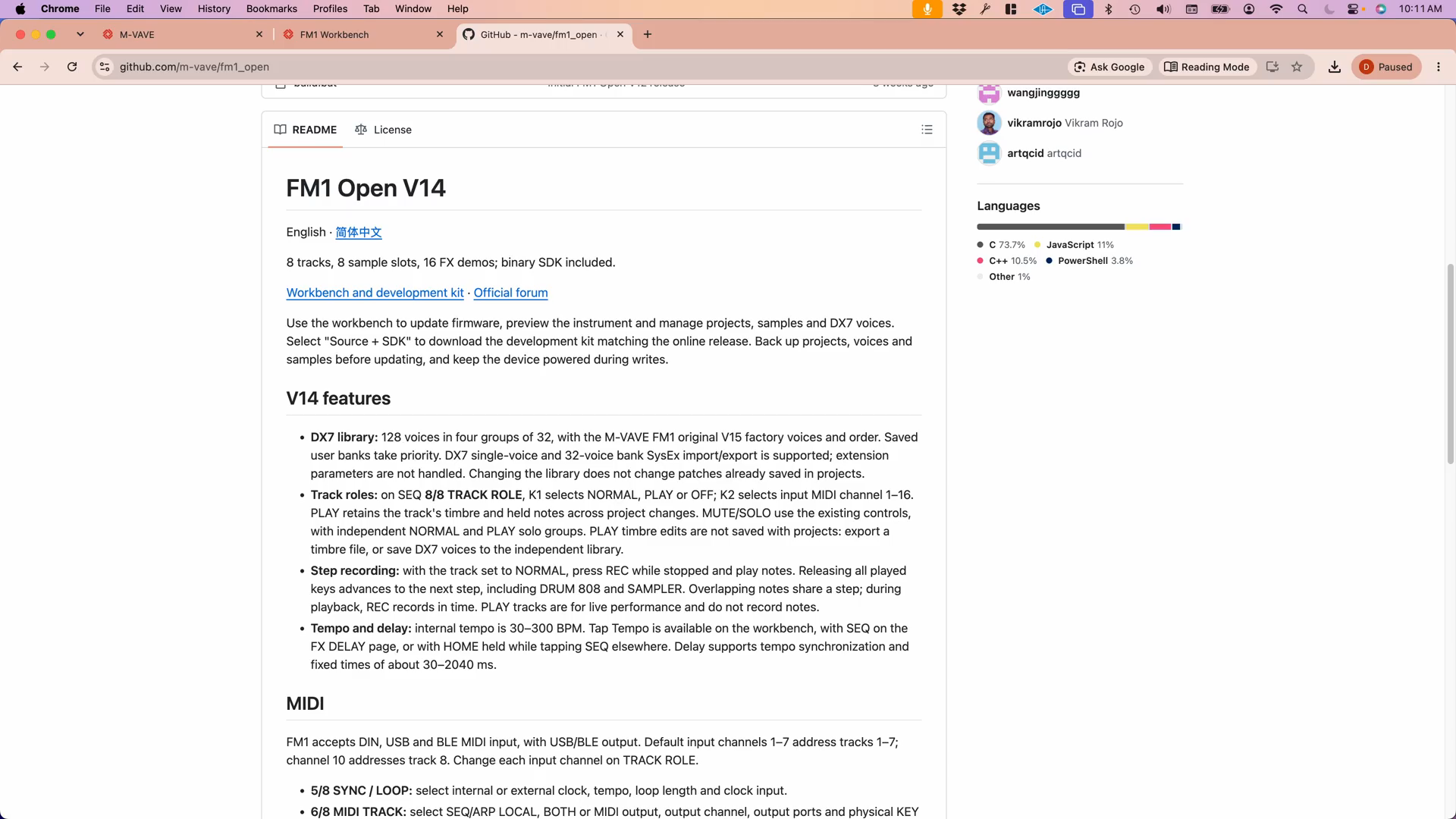
David Hilowitz bought himself a second FM-1. Not as a backup: Bod Girl’s firmware is to stay on the pink one, while the orange is reserved for experiments. In his video published on November 7, 2026, this division already says a lot about the little M-VAVE. Apparently, a case no longer has to house the same instrument permanently.
Not Every Firmware Wants to Be a Groovebox
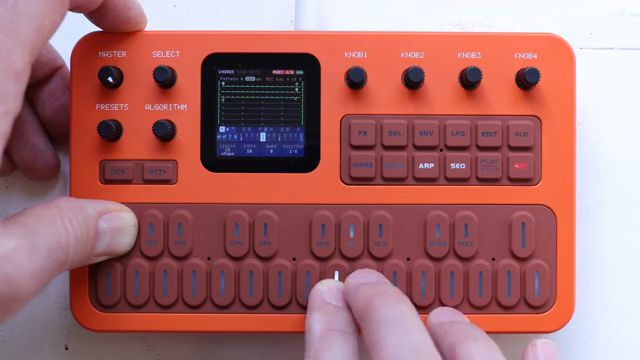
“I've never actually used one, so I can't say how close it is, but I do find this instrument super inspiring.”
© Screenshot/Quote: David Hilowitz Music (YouTube)
Hilowitz is audibly interested in musical characteristics rather than just long feature lists. According to him, he uses Grimm to create a sample library of spooky synth sounds. In contrast, he presents AMB-1 as a generative instrument inspired by Brian Eno’s “Music for Airports.” Notes can be activated and deactivated, scale modes selected. The appealing shift in perspective: you provide a harmonic framework for the music instead of setting every note yourself.
With Choral Flower, loosely inspired by the Orchid from Telepathic Instruments, he records a short sequence and plays it back. He remains pleasantly precise: his enthusiasm is not proof of closeness to the original.
First Hacked by Users, Then Officially Supported
Hilowitz describes the beginning of these transformations using Bod Girl’s work: fixing bugs in the original FM engine, adding her own synthesis engine, and overhauling the interface. Later, Falluca arrived as a free open-source firmware, whose code other developers could build upon. Thus, individual modifications became a foundation for further instruments.
The order is remarkable. According to Hilowitz, the community first unlocked the device through reverse engineering, aided by AI tools. Only afterwards did M-VAVE provide an open SDK and a modifiable firmware. An SDK bundles libraries and documentation for custom programs. The manufacturer thus supports a path that users first had to find themselves—a stronger signal than mere tolerance.
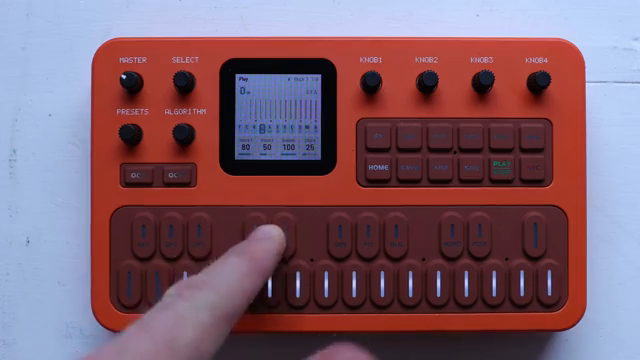
“To their credit, MVave has responded incredibly positively. They've now released an open source SDK and another custom firmware that's completely open to being modified by the community. Honestly, the response could not have been classier and it buys them a lot of goodwill.”
© Screenshot/Quote: David Hilowitz Music (YouTube)
More Choices Don’t Automatically Mean New Ideas
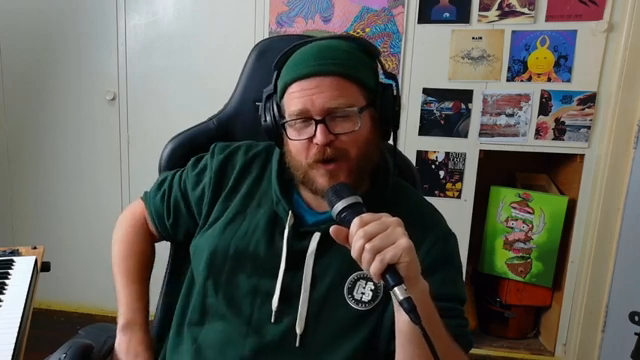
“A lot of them are just trying to push the same, let's turn it into a groove box aesthetic.”
© Screenshot/Quote: Blairy's Beatlab (YouTube)
However, Blair from Blairy’s Beatlab is not just concerned with the sheer volume of new releases. In “THE SYNTH REVOLUTION WILL BE TELEVISED” from October 17, he welcomes original firmware projects but also notes increasing similarities. He is drawn to the untapped potential of standalone synthesizers and new synthesis ideas. This is the productive counter-question to the firmware boom: Are new musical possibilities emerging—or just endless variants of the same all-in-one setup?
Your Own Groovebox Is Still Allowed
On October 23, Blair then presents a groovebox of his own, still in its early stages. The difference lies in his intent: he doesn’t want to learn someone else’s workflow, but to implement his own. With Claude as a programming assistant, he develops four tracks, larger controls on the display, and punch-in macros. In the demonstration, he sends sounds to reverb and delay and tweaks the kick drum. Here, sound design becomes a question of which manipulations should be at your fingertips.
The demonstration is not a glossy showcase of effortless AI development. Blair hits the macro limit, struggles with bugs, and discovers a workflow he wants to change. It’s precisely this friction that makes the contribution interesting: between a quickly generated draft and an instrument that reliably responds to musical gestures, there’s work to be done.
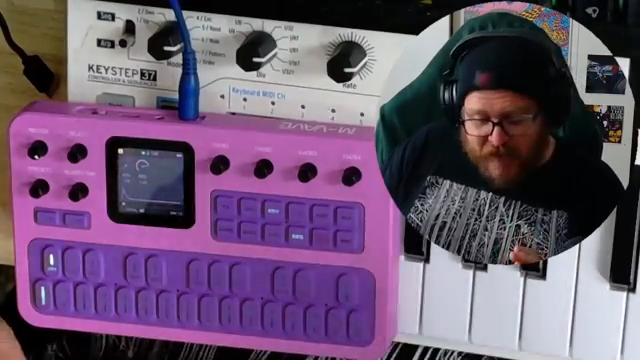
“Instead, you go step by step and you build it up piece by piece and you fine tune and you reiterate and you reiterate and it takes a long time.”
© Screenshot/Quote: Blairy's Beatlab (YouTube)
Hilowitz wants to keep a discovered sonic world and continue exploring alongside it. Blair wants to shape the instrument himself. This is the musical strength of this openness: it allows both. Not everyone has to write firmware. But what music becomes possible in the little box is no longer decided by the manufacturer alone.
Videos for this article
All YouTube videos featuring the M-VAVE FM-1
Primary – main topic (23)
 FM-1: Amazing things are happening with this little synth
 My $50 OCTATRACK-KILLER has a crossfader now!! - Fm1 Custom Firmware
 How To Make SICK Beats on The SICKEST FM1 Firmware
 A $60 Synth Exposed the AI Hypocrisy in Music
 I put ALL my Elektrons into my FM 1!! and you can too
 NO other FM-1 firmware can do what this one DOES!!!
 You can STOP looking NOW, I found the BEST fm1 firmware!! ... its mine
 20 minutes of the NASTIEST FILTHIEST FM-1 FIRMWARE!!
Show all (15 more)
 The Mvave Fm1 Broke my BRAIN!!! I'll never buy a REAL synth again!!
 THE SYNTH REVOLUTION WILL BE TELEVISED Mvave Fm1 and BEYOND!!
 M-Vave Fm-1 VS SMK37 | IS BIGGER BETTER?!?!
 what's the OBSESSION with the M-VAVE FM-1?
 Anybody Can VIBE CODE the M-vave Fm-1
 This Will Be The Next M-VAVE FM-1
 Mvave Fm1 Broke The Synth Industry
 Bad Gear - THEY have a PROBLEM!!!
 ambient exploration with the MVAVE FM-1, SideKick, Microcosm, & XYNTHESIZR App
 FM-1: A full FM synthesizer for $67
 This Free App Solves Bluetooth MIDI’s Biggest Problem
 Rambling About: M-Wave FM-1 with tafony
 This Tiny Synth Can Load Classic DX7 Sounds
 M-Vave FM-1 Review - Pocket $70 Polyphonic FM Synthesizer | SYNTH ANAOTOMY
 10 Paid Plugins Actually Worth Buying


