Arturia’s Pigments stands as a digital chameleon, inviting users to sculpt sound from the ground up with a blend of instinct and technical depth. In this official Arturia video, producer Jenys dives into Pigments’ multi-engine synthesis, granular textures, and open modulation matrix, building a future-facing sketch from a blank canvas. The focus is on workflow: how Pigments’ architecture enables rapid layering, modulation, and performance tweaks, all while encouraging creative experimentation. For those curious about how digital synths can be both powerful and accessible, this walkthrough is a revealing look at what Pigments offers right out of the box.

6. May 2026
LYRA
Instinct and Architecture: Arturia Pigments in the Hands of Jenys
Blank Canvas, Infinite Possibility
The video opens with Jenys introducing Pigments as a tool for breaking boundaries in sound design, emphasizing the freedom to start from scratch and pursue unconventional sonic paths. Pigments is presented not just as a synthesizer, but as a platform for instinct-led exploration, where the user’s curiosity is the main driver. The interface is shown as approachable, with clear access to different synthesis engines and parameters, encouraging users to experiment without fear of getting lost in menus.
This segment sets the tone for the workflow: Pigments is positioned as a playground for both seasoned producers and newcomers, capable of supporting everything from gentle pads to aggressive leads. The focus is on immediate access to creative options, with the architecture designed to facilitate rapid ideation and hands-on manipulation.
Wavetables, Granular Textures, and Modulation Galore
Jenys demonstrates Pigments’ multi-engine approach, starting with wavetable synthesis and highlighting the range of available timbres—from soft to abrasive. The workflow allows users to select between analog, wavetable, sample, harmonic, and modal engines, each offering distinct sonic characteristics. Layering is straightforward: additional voices can be added for stereo width or detuned chaos, and the ADSR envelopes are easily accessible for shaping dynamics.
Granular synthesis is brought into the mix, with Jenys selecting and activating a granular sample to add texture and unpredictability. The ability to pre-listen to samples and quickly activate granular mode streamlines the process of finding the right sound. The video underscores how Pigments’ engine switching and layering are designed for speed and flexibility, supporting both subtle sound design and more experimental, glitchy textures.
Modulation is a central theme, with envelopes and LFOs assigned to filter cutoff, drive, and other parameters through a drag-and-drop matrix. The open modulation architecture is highlighted as a core strength, enabling intricate, evolving sounds with minimal menu-diving. This section makes clear that Pigments is built for deep, hands-on modulation without sacrificing workflow efficiency.
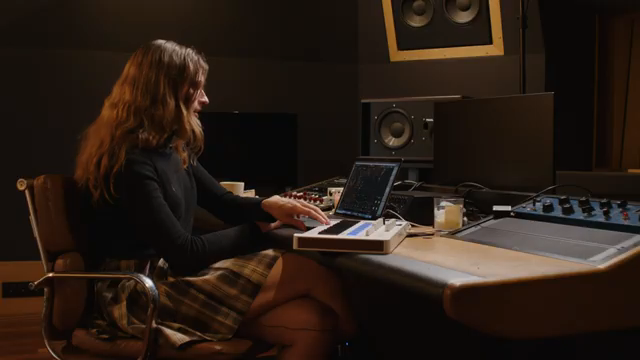
"It has an open matrix and it's really simple. You can drop it anywhere you want, for example onto the drive or the distortion."
© Screenshot/Quote: Arturiaofficial (YouTube)
Layering, Performance Tools, and Effects in Action
The video shifts into practical sound design, with Jenys merging oscillators and layering granular textures for a more complex timbral palette. The process is fluid: switching between oscillators, adjusting filter types, and manipulating envelopes all happen in a few clicks. Pigments’ play modes are explored, with mono mode used to prevent note overlap—a useful trick for arpeggios and basslines.
Performance tools come to the fore as Jenys enters the sequencer section, adjusting note probability and adding effects like distortion, saturation, and compression. The workflow is performance-oriented, with quick access to arpeggiators and step sequencing, allowing for real-time experimentation and groove creation. Effects are not just afterthoughts—they are integral to the sound, with multiband compression (OTT), flanger, and other processors shaping the final texture.
Open Matrix: Modulation Without Borders
"Pigments is capable of doing one million tweaks and interconnections between the blocks."
© Screenshot/Quote: Arturiaofficial (YouTube)
Pigments’ open modulation matrix is given a spotlight, with Jenys assigning LFOs and envelopes to virtually any parameter—drive, filter, harmonic ratios, and more. The drag-and-drop interface is shown as intuitive, making it easy to experiment with modulation routings on the fly. Multiple LFOs and envelopes can be layered, and the system supports complex interconnections between oscillators, filters, and effects.
The flexibility extends to performance sync: LFOs can be set to free-running rates or synced to the DAW grid, supporting both experimental and tightly quantized workflows. Jenys demonstrates how modulation can be used to create movement and unpredictability, from subtle filter sweeps to wild, evolving textures. The matrix encourages users to push boundaries, with the architecture supporting both traditional synthesis and more avant-garde sound design.
Effects modulation is also explored, with shapers and randomizers assigned to parameters like reverb size and filter frequency. The result is a sound engine that feels alive and responsive, rewarding both careful planning and spontaneous experimentation. Pigments’ architecture is clearly designed to encourage creative risk-taking, with the modulation matrix at the heart of its workflow.
Intuitive, Accessible, and Ready for Experimentation
Jenys closes the video by reflecting on Pigments’ accessibility and intuitive design. The interface is described as vivid and logically organized, allowing users to follow their intuition even without formal music training. Tutorials and documentation are mentioned as further support for new users. The overall message is clear: Pigments is a tool that invites experimentation and personal expression, making advanced sound design approachable for anyone willing to explore.
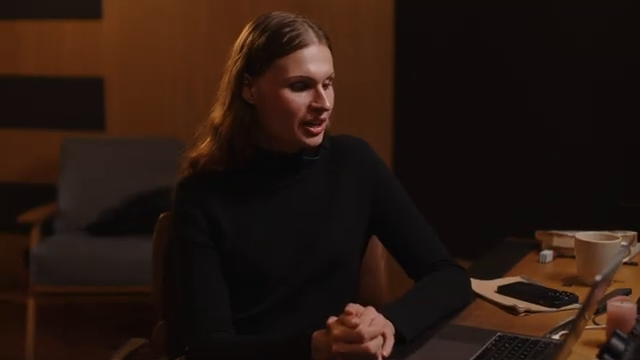
"Everything is vivid. Everything is simple on the same places. You can just put your intuition in it and figure out how to do that, even without any knowledge in music and education."
© Screenshot/Quote: Arturiaofficial (YouTube)
This article is also available in German. Read it here: https://synthmagazin.at/instinkt-und-architektur-arturia-pigments-in-den-haenden-von-jenys/
More articles about these products:
 Starsky Carr’s £15,000 Synth Soup: Analog Royalty, Now in Your Serum
 AudioPilz Dishes the Dirt: What Your Synth REALLY Says About You
 Tefty Music Tech Turns the MPC XL Into a Sonic Street Weapon
 AudioPilz vs. Arturia Pigments: The Last Synth or Just Another Plugin Poshboy?
 Voltage Labs: Echoes from Kingston to Kreuzberg – The Sonic Story of Dub Techno
 Ambient Pad Alchemy with MartinStuertzer
 ROLI Airwave: Unlocking Spatial Expression in Ableton Live
 Arturia KeyLab mk3: Súbelo Neo’s Hybrid Workflow for Reggaeton Innovation
 Arturia Pigments: Trap Explorations Dissected – A Workflow Deep Dive
Watch on YouTube:
Latest articles
Watch on YouTube:
Visit the channel:
https://www.youtube.com/ArturiaOfficial
https://www.youtube.com/ArturiaOfficial
Links from ArturiaOfficial:
website: https://www.arturia.com
instagram: https://instagram.com/arturia_official
twitter: https://twitter.com/ArturiaOfficial
soundcloud: https://soundcloud.com/arturia-official/albums
Sponsored links:
If you purchase via these links, we may earn a small commission – at no extra cost to you. The link opens an Amazon keyword search, and results may vary depending on availability.
Arturia Pigments
🔗 Check price on Amazon
🔗 Check price on Amazon