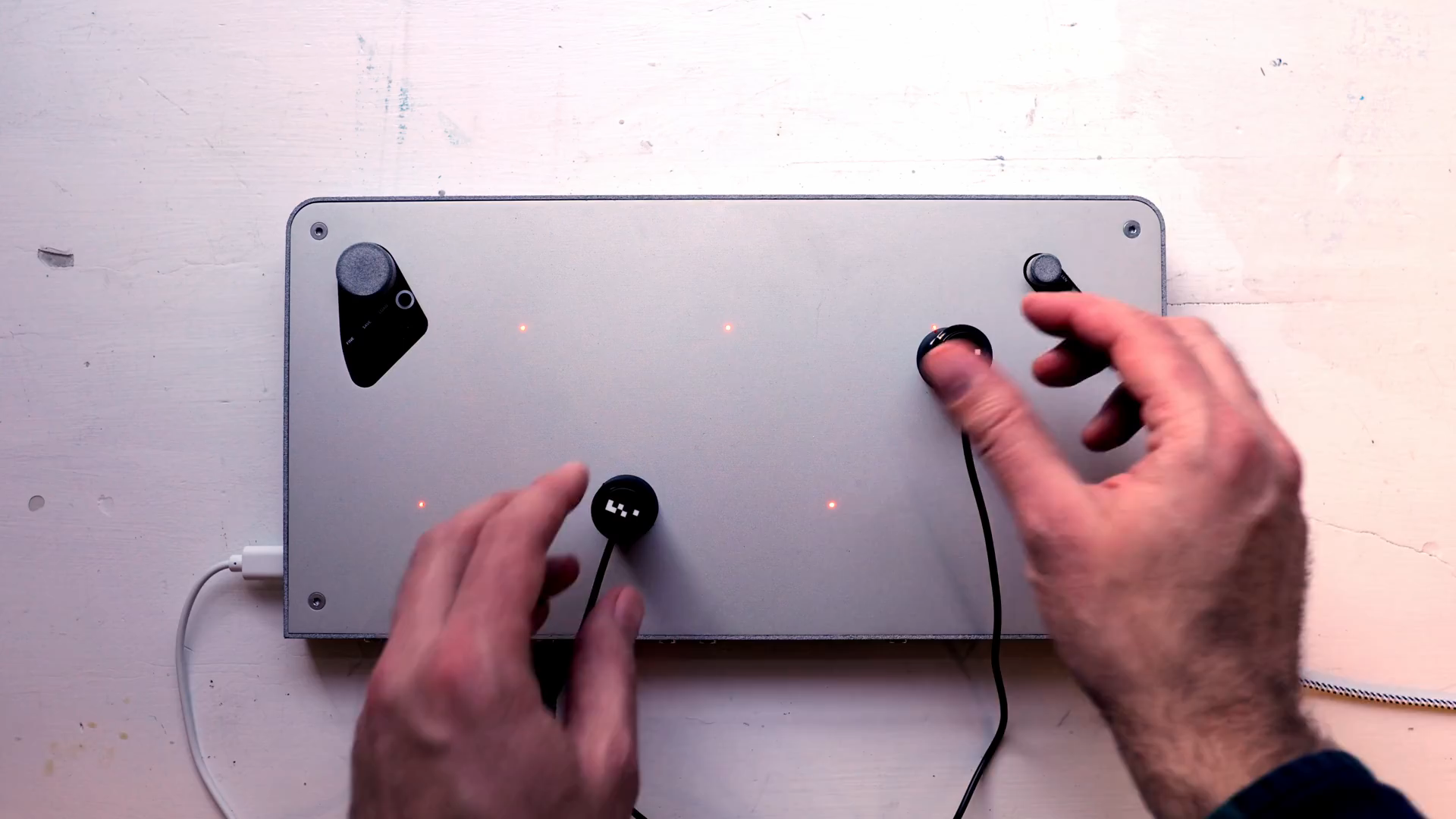
David Hilowitz doesn't start with the perfect patch, but with a deliberately relaxed knowledge gap. For his Haloplane video, published on November 21, 2026, he made sure to know as little as possible about the functions in advance. He wants to get to know the instrument on camera. His first practical step is refreshingly unspectacular: create a short arpeggio on the FM1, start the loop, record. The exciting part is what he does next with this one sound.
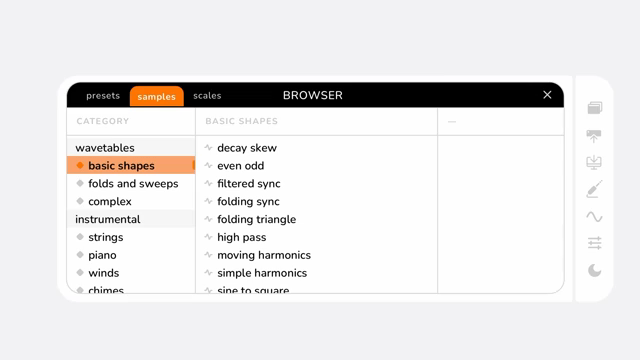
Seven times the same beginning
© Screenshot: David Hilowitz Music (YouTube)
“And that's it. I've now recorded the sound of the FM1 loop to all seven fields.”
© Quote: David Hilowitz Music (YouTube)
The Haloplane generates seven electromagnetic fields, played with two pickups moved above them. After Hilowitz’s recording, the same material is initially present everywhere. Whichever field he targets: he hears his FM1 loop. This is not yet a sophisticated soundscape, but a pleasantly direct starting point. One recording is enough to fill the entire surface with shared material. Hilowitz sums up the step as follows:
KOMA Elektronik Haloplane – Amazon keyword search
Search for this product on Amazon →
This link opens an Amazon keyword search. Depending on availability, other results may be shown.
Advertising – affiliate link. If you buy through this link, we may earn a commission – at no extra cost to you.
Not every field has to stay the same
Hilowitz now wants to tune the fields differently. He selects one, changes its pitch, and then combines the original with the new tuning. Next, he adjusts the loop section used. One attempt is too short, the next one he sticks with. In the end, he only retunes the four fields on the right. This small decision makes the experiment tangible: he doesn’t dutifully work through all seven spots, but follows a musical idea.
In the Superbooth feature published on May 15, 2026 by Voltage Labs, the designer Chris describes the independence of these sound locations. They don’t even have to use the same type of sound generation: one field can play a sample, another a wavetable. His description thus goes well beyond seven differently tuned copies:
© Screenshot: Voltage Labs (YouTube)
“So each of these spots on the instrument is like its own micro world. It has its own sample, its position, its length, its pitch. They're each independent.”
© Quote: Voltage Labs (YouTube)
The sequence moves along
© Screenshot: Voltage Labs (YouTube)
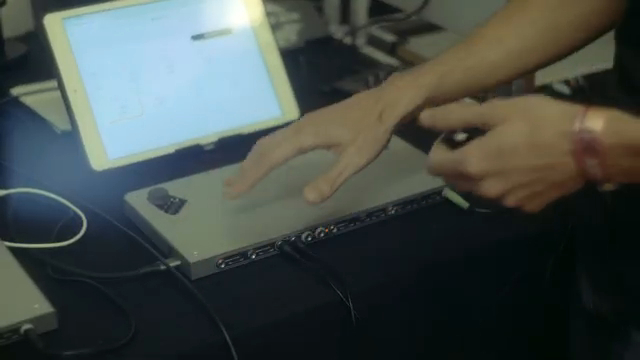
“The sound is stereo, so I can pan by moving the pickups.”
© Quote: Voltage Labs (YouTube)
Hilowitz later explores how mobile this arrangement is with a prepared sequence of notes. First, his hand moves through the notes. Then he turns the rotate thumbwheel and instead shifts the field assignment around the instrument. So it’s not just the hand that can go to the next note; the notes themselves can be shifted under the pickups. Chris at Voltage Labs also demonstrates how a CV signal determined by pickup activity modulates this rotation. The playing movement thus influences the arrangement it accesses.
There is also a second spatial level: Chris assigns the two pickups to the left and right stereo sides and demonstrates moving the sound back and forth. His explanation makes it clear that the gesture is not just about selecting a voice:
A discovery gets to live on
Hilowitz doesn’t let his first discovery disappear in the demonstration. He saves it as a loop in Ableton and also stores the preset on the internal SD card. He then plays over the previously recorded loop with a wavetable sound. Thus, the process of getting to know the instrument already becomes a small production workflow: find something, save it, and use it as the basis for the next musical decision.
Later, the path also runs from the computer back to the playing surface. In USB audio mode, the device appears to him as an audio output; seven input channels correspond to the seven fields. Hilowitz sends sounds from Ableton in and distributes different notes and sounds. In his demonstration, the Haloplane thus also becomes a playable surface for computer sounds. His final thought is consequently less about a single function and more about how to interact with the instrument:
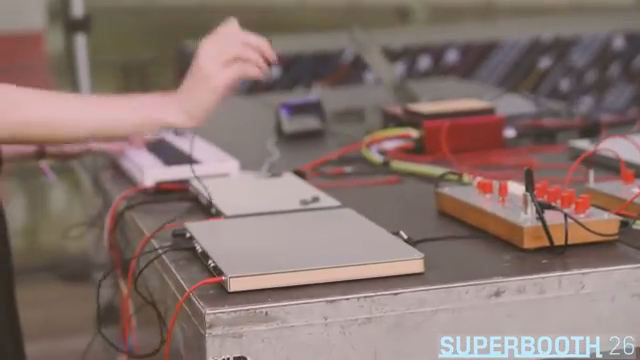
© Screenshot: David Hilowitz Music (YouTube)
“I think that the way that you interact with an instrument really affects the kind of music you make with it.”
© Quote: David Hilowitz Music (YouTube)
A preset here preserves more than just a sound: it keeps an arrangement of possible playing movements. What comes of it is only decided with the hands above it. That’s the appealing idea behind Hilowitz’s experiment—the prepared loop gets to open up again during play.
KOMA Elektronik Haloplane – Amazon keyword search
Search for this product on Amazon →
This link opens an Amazon keyword search. Depending on availability, other results may be shown.
Advertising – affiliate link. If you buy through this link, we may earn a commission – at no extra cost to you.


