In the magnetic glow of vintage circuitry, Doctor Mix unspools the legend of the Fairlight CMI—a machine that changed music’s DNA. Joined by Chris Blyth, whose Fairlight collection is a museum of dreams, we drift through foggy memories of sampled ghosts, light pens, and rhythm pages that ripple through decades. This isn’t just a demo—it’s a pilgrimage into the heart of digital sound. Prepare to be drawn into the Fairlight’s orbit, where each note is history refracted through glass and silicon.
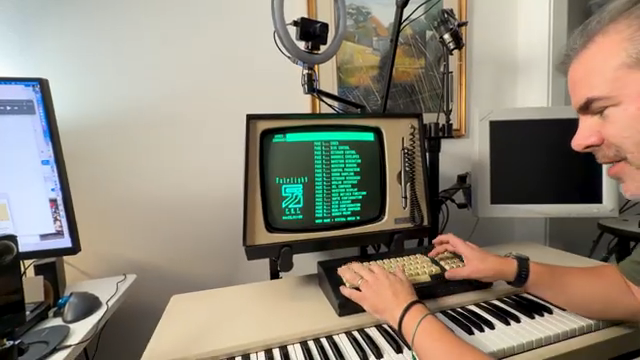
30. September 2026
LUMINA
Fairlight CMI: A Sonic Odyssey with Doctor Mix
Fairlight CMI Series III, Fairlight CMI Series IIx, Fairlight EVO
Genesis in Glass and Code
There are moments when technology doesn’t just move forward—it leaps, inhaling the future and exhaling it as music. The Fairlight CMI was such a leap: a sampler, a sequencer, a digital audio workstation before the world knew what those words meant. Doctor Mix and Chris Blyth summon this machine’s origin story, painting it as the ancestor of every digital studio where sound can be sculpted, stored, and set adrift—a box where dreams and data merged for the first time.
The Fairlight’s arrival in 1979 was nothing less than a meteor strike in the field of music production. Instead of mere oscillators and filters, it offered a constellation of possibilities: sampling, sequencing, and sound-shaping, all woven together in a single instrument. In this episode, Doctor Mix’s signature exuberance is tempered by Blyth’s depth, inviting us to consider not just the machine, but the revolution of thought it ignited. The Fairlight was not just built for music—it was built for imagination.
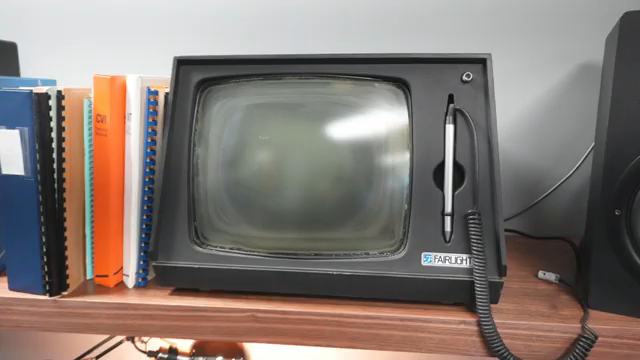
"It's basically the first digital audio workstation, allowed you to do sequencing, sampling and shaping of sounds all in one box."
© Screenshot/Quote: Doctormix (YouTube)
Light Pens and Sonic Cartography
"Now it shows the waveform for that thing."
© Screenshot/Quote: Doctormix (YouTube)
To draw with light—what a vision. The Fairlight’s interface bridged the tactile and the ethereal, letting musicians sketch waveforms as if inscribing sigils on fogged glass. Each harmonic envelope became a landscape; each flick of the pen, a new terrain of sound. Doctor Mix and Blyth guide us through the ritual: loading samples with a gesture, summoning spectral voices from floppy disks, and shaping timbres in real time. The light pen, finicky yet magical, is both tool and companion, flickering with the promise of invention.
This was hardware as alchemy, fusing dual processors, handmade keyboards, and the luminous glow of cathode screens. Even the quirks—drive failures, erratic pens, error messages in an Australian accent—become part of the story. The Fairlight made music a visual medium, a process of navigation and sculpting, turning every user into a cartographer of the unheard. Some things, like the sensation of drawing sound into existence, truly defy translation—best witnessed in the hands of the masters.
Ghosts in the Circuits: Iconic Sounds
If you listen closely to the fabric of pop, hip hop, and film scores, you’ll hear echoes of the Fairlight’s sampled soul. In the video, Doctor Mix and Blyth conjure the spectral hits and stabs—the ORCH5, the laughter, the cinematic punctuations—that became the DNA of a hundred anthems. Each trigger is a time machine: Art of Noise, Tears for Fears, Yes, and the unmistakable orchestral burst that’s as much a cultural artifact as it is a sound.
The demonstration is more than nostalgia; it’s a reminder of how deeply these digital ghosts haunt our shared musical memory. The Fairlight was not just a sampler; it was an archive of feeling, a vessel for everything from triumph to melancholy. Not every nuance can be captured in print—the full resonance, the textural grit, the way these sounds shimmer and decay—these are best experienced in the video itself, where history sings through circuitry.

"This will be a very recognizable sound, here we go."
© Screenshot/Quote: Doctormix (YouTube)
From II to III: Evolution of a Legend
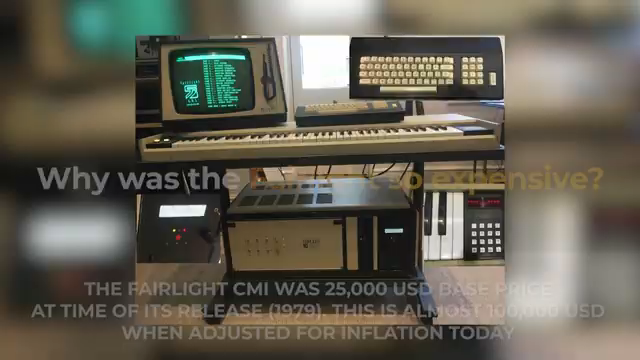
"The three was a big departure because it was 16-bit sound, it had huge sampling 100 kilohertz sampling on the one of the sample cards."
© Screenshot/Quote: Doctormix (YouTube)
Time distills vision into refinement. The Fairlight’s journey from Series II to IIx to III is a testament to technological ambition—each generation a deeper dive into polyphony, fidelity, and power. Doctor Mix and Blyth unbox this lineage: the IIx’s embrace of MIDI and SMPTE, the III’s leap to 16-bit sound, stereo sampling, and expanded memory. Differences aren’t just technical—they’re textural, shaping how the instrument invites play and invention.
Yet with progress came complexity: the Series III’s vastness slowed its touch, added weight to its workflow, and demanded patience. Still, it was a quantum leap, a machine that could weave denser tapestries and house more spectral voices. The Fairlight’s metamorphosis was not just about features, but about evolving the very language of sound design. Each model carries the fingerprints of its era, and each remains luminous in the hands of those who know how to listen.
The Sakamoto Enigma
The narrative reaches its twilight in a workshop dense with myth and circuitry. Here, Doctor Mix and Blyth reveal a Fairlight Series III cloaked in mystery—a battered artifact, bearing scars and serials, that might have once belonged to Ryuichi Sakamoto. Its provenance is pieced together from software versions and reflected faces, an archival detective story worthy of its subject.
This possibility casts a halo of reverence over the machine, inviting us to imagine the music it once conjured—the sonic ghosts it might still harbor. The Fairlight was always more than hardware; it was a vessel for genius and accident alike. As we peer into its shadowy past, we’re reminded that every instrument has stories etched in its circuits, and some are stranger and more wondrous than we’ll ever know.
This article is also available in German. Read it here: https://synthmagazin.at/fairlight-cmi-eine-klangliche-odyssee-mit-doctor-mix/
Watch on YouTube:
Latest articles
Watch on YouTube:
Visit the channel:
https://www.youtube.com/Doctormix
https://www.youtube.com/Doctormix
Links from Doctormix:
DoctorMix.com: https://doctormix.com
Facebook: https://facebook.com/doctormixdotcom
Twitter: https://twitter.com/doctormix
Instagram: https://instagram.com/doctormixdotcom
Tik Tok: https://tiktok.com/@doctormix.com
Sponsored links:
If you purchase via these links, we may earn a small commission – at no extra cost to you. The link opens an Amazon keyword search, and results may vary depending on availability.
Fairlight CMI Series III
🔗 Check price on Amazon
🔗 Check price on Amazon
Fairlight CMI Series IIx
🔗 Check price on Amazon
🔗 Check price on Amazon
Fairlight EVO
🔗 Check price on Amazon
🔗 Check price on Amazon