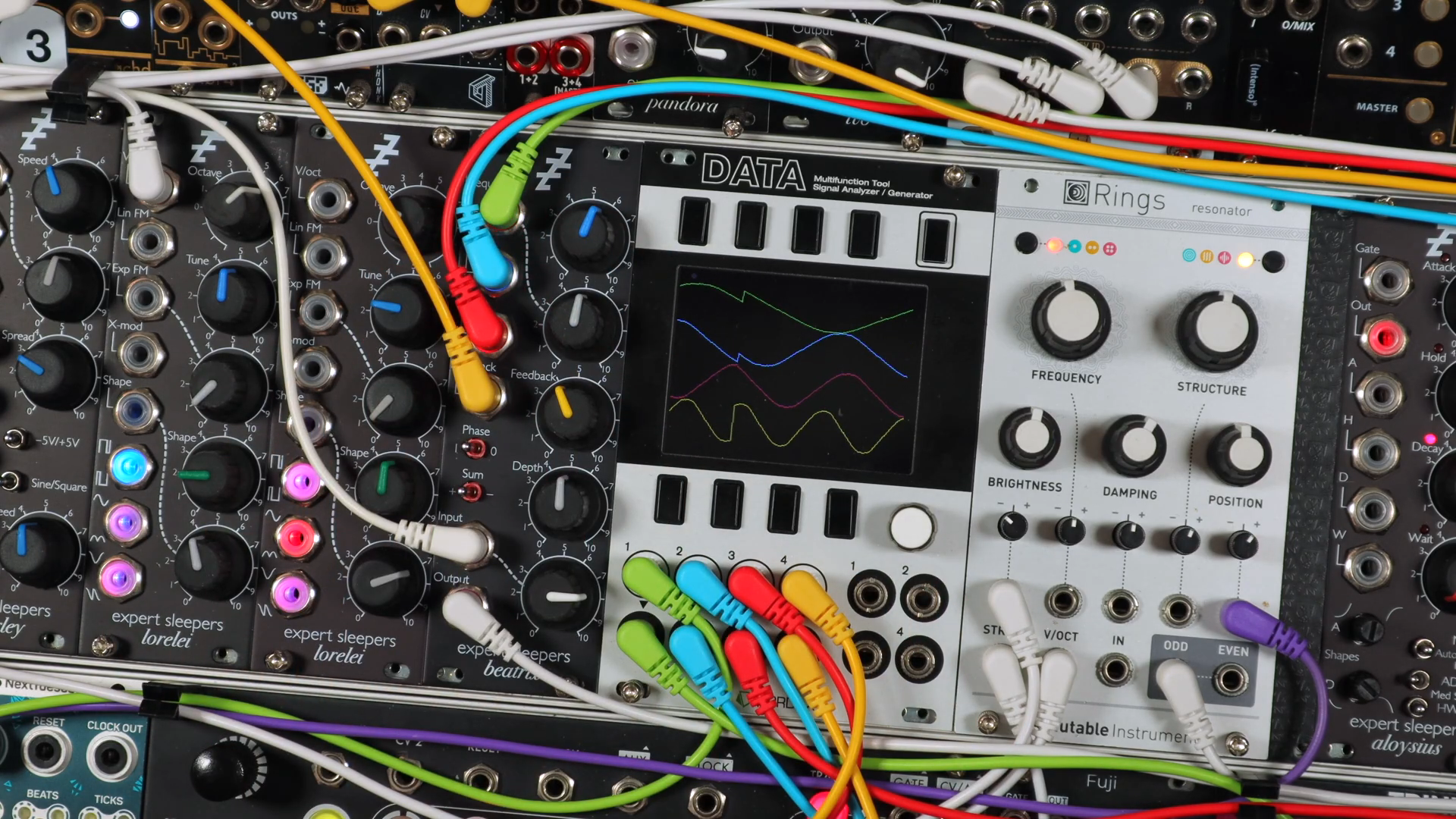
DivKid first removes the drums and sidechain ducking. The bass is supposed to explain what’s happening here without rhythmic backup. In his Expert Sleepers-sponsored video from November 27, 2026, he covers nine analog modules from the brand. With Beatrix, this becomes a particularly fruitful repurposing: the phaser doesn’t just refine an existing bass, but takes over a crucial part of its sound shaping.
Familiar Function, Subtle Twist
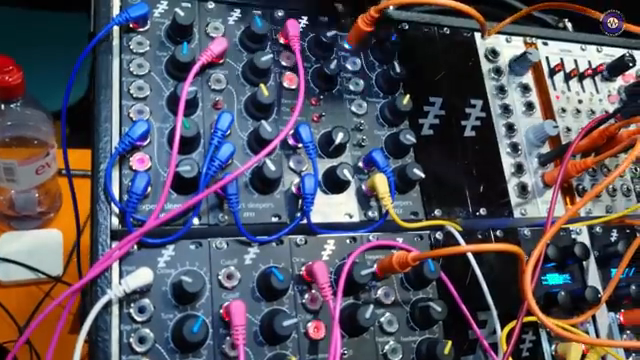
© Screenshot: sonicstate (YouTube)
“traditional functions, but each has like a little twist that makes it unusual and gives it something that you wouldn't necessarily find in other modules of its ilk.”
© Quote: sonicstate (YouTube)
Beatrix was already a topic in sonicstate’s Synthfest UK feature from October 10, 2022. There, Oz from Expert Sleepers presents the module as a four-pole analog phaser. In the conversation, he describes the analog series as a deliberate break from the previous focus on digital modules and computer connectivity.
His design principle is less futuristic than idiosyncratic: familiar core functions, each with a special twist that opens up extra possibilities. That’s a manufacturer’s perspective at first, not a bass recipe. Oz puts it this way:
Expert Sleepers Beatrix – Amazon keyword search
Search for this product on Amazon →
This link opens an Amazon keyword search. Depending on availability, other results may be shown.
Advertising – affiliate link. If you buy through this link, we may earn a commission – at no extra cost to you.
One Sine Plays, the Other Intervenes
DivKid starts his Beatrix patch with a shaped, saw-like wave from Lorelei. He sweeps the phaser frequency by hand and adds feedback. Then he reduces both involved oscillators to sine waves. This simplification makes the division of roles clear: the low oscillator provides the audio signal for Beatrix. The higher-tuned second oscillator modulates its phaser frequency.
So the fast modulation happens at the phaser, not at the frequency input of the sound-generating oscillator. DivKid describes the resulting tones as phase modulation or phase distortion-like. He then changes the waveforms and detunes the oscillators slightly against each other. From this manageable starting point, he develops his Reese-style drum and bass sound.
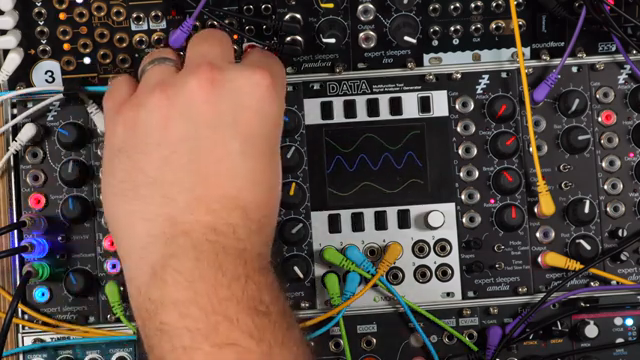
The elegant part follows at the offset input: here, DivKid also lets a slow LFO intervene. Fast sound shaping and slow phaser movement don’t have to replace each other—they can work simultaneously:
© Screenshot: DivKid (YouTube)
“And then as we modulate, say, the offset input that Beatrix has, you can have kind of best of both this really crunchy audio rate phase distortion like tone, but also have an LFO move that phasing.”
© Quote: DivKid (YouTube)
Not Just Faster, but More Variable
© Screenshot: DivKid (YouTube)
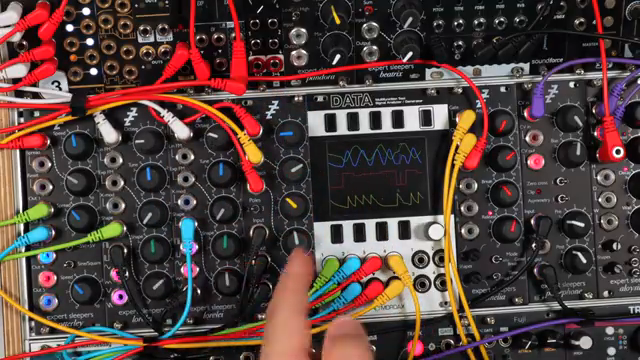
“They're going to change over time now as well.”
© Quote: DivKid (YouTube)
DivKid doesn’t stop at a moving phaser. Two more LFOs control the shape inputs of the two Lorelei oscillators. Both the input signal and the higher-tuned modulator thus continuously change their waveforms. Movement now arises on several levels: in the audio material, in the modulation signal, and in the phaser itself.
DivKid also routes the common pitch control voltage to both oscillators and to the speed control of the LFOs. The patch is played via a keyboard off-screen. Finally, drums and the ducking from the kick return, after which he increases the feedback. This setup makes the demonstration interesting: the bass isn’t presented as a finished surprise, but as a playable arrangement with understandable interventions.
About the now also moving waveforms, DivKid says:
The Slow Phaser Gets to Stay
This approach doesn’t abolish the classic phaser, as DivKid shows in the very next example. A Rings signal with delay and reverb runs through Beatrix; four LFOs move frequency, depth, offset, and feedback. Even there, he tries out a pitch-tracked audio-rate modulator in between. He describes the resulting character as digitally fractured and aliasing-like—a sound association, not a statement about digital signal processing in Beatrix.
In the older sonicstate conversation, Oz had summed up the usual approach quite casually:
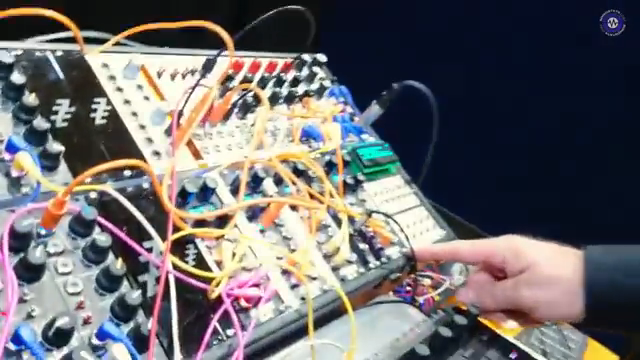
© Screenshot: sonicstate (YouTube)
“give it an LFO typically, but equally give it an envelope, or just twiddle the knob”
© Quote: sonicstate (YouTube)
DivKid’s patch adds a crucial possibility to this list: controlling the phaser with a second audible oscillator. What’s interesting here is less the Reese label than the changed division of labor. Beatrix isn’t handed a finished character—it helps create it in the first place.
Expert Sleepers Beatrix – Amazon keyword search
Search for this product on Amazon →
This link opens an Amazon keyword search. Depending on availability, other results may be shown.
Advertising – affiliate link. If you buy through this link, we may earn a commission – at no extra cost to you.