This episode from 4ms Company features a deep-dive conversation with Keith Fullerton Whitman—a composer whose three decades of live electronic music traverse analog, digital, and generative systems. The discussion ranges from Whitman’s computational childhood and early Eurorack explorations to his current experimental workflows, collaborations with visual artists, and critical takes on music technology’s evolving landscape. For anyone fascinated by the patching mindsets behind modular music, Whitman’s reflections deliver a rare, circuit-bent perspective.
25. August 2026
MILES
4ms Company: Keith Fullerton Whitman on Modular, Process and Perpetual Curiosity
4ms Quad Clock Distributor, 4ms Rotating Clock Divider, Doepfer Modular System, ER-301, Harvestman modules, Meta Module, Ornament and Crime, Pamela's Pro Workout
From AT&T Mainframes to Algorithmic Soundscapes
Keith Fullerton Whitman stands out as a fixture in the world of live electronic music, having woven together improvisation and composition across the analog and digital divide for more than thirty years. Raised by two computer programmers, Whitman’s first musical experiments were coded on early home computers—a background that would shape his structural, almost computational approach to music-making. From Commodore 64s to Atari STs, his formative years were less about learning traditional instruments and more about exploring the boundaries of machine-generated sound.
This blend of technical upbringing and exposure to New York’s dense musical culture in the 1980s gave Whitman a unique vantage point. He describes a youthful curiosity that pulled him into the peripheries of jazz, classical, and electronic music alike, never content to remain in any one genre. Even in his teens, Whitman’s interests skewed toward the exploratory and the structural, priming him for a later life in which generative and algorithmic processes would become central creative tools.
"Coming from music from a technical perspective, you know, it's definitely 100% how I, you know, because I grew up, the first music I ever made was with computers."
© Screenshot/Quote: 4Mscompany (YouTube)
Eurorack Roots and the 4ms Connection
"There was a lot of subterfuge where everybody was like, you know, they'd wrap the core circuit and like some kind of a vectoral type box to like, to stop people from understanding how it worked."
© Screenshot/Quote: 4Mscompany (YouTube)
Whitman’s deep engagement with Eurorack and 4ms modules is grounded in years of direct experience, going back to the late 1990s when the modular resurgence began to cross the Atlantic. Early exposure to Doepfer’s compact systems and the affordability of modules shaped his patching ethos: methodical, incremental, and exploratory, with a clear focus on extracting the maximum from minimal setups. He describes the process of slowly building up a system—oscillator one year, filter the next—delaying gratification to ensure each component was thoroughly understood.
As an early adopter of 4ms’s experimental clocking modules, Whitman observed the evolution from anarchic noise boxes to the more structured world of Eurorack. His recollections of first encountering 4ms in their St. Louis squat days—when drone and noise devices were wrapped in inscrutable circuit tricks—highlight both the DIY spirit and the technical ambition that set 4ms apart. The episode underscores Whitman’s appreciation for malleable clock networks and feedback-based system design, with 4ms modules as core ingredients in his explorations of generative timing and structured chaos.
Process, Play, and Interdisciplinary Patching
Whitman’s creative workflow places experimentation at the forefront. He speaks of a constant push-and-pull between aesthetic intention and technical possibility, where the system itself often guides the outcome. Whether shaping patches around fractal rhythms, exploiting feedback loops, or introducing macro-level randomness via a single control, the emphasis is always on live interaction and processes that evolve in real time. For Whitman, the ideal system is one that is self-policing—a network of modules that can diverge into chaos and then lock back into structure at will.
His collaborative work with visual artists further demonstrates the permeability between disciplines in contemporary electronic music. Whitman describes building Max patches and modular setups that drive audiovisual installations—sometimes as gallery pieces that loop for hours autonomously, sometimes as tightly coupled stage performances where audio triggers generate op-art visuals in perfect sync. The conversation reveals how patching strategies can transcend pure sound design, becoming the connective tissue for broader artistic projects.
Even outside official collaborations, Whitman’s approach is to treat every patch as a living system, constantly documenting, revising, and sometimes abandoning work until the process feels alive. This ethos—of being as much an audience member as a performer—runs through his reflections, reinforcing the modular mindset of perpetual curiosity and non-linear exploration.
"It has to be the path of least resistance using just like simple macro controls to have everything just shatter, you know, in a repeatable way, but never the same twice."
© Screenshot/Quote: 4Mscompany (YouTube)
Evolving Tools: From Computer Music to AI and Modular Hybrids
"How do you differentiate between what a great janky vibe coded plugin is when the market is now flooded with thousands of them from every corner of the world?"
© Screenshot/Quote: 4Mscompany (YouTube)
The discussion navigates the shifting terrain of music technology, with Whitman reflecting on his periodic return to software environments like Max, Csound, and Bitwig after deep dives in hardware modular. He highlights the constant flux between digital and analog domains, arguing that such oscillations are essential to avoid creative stagnation. The arrival of multifunction modules and software-infused hardware—such as 4ms’s Meta Module or the ER-301—has, in his view, both expanded possibilities and introduced new complexities, sometimes blurring the line between modular and computer music.
Whitman and the host also address the impact of AI and the proliferation of software tools. There’s a critical undertone as Whitman worries about the temptation to bypass deep learning in favour of quick, AI-assisted solutions—a trend he links to the rise of plugins with flashy interfaces but generic sound. For him, the joy lies in granular experimentation and the accumulation of knowledge, not in fast-tracking to a finished product. The section offers a nuanced perspective on how innovation and tradition must be balanced, lest the craft of electronic music become diluted.
The State of the Patch: Craft, Curiosity, and Community
Closing the episode, Whitman advocates for a more engaged, craft-oriented approach to electronic music. He challenges the notion that technology should always simplify or automate, arguing that the incremental, sometimes painstaking process of patching and learning is where the real magic happens. For Whitman, personal exploration—be it in microtonal tuning, spatial audio, or generative systems—is both the reward and the responsibility of the artist.
He observes that today’s community is more open and malleable than before, with less rigid scene politics and a greater appreciation for curiosity and dorkiness. Whitman’s encouragement is clear: embrace the work, revel in the process, and let personal taste be the ultimate litmus test. In a landscape flooded with tools and possibilities, meaningful music arises from those who are willing to dig deep, fail often, and remain open to surprise.
This article is also available in German. Read it here: https://synthmagazin.at/4ms-company-keith-fullerton-whitman-ueber-modular-prozesse-und-ewige-neugier/
More articles about these products:
 Nebula in a Case: The Unperson’s Eurorack Ambient Machine
 Signal Sounds and Chris Miller: Where Serge, Cybernetics, and Sonic Storytelling Collide
 Molten Music Technology vs. Random: The Random8 Riot
 The Unperson’s Modular Drum Safari: Kicking Writer’s Block in the Teeth
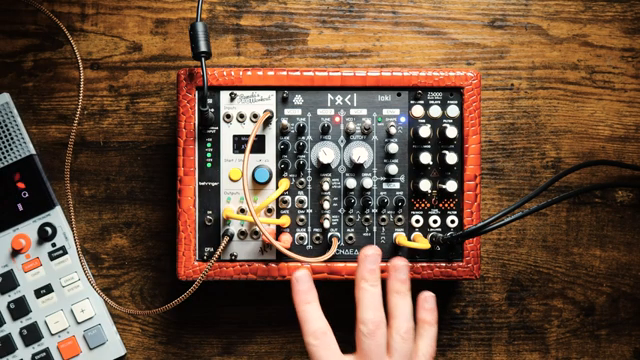 The Unperson’s 40HP Mono Modular: A Rave Bunker in a Lunchbox
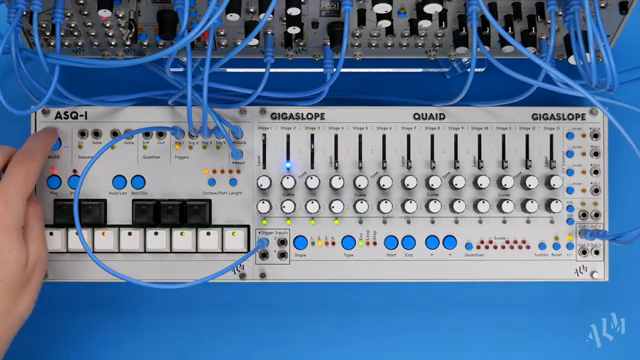 ALM TV’s QUAID GIGASLOPE: Four Channels of Modular Mayhem
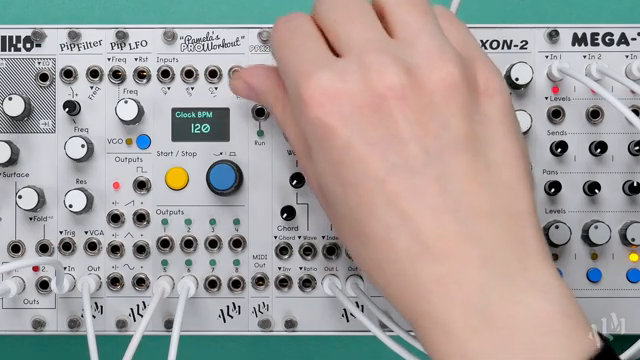 ALM TV’s FMco: Compact FM Synthesis, Maximum Patchability
 DivKid Illuminates Modular Alchemy: d’Voxx on Recording, Producing & Mixing Sonic Narratives
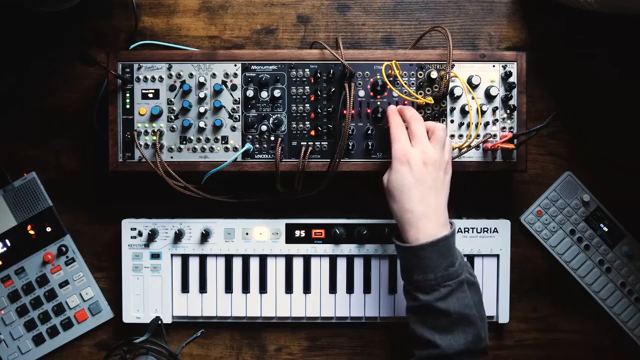 The Unperson Goes Full Triton: Eurorack Layering Like a Kangaroo on a Synth Bender
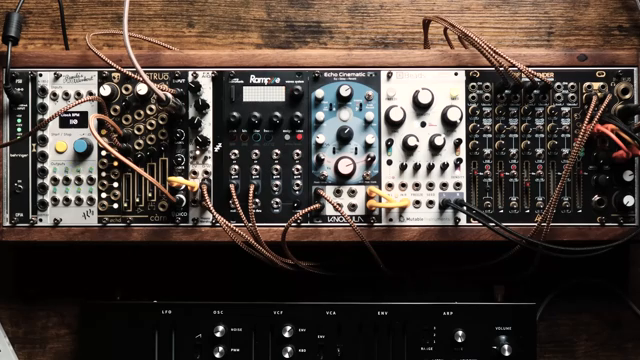 The Unperson’s Live Rig: A Hardware Rave That Laughs in the Face of DAWs
 The Unperson’s Polymeter Playground: Rhythms That Refuse to Behave
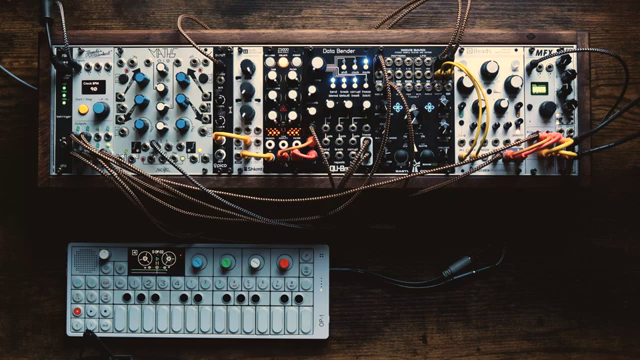 The Unperson’s OP-1 vs Modular FX: Turning a Cult Classic into a Sonic Street Weapon
Watch on YouTube:
Latest articles
Watch on YouTube:
Visit the channel:
https://www.youtube.com/4msCompany
https://www.youtube.com/4msCompany
Links from 4msCompany:
website: https://4mscompany.com
instagram: https://instagram.com/4ms_company
facebook: https://www.facebook.com/4mscompany
Sponsored links:
If you purchase via these links, we may earn a small commission – at no extra cost to you. The link opens an Amazon keyword search, and results may vary depending on availability.
4ms Quad Clock Distributor
🔗 Check price on Amazon
🔗 Check price on Amazon
4ms Rotating Clock Divider
🔗 Check price on Amazon
🔗 Check price on Amazon
Doepfer Modular System
🔗 Check price on Amazon
🔗 Check price on Amazon
ER-301
🔗 Check price on Amazon
🔗 Check price on Amazon
Harvestman modules
🔗 Check price on Amazon
🔗 Check price on Amazon
Meta Module
🔗 Check price on Amazon
🔗 Check price on Amazon
Ornament and Crime
🔗 Check price on Amazon
🔗 Check price on Amazon
Pamela's Pro Workout
🔗 Check price on Amazon
🔗 Check price on Amazon