RolandChannel’s n/vision brings modern wavetable synthesis into the portable Boutique format, fusing vintage digital character with expressive control. This official walkthrough highlights n/vision’s dual wavetable layers, hands-on morphing, filter models, and deep modulation—all in a compact, DAW-friendly package. We examine the underlying architecture, real-time sound-shaping workflow, and the device’s seamless integration into evolving studio and DAWless setups, keeping a close eye on how Roland translates complex synthesis into immediate playability.
21. October 2026
LYRA
Wavetable, Reinvented: RolandChannel’s n/vision Boutique Synthesizer Unpacked
Hybrid Heritage: n/vision’s Digital DNA
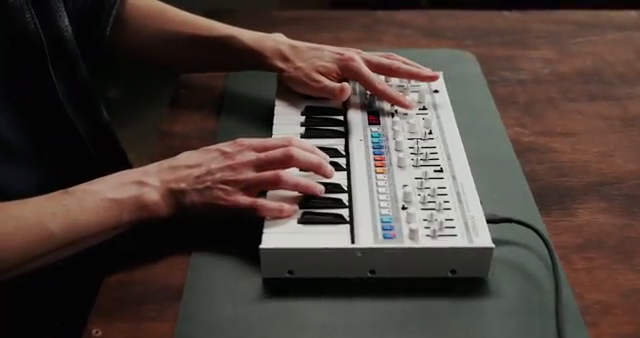
The n/vision emerges as Roland’s latest Boutique entry, proudly straddling the line between classic 80s digital synth character and cutting-edge technology. RolandChannel positions this instrument as a bridge, offering the morphing, evolving timbres associated with early digital architectures, while leveraging the immediacy and refinement of today’s DSP. The video makes it clear: this is not a retro reissue but a modern reimagining of what wavetable synthesis can be in a compact hardware format.
From the outset, the focus is on movement. n/vision is designed for sounds that are always in flux, never static. The walkthrough stresses how morphing and evolving textures are at the instrument’s core, with analog-modeled filters and contemporary modulation options rounding out the package. Roland’s approach here is to combine nostalgia with expressive workflow—giving familiar digital colors a fresh, hands-on twist.
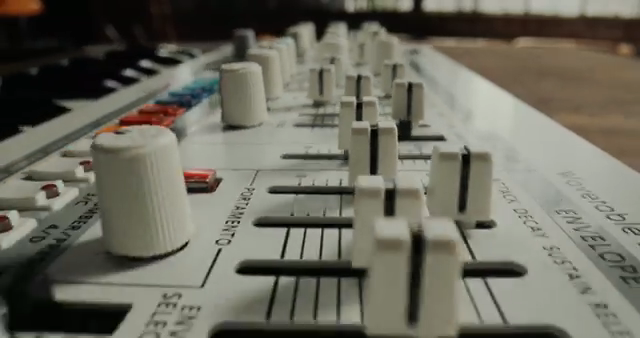
"With rich, evolving wavetable textures and analog model filters with lots of character."
© Screenshot/Quote: Rolandglobal (YouTube)
Layers, Wavetables, Filters: The Sound Engine
"Multiple filter models, some vintage-inspired, some modern, plus a drive control that adds grit and warmth."
© Screenshot/Quote: Rolandglobal (YouTube)
n/vision’s architecture centers on two independent wavetable layers, each pulling from a pool of 63 wavetables and 127 morphable positions per table. This setup allows for a rich palette of evolving timbres, as users scan, blend, and morph between waveforms in real time. The video demonstrates how the immediate front-panel controls make navigating this sonic terrain straightforward—a nod to the Boutique ethos of directness.
Beyond the oscillators, multiple filter models (some vintage-inspired, others more contemporary) are available, each adding their own flavor to the sound. A dedicated drive control injects grit or warmth as needed, pushing the synth from silky smooth to aggressive and biting. The architecture is designed for layering and transformation, with each element—from wavetable selection to filter shaping—immediately accessible for rapid experimentation.
Hands-on Morphing: Workflow in Motion
n/vision’s control philosophy is all about immediacy. Faders for wave morphing and a suite of performance controls put the instrument’s key parameters directly under the user’s fingers. The walkthrough shows how you can manually sweep through a wavetable, or assign movement to an LFO or envelope, making evolving sounds accessible even for those new to wavetable synthesis. The learning curve, at least for basic sound exploration, appears minimal.
Real-time modulation is a highlight: position LFOs, oscillator envelopes, and the ability to blend layers or shift octaves all contribute to a sense of dynamic play. The waveshaper introduces non-linear processing for more complex harmonic content—beyond what standard wavetables offer. The workflow encourages users to experiment, moving quickly from foundational tones to deeply modulated and harmonically rich textures. For those who thrive on tactile exploration, n/vision seems to deliver an inviting playground.
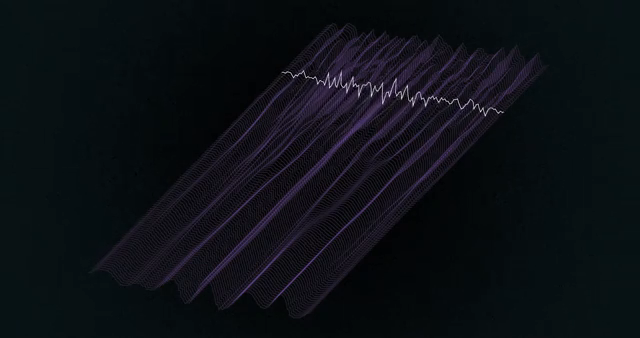
"The faders put wave morphing right under your fingers."
© Screenshot/Quote: Rolandglobal (YouTube)
Sequencing and Arpeggiation: Creative Structure
Roland includes a built-in sequencer and arpeggiator to support more structured creative workflows. The step LFO enables parameter modulation across 16 tempo-synced steps, making it possible to program rhythmic changes or evolving timbral shifts over time. The walkthrough demonstrates how this can transform a basic patch into a complex, evolving phrase, all without leaving the hardware.
A two-part, 64-step polyphonic sequencer allows for intricate melodic and harmonic patterns, while per-part arpeggiators add further motion. This sequencing architecture is designed to let users build track foundations directly on the n/vision, ideal for both DAWless setups and quick idea capture. The focus here is on integrating sound design and composition, reducing the gap between patch creation and performance.
Plugged-in Portability: Modern Connections
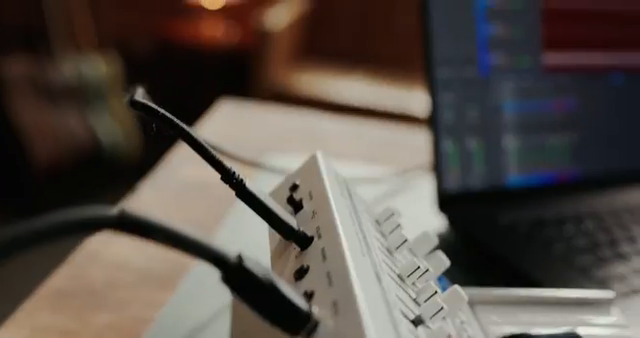
"Straight into your computer to record all of the N-Vision parts separately across the main mix, lower and upper parts, as well as an external input."
© Screenshot/Quote: Rolandglobal (YouTube)
n/vision rounds out its package with a strong emphasis on modern connectivity. The synth features USB-C for both audio and MIDI, allowing for multitrack recording of its parts straight into a DAW. Traditional five-pin MIDI in and out, as well as an external clock input, ensure compatibility with vintage and modular rigs. Whether running on USB-C power or AA batteries, and with a built-in speaker, n/vision is clearly positioned as a portable, all-in-one solution that fits easily into both home studios and on-the-go setups.
This article is also available in German. Read it here: https://synthmagazin.at/wavetable-neu-gedacht-rolandchannel-stellt-den-n-vision-boutique-synthesizer-vor/
Watch on YouTube:
Latest articles
Watch on YouTube:
Visit the channel:
https://www.youtube.com/rolandglobal
https://www.youtube.com/rolandglobal
Links from rolandglobal:
website: https://www.roland.com
roland_cloud: https://www.roland.com/global/promos/about_roland_cloud
instagram: https://instagram.com/rolandglobal
Sponsored links:
If you purchase via these links, we may earn a small commission – at no extra cost to you. The link opens an Amazon keyword search, and results may vary depending on availability.
Roland Boutique n/vision
🔗 Check price on Amazon
🔗 Check price on Amazon
Roland K25M keyboard dock
🔗 Check price on Amazon
🔗 Check price on Amazon