Voltage Labs threads a luminous path through ambient music’s clouded dawn, from Satie’s sonic furnishings to Eno’s tapestries of suspended time. With a keen eye for moments where music and environment dissolve into each other, this episode lingers in foggy airports, bustling Japanese storefronts, and the haunted decay of Basinski’s tapes. Here, the story of ambient is a meditation—on memory, loss, and the secret lives of sound between the notes.
12. October 2026
LUMINA
Voltage Labs Illuminates the Nebulous Origins of Ambient Music
Furniture for the Mind: Satie to Eno
Ambient music unfurls as a gentle mist, its roots tangled in the quiet revolution of Erik Satie. In 1917, Satie sowed the seeds of “furniture music,” imagining sound that would drift through rooms like light through dust—there, but never demanding. His vision was not for music to stand at the center, but to dissolve into the daily hum, a sonic tapestry woven into the fabric of existence. Yet, when listeners paused to absorb his pieces, the paradox became clear: this music was meant to disappear, but its very presence drew attention, subverting the rules of listening itself.
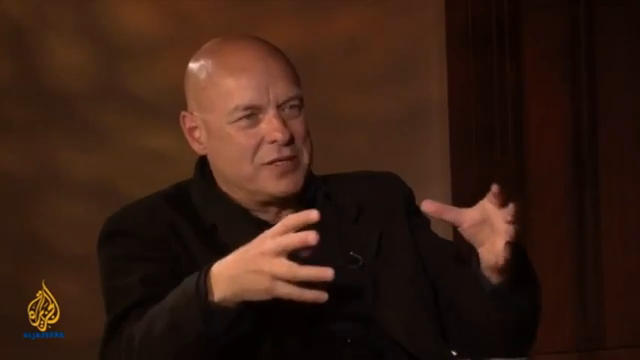
Decades later, Brian Eno would catch this elusive thread and spin it into the ambient genre’s first true garment. Eno’s 1970s experiments, inspired partly by a rain-soaked accident and a harp record playing at the edge of audibility, crystallized the idea of music as landscape—an environment to inhabit, not simply observe. In airports and introspective spaces, Eno’s approach allowed sound to hover, linger, and breathe, offering listeners the chance to either drift within or simply pass through. The genre was named; its boundaries evaporated.
"created a sort of landscape that you could belong to, you could be part of."
© Screenshot/Quote: Voltage Labs (YouTube)
Silence as Canvas: Cage, Reich, and the Power of Absence
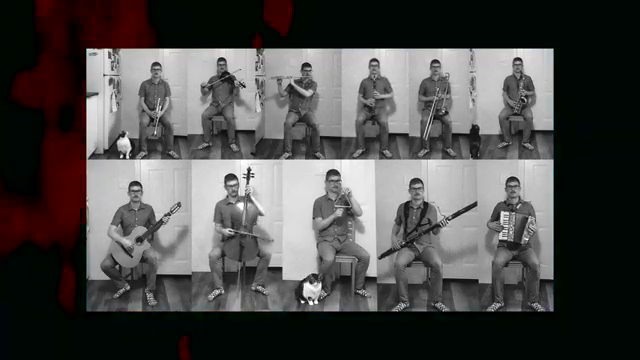
"the audience hears whatever happens around them – people moving, coughing, or sounds coming from the outside."
© Screenshot/Quote: Voltage Labs (YouTube)
Amid the 20th century’s laboratory of ideas, composers like John Cage and Steve Reich questioned not just what music could be, but what it could un-be. Cage’s infamous 4’33” turned silence into a magnetic field, inviting the audience to listen to the world as a living score—each cough, shuffle, and distant horn a ghostly performer. Here, music became the frame, not the painting, dissolving the line between art and atmosphere.
Reich, alongside Pierre Schaefer and others, played with the looped mechanics of memory—tape reels spinning, sounds fracturing and repeating, until time itself seemed to ripple. Lamont Young and Éliane Radigue, with their drones and slow spectral shifts, taught us that sound could stretch, pulse, and shimmer, abandoning melody and rhythm for something closer to weather than song. These bold experiments formed the gravitational core around which ambient would soon orbit.
Kankyō Ongaku: Soundtracking Everyday Life in Japan
As ambient drifted eastward, it found fertile ground in the gleaming corridors of 1980s Japan. Here, the genre was adopted by corporations eager to harmonize commerce with calm—music written not for the concert hall but for the shop floor, the model home, the gentle sway of daily existence. Haruomi Hosono’s “Watering a Flower” and Hiroshi Yoshimura’s “Surround” became ethereal companions to Muji stores and housing developments, dissolving the edges between art, architecture, and the routines of life.
This environmental music, or kankyō ongaku, was designed to be as invisible as air, yet decades later its vapor trails were rediscovered by listeners hungry for sonic nostalgia. What began as background for consumption blossomed into celebrated art, proof that the boundaries between public utility and personal reverie are as porous as fog. Voltage Labs frames this cultural migration not as footnote, but as a pulse within ambient’s global heart.
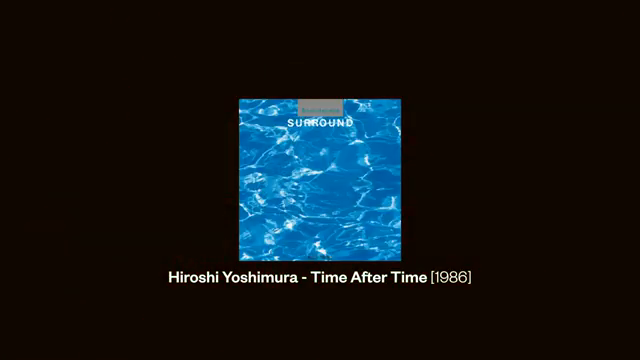
"This curious melting point between art, architecture and the corporate design became closely associated with kankyo ungatu, or environmental music."
© Screenshot/Quote: Voltage Labs (YouTube)
Ghosts in the Tape: William Basinski and the Art of Disintegration
In the hands of William Basinski, ambient became a vessel for memory’s decay—a slow-motion implosion of sound and time. While archiving old tape loops in 2001, Basinski witnessed the magnetic rust flake away with each pass, the music vanishing into dust even as he tried to preserve it. The resulting Disintegration Loops, played as smoke rose above Manhattan on September 11, became a requiem for both analog matter and collective loss, each note ghosted by entropy and grief.
Basinski’s process revealed the delicate mortality at the core of all recording: the medium is never neutral, always inviting both preservation and forgetting. To listen to these loops is to hear time itself unravel—a nebula of echoes, each repetition fainter, the music dissolving until only silence remains. The video’s retelling is sparse and evocative; to truly feel the slow collapse, the viewer must surrender to the looping arc of the original work.
Ambient Everywhere: The Invisible Architecture of Modern Sound
Today, ambient permeates the spaces between our thoughts—a vapor in streaming playlists, art installations, and algorithmic soundscapes for sleep, study, and solace. As Voltage Labs points out, we have circled back to Satie’s vision: music not as event, but as presence, a drift of tones that merge with footsteps, screens, and sunlight on the floor. Yet, the genre’s paradox persists. Some creators whisper, asking less of our attention, while others weave textures that reward the most intimate listening.
Ambient music ultimately invites us to question the edges of perception and presence. It’s not just a genre, but a way of being: sound as a companion, a shelter, a fogbank of memory and desire. To grasp its true resonance, one must step into the sound itself—where the story is written not in notes, but in the space between them.
This article is also available in German. Read it here: https://synthmagazin.at/voltage-labs-beleuchtet-die-nebuloesen-urspruenge-der-ambient-musik/
Watch on YouTube:
Latest articles
Watch on YouTube:
Visit the channel:
https://www.youtube.com/voltage_labs
https://www.youtube.com/voltage_labs
Links from voltage_labs:
instagram: https://www.instagram.com/voltage.labs
Sponsored links:
If you purchase via these links, we may earn a small commission – at no extra cost to you. The link opens an Amazon keyword search, and results may vary depending on availability.
The Disintegration Loops
🔗 Check price on Amazon
🔗 Check price on Amazon