UDO Audio returns with another Patchwork episode, this time enlisting Hazel Mills to dissect and reconstruct the iconic bass synth from The Knife’s ‘Heartbeats’ using the Super 8. The video is a hands-on exploration of classic sound design techniques—pulse width modulation and oscillator sync—showcasing the Super 8’s knack for nailing both subtle movement and massive, layered tones. As always with UDO, the focus is on immediate playability and sonic depth, with Hazel’s patching process revealing both the strengths and creative quirks of this British hybrid polysynth. If you’re after a synth that invites experimentation and rewards careful modulation, this is a revealing watch.

16. May 2025
MILES
UDO Audio’s Super 8: Patchwork Pursuits with The Knife’s ‘Heartbeats’
Chasing Heartbeats: The Super 8 Steps Up
The video opens with Hazel Mills setting out a familiar challenge: can the UDO Super 8 convincingly recreate the bass synth from The Knife’s ‘Heartbeats’? This isn’t just a nostalgia trip—it’s a practical test of the Super 8’s versatility and sonic character. UDO Audio, known for their hybrid approach and hands-on interface, put their flagship polysynth under the microscope, focusing on how it handles iconic, movement-rich sounds.
Hazel’s approach is methodical and rooted in classic synthesis. She immediately identifies the original’s timbre as being square or pulse-based, and sets up the Super 8’s oscillators accordingly. The process is less about copying presets and more about understanding the architecture—oscillator waveforms, pulse width, and subtle detuning all come into play. This sets the stage for a deep dive into the Super 8’s modulation capabilities and its suitability for both faithful emulation and creative reinterpretation.
"My first instinct is that we've got a kind of square, possibly pulse wave thing going on."
© Screenshot/Quote: Udo Audio (YouTube)
Pulse Width Modulation vs. Hard Sync: Two Roads to Movement
"So it's possible that there's pulse width modulation. Maybe quite slowly."
© Screenshot/Quote: Udo Audio (YouTube)
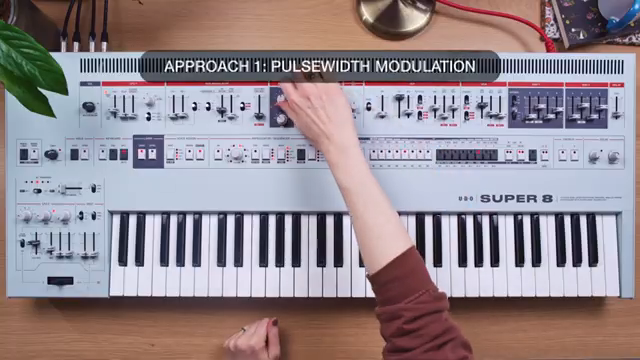
Hazel’s first tactic is pulse width modulation (PWM), a staple for adding life to static waveforms. By assigning DDS 1 to a square wave and DDS 2 to a pulse wave, she explores how changing the pulse width imparts that signature movement heard in ‘Heartbeats’. The Super 8’s modulation matrix allows for slow, evolving PWM, and Hazel notes that even without much envelope shaping, the sound is already close to the original. Adding a touch of detune and pitch modulation via aftertouch further thickens the texture, demonstrating the synth’s ability to respond dynamically to performance gestures.
Switching gears, Hazel tries a hard sync approach—forcing one oscillator to reset in phase with another, then modulating the pitch of the slave oscillator. This yields a different flavour of movement, less bright but rich in harmonic complexity. She experiments with removing binaural mode to centralise the sound and tweaks modulation sources, weighing up LFOs versus envelopes for pitch movement. The process is iterative, with Hazel comparing the results to her earlier PWM patch, highlighting the Super 8’s flexibility in achieving similar ends through different means.
A/B: The Sound of Two Techniques
With both patches dialled in, Hazel offers a direct comparison. The PWM approach delivers a brighter, more animated sound, while the hard sync patch is darker and denser. This side-by-side test is a practical demonstration of how the Super 8’s architecture lets users sculpt timbre not just through oscillator choice, but by exploiting different modulation paths. For those who obsess over the nuances of movement and harmonic content, this is a textbook example of why hands-on synths like the Super 8 remain so compelling.
Layered Mayhem: Combining Forces
The finale is pure synth excess: Hazel combines both techniques, stacking PWM and hard sync for a massive, almost unruly sound. The Super 8 doesn’t flinch, handling the layered modulation with ease and delivering a wall of tone that’s as playful as it is powerful. While it may be a bit over the top for a faithful cover, the point is clear—this synth invites experimentation, and its architecture rewards those willing to push it. For patchers who like to pile on the complexity, the Super 8 proves itself more than capable.

"The point is that you can if you want to pile on the sounds and it's massive."
© Screenshot/Quote: Udo Audio (YouTube)
This article is also available in German. Read it here: https://synthmagazin.at/udo-audio-super-8-patchwork-expeditionen-mit-the-knifes-heartbeats/
Watch on YouTube:
Latest articles
Watch on YouTube:
Visit the channel:
https://www.youtube.com/udo_audio
https://www.youtube.com/udo_audio
Links from udo_audio:
website: https://www.udo-audio.com
instagram: https://www.instagram.com/udo_audio
Sponsored links:
If you purchase via these links, we may earn a small commission – at no extra cost to you. The link opens an Amazon keyword search, and results may vary depending on availability.
UDO Super 8
🔗 Check price on Amazon
🔗 Check price on Amazon