RolandChannel takes a bold step with the Aerophone Brisa, targeting flute players who crave the expressive depth of acoustic winds with the flexibility of modern digital technology. This official walkthrough, featuring flutist Elena Pinderhughes, dives into the Brisa’s SuperNATURAL Winds engine, dual breath sensors, and a thoughtful interface that bridges traditional technique and digital power. With customizable fingerings, DAW integration, and a companion app, Brisa aims to be more than just another wind controller—it’s pitched as a creative platform for both seasoned performers and newcomers. We examine how Roland’s design choices translate into real-world workflows and where the video leaves questions for deeper exploration.

17. September 2025
LYRA
RolandChannel’s Aerophone Brisa: Digital Winds, Reimagined for Flutists
A Digital Wind Revolution for Flute Players
RolandChannel opens with a statement rarely heard in the world of wind instruments: the Aerophone Brisa is a digital wind controller purpose-built for flutists. Historically, most wind synths have leaned towards saxophone ergonomics, leaving flute players to adapt awkwardly. Here, Roland claims to have listened to the community, delivering an instrument that mirrors the form and feel of an acoustic flute while offering the creative freedoms of digital sound design.
The video’s host, Elena Pinderhughes, underscores how Brisa bridges the gap between tradition and technology. The instrument’s design is not just about replicating the flute’s physicality—it’s about enabling expressive performance without forcing players to abandon their established techniques. Roland’s pitch is clear: Brisa isn’t just another Aerophone variant, but a next-generation tool that expands the possibilities for wind players of all backgrounds.

"Roland has developed the AE Presa."
© Screenshot/Quote: Rolandglobal (YouTube)
SuperNATURAL Winds and Dual-Breath Sensors: Expression Engineered
"What makes this possible is a specialized sound technology called Supernatural Winds, which gives it rich, dynamic tones with lifelike expression."
© Screenshot/Quote: Rolandglobal (YouTube)
Central to Brisa’s sonic identity is Roland’s SuperNATURAL Winds technology, which the video credits with delivering rich, dynamic tones that respond to nuanced playing. This engine is designed to capture the subtleties of breath and articulation, aiming for a lifelike experience that goes beyond simple sample playback. The walkthrough highlights how this technology underpins the instrument’s ability to traverse genres and sound palettes.
A standout hardware feature is the dual breath sensor system. Unlike single-sensor wind controllers, Brisa’s approach allows for more detailed control, such as directing breath between two holes to switch octaves in flute mode. This, combined with performance-oriented controls like motion sensors and assignable buttons, is presented as a leap forward in expressive potential—though the video stops short of showing deep editing or calibration workflows.
Customizable Fingerings: Flute, Trumpet, and Beyond
Adaptability is a major theme, with Brisa supporting multiple fingering modes to suit different players. The default Brisa mode echoes saxophone fingerings, but the instrument also offers a dedicated flute mode that closely mirrors acoustic flute technique. This is a significant nod to inclusivity, making the transition smoother for flutists and reducing the learning curve.
For those with different backgrounds, trumpet mode and left/right hand variations are available. The video demonstrates how octave switching and key assignments change between modes, with features like octave buttons in Brisa mode and mouthpiece position determining range in flute mode. This flexibility is clearly designed to accommodate a wide spectrum of wind players, though the walkthrough doesn’t delve into how deeply these modes can be customized or extended.
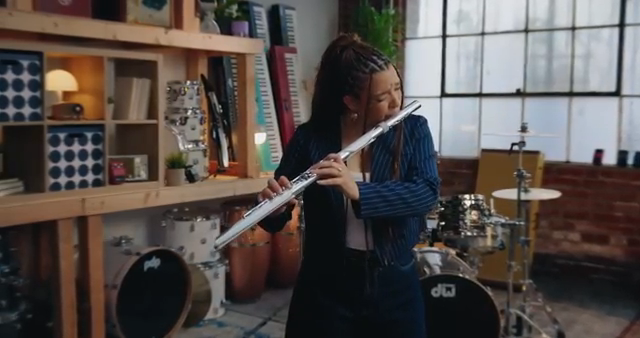
"There are more fingering variations, such as trumpet mode, and left and right hand modes, allowing you to play in your preferred style."
© Screenshot/Quote: Rolandglobal (YouTube)
Connectivity and Built-In Sound: Studio, Stage, and Practice Ready
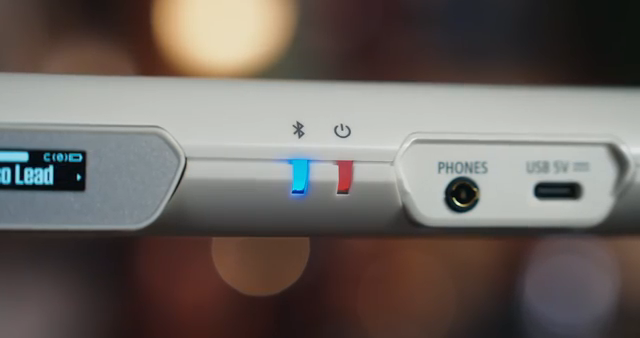
"The Presa supports both Bluetooth and USB MIDI, so you can connect wirelessly to apps, pedals, or mobile sound tools."
© Screenshot/Quote: Rolandglobal (YouTube)
Roland emphasizes Brisa’s modern connectivity, equipping it with both Bluetooth and USB MIDI. This allows for wireless integration with apps, pedals, and mobile tools, as well as traditional wired connections to DAWs and hardware. The video notes that Brisa can also function as a USB audio interface, enabling direct recording into a DAW—an increasingly common but still valuable feature for hybrid workflows.
The built-in speaker is highlighted as a practical tool for warming up or practicing without external amplification. For private sessions or stage monitoring, standard headphone and in-ear outputs are available. While these features make Brisa versatile for a range of environments, the video doesn’t address latency, audio quality, or how the instrument performs in dense, multi-device setups—areas that would merit further hands-on testing.
The Companion App: Unlocking Creative Potential
The free Aerophone Brisa Plus companion app is presented as an essential extension of the instrument. Available for iOS and Android, it allows users to save and recall tones, access additional sounds via Roland Cloud, and adjust parameters like breath sensitivity and controller assignments. This app-centric approach is increasingly common in digital instruments, promising deeper customization without menu-diving on the hardware itself.
Roland positions the app as a gateway to ongoing creative expansion, with cloud-based content and flexible control mapping. However, the video only briefly shows the app in action, leaving open questions about its interface, stability, and the breadth of available sounds. For users invested in software-hardware integration, these details will be crucial in assessing Brisa’s long-term value.
This article is also available in German. Read it here: https://synthmagazin.at/rolandchannel-praesentiert-die-aerophone-brisa-digitale-blasinstrumente-neu-gedacht-fuer-floetisten/
Watch on YouTube:
Latest articles
Watch on YouTube:
Visit the channel:
https://www.youtube.com/rolandglobal
https://www.youtube.com/rolandglobal
Links from rolandglobal:
website: https://www.roland.com
roland_cloud: https://www.roland.com/global/promos/about_roland_cloud
instagram: https://instagram.com/rolandglobal
Sponsored links:
If you purchase via these links, we may earn a small commission – at no extra cost to you. The link opens an Amazon keyword search, and results may vary depending on availability.
Roland Aerophone Brisa
🔗 Check price on Amazon
🔗 Check price on Amazon