A basic arpeggio, two additional high notes: Voltage Labs doesn't need much more at first. In his video "Roland N/Vision | Live-Performance & Walkthrough" published on November 1, 2026, the creator explains how his jam emerges from this. For much of the track, the real work is done by the filter envelope and layer mix. Not every musical twist here requires a new note. Sometimes it's enough to let the same note become something else.
Movement Begins Before the Filter
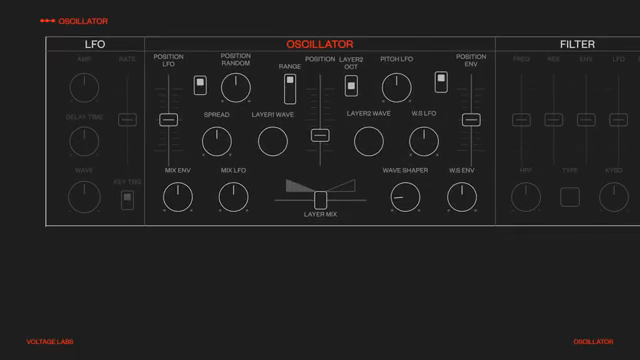
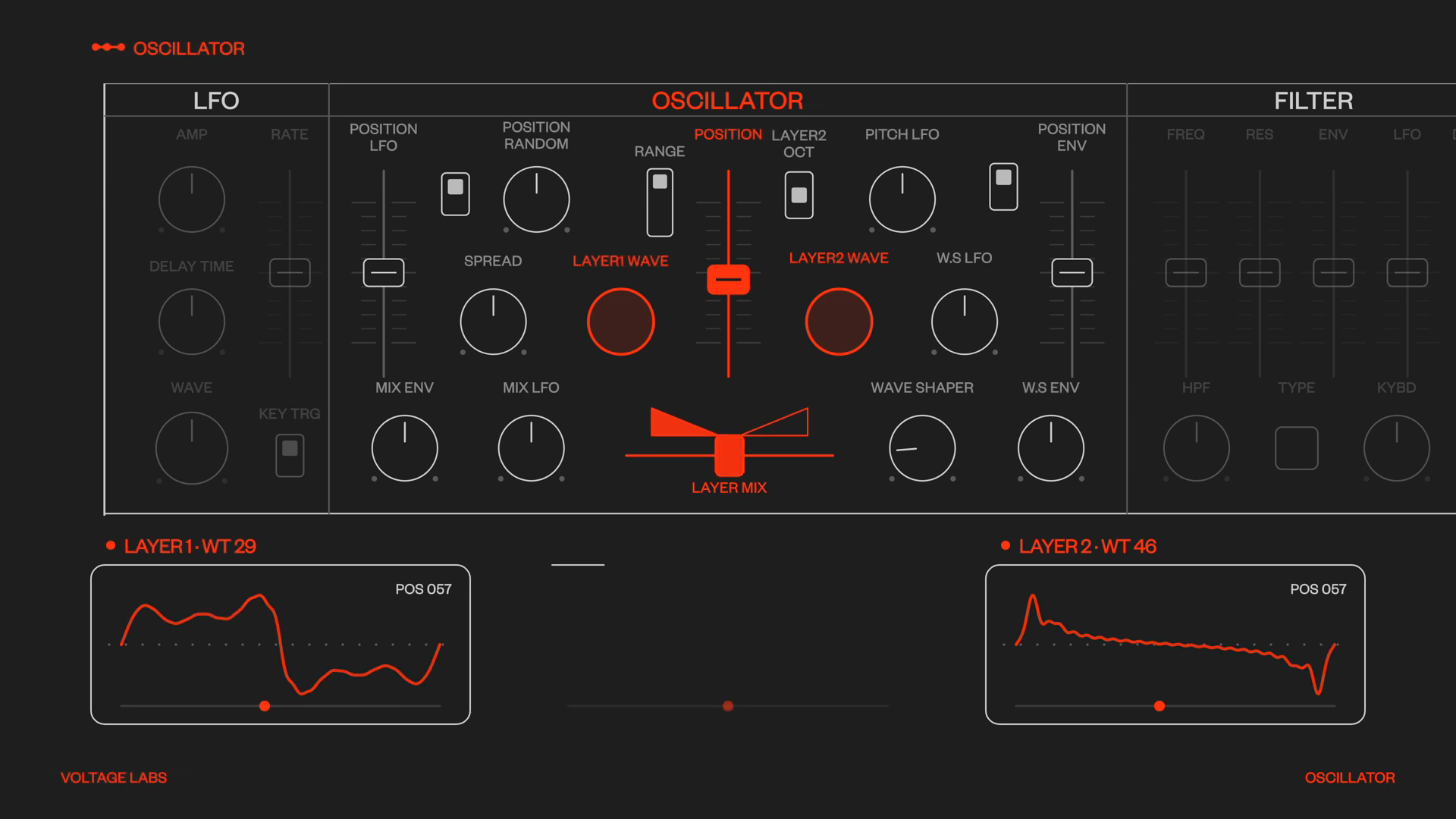
“Layer 1 and 2 let you select two different wavetables. Position lets you move through their wavetables, while layer mix lets you blend the two together. Dedicated LFO, envelope, and random modulation controls allow you to automate these movements.”
© Screenshot/Quote: Voltage Labs (YouTube)
Voltage Labs first distinguishes between two types of interventions: Position changes the waveform within the selected wavetables, while layer mix adjusts the balance between them. One moves through the material, the other shifts the weighting of two sound sources. LFO, envelope, and random modulation can automate these changes. Timbre is thus not just a setting before playing, but a musical process in itself.
Little Material, Many States
In the track, this doesn't remain an abstract synthesis selection. Voltage Labs describes how, throughout the jam, he keeps changing the balance between the two layers and the filter envelope; octave position also becomes a tool. The filter is by no means left idle. Rather, wavetable movement expands the space in which it can act. This limitation is what makes things interesting: The note material provides stability while its sonic shape keeps changing.
For the pad, he uses the same sound twice, one version an octave higher, with a portamento character. He sends both together through Arturia's Dimension D. This is an important distinction: The spatial development of his arrangement doesn't arise solely within n/vision. The creator demonstrates a production process, not an isolated factory sound.
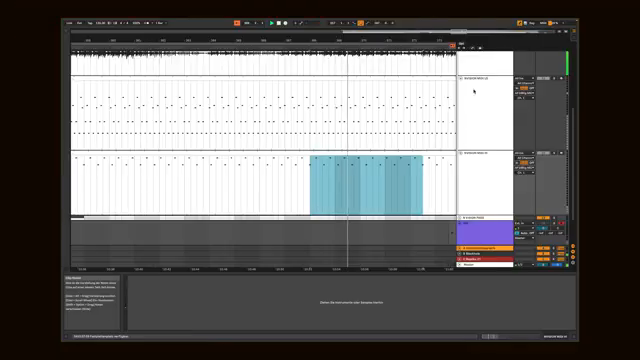
“And then pretty much throughout the entire length of the jam, I just played around with the filter envelope, the mix between the two layers, and the many different timbres that you could get.”
© Screenshot/Quote: Voltage Labs (YouTube)
Even the Rough Edge Gets Its Own Progression
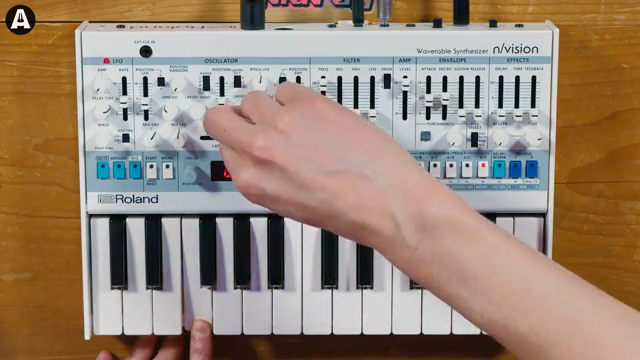
“But you can also control that either via an LFO or an envelope. So if I add just a bit of an envelope, based on our attack and decay, it's going to sort of bring in that distortion and take it out.”
© Screenshot/Quote: Andertons Synths, Keys and Tech (YouTube)
In the Andertons video published on October 22, 2026, a Roland representative builds up the sound step by step. He chooses wavetable 41, shifts it down an octave, and uses position to find a vocal-like area. Attack, decay, and the position envelope shape its progression. Then he adds a second, even lower wavetable. It's a vivid moment: It's not just an effect that turns the raw material into an articulated gesture.
He then demonstrates the waveshaper as an additional source of overtones. Even its grit doesn't have to stick to the sound permanently: An envelope can bring it in and take it out again. This way, not only the vocal character but also the aggressive edge gets its own temporal shape.
Letting the Ear Decide
The Andertons host responds to this build-up with a personal observation: He finds it appealing not to constantly see the waveform. This is not proof that operation without graphics is fundamentally better. Later, he himself recalls that a visual representation helped him understand wavetable synthesis. Here, it's more about a shift in attention: away from the expected curve image, toward audible change.
A limitation is also mentioned by the Roland representative: According to him, it's not possible to load your own wavetables. The freedom here lies in shaping and moving the existing material, not in importing your own collection of waves.
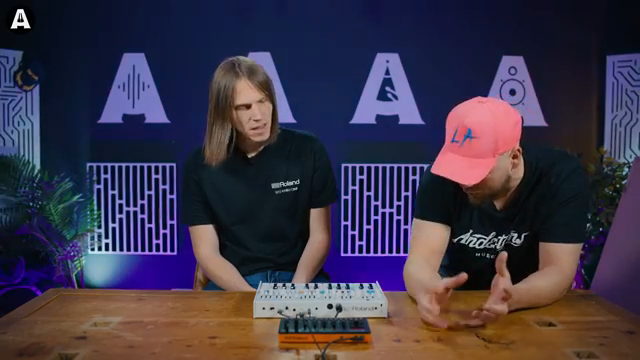
“I've only ever seen it with visual representation, and I feel already I'm excited by this of not seeing the waveform and just using my ears a bit more.”
© Screenshot/Quote: Andertons Synths, Keys and Tech (YouTube)
The most appealing idea in Voltage Labs’ jam is therefore not the most alien waveform possible. It's the decision to give a manageable motif ever new states. The next musical twist doesn't have to be on the keyboard. It can lie in the transition between two timbres.
Videos for this article
All YouTube videos featuring the Roland n/vision
Primary – main topic (5)
 Roland N/Vision | Live-Performance & Walkthrough | Voltage Labs
 Roland n/vision - Classic '80s Wavetable Sound, Modern Boutique Creativity!
 Roland n/vision Demo with Factory and Custom Presets
 Roland's new Wavetable Synth "n/Vision " - Demo with Presets for Ambient and Techno
 Roland n/vision Boutique Wavetable Synthesizer Sound Snacks | SYNTH ANATOMY