Ever felt your tracks are as stiff as a possum on a cold morning? Rapid Flow’s Erik is here to shake things up like a dust storm at a bush doof. In this wild ride, he spills the beans on how a decade of groove obsession led him to ditch the grid and inject real human swing into EDM. From micro-timing wizardry to the E-RM Multiclock’s rotary magic, Erik’s approach is more about feel than numbers—just the way we like it. If you’re keen to make your beats bounce with life, this one’s a must-watch. Grab your headphones and get ready for a groove lesson that’s anything but ordinary.
28. December 2025
TAS
Rapid Flow’s Groove Sorcery: Off-Grid EDM That’ll Make Your DAW Sweat
Ableton Live 12, E-RM Multiclock, Waves InPhase LT, Zensphere VSTi
Off the Grid and Into the Groove
Let’s kick things off with Erik from Rapid Flow, who reckons the secret sauce to making EDM truly slap isn’t another plugin or a shiny new synth, but a willingness to step off the grid—literally. Instead of sticking to the DAW’s rigid timing, Erik’s all about chasing that elusive human feel, the kind that makes a crowd move like a mob of kangaroos after a servo pie run. He admits it took him nearly a decade to crack the code, but once he did, it was like finding a cold beer in the middle of the outback.
The heart of his approach is about unlocking vibrancy and life in your music. By remixing a classic Hallucinogen track, Erik demonstrates how adding his own parts forced him to confront the lifelessness that creeps in when everything’s too perfect. It’s not about being sloppy—it’s about finding that sweet spot where the groove breathes, pulses, and pulls you in. If you’ve ever wondered why your technically perfect tracks still feel a bit dead, this is the wake-up call you need.
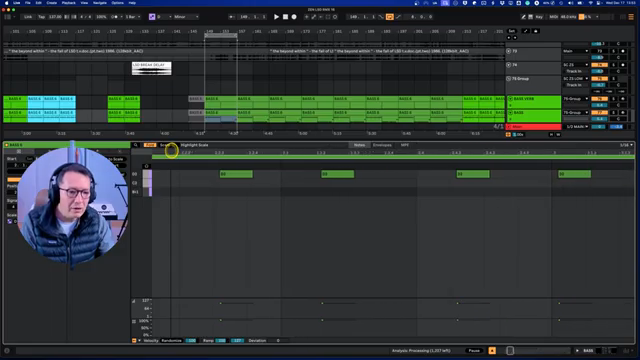
"Don't be afraid to go off grid."
© Screenshot/Quote: Rapidflow Shop (YouTube)
Micro-Timing: The Secret Ingredient
"Do you hear how massive the difference is in the microtiming of where the kick is kind of like cutting through the music and hitting in the track?"
© Screenshot/Quote: Rapidflow Shop (YouTube)
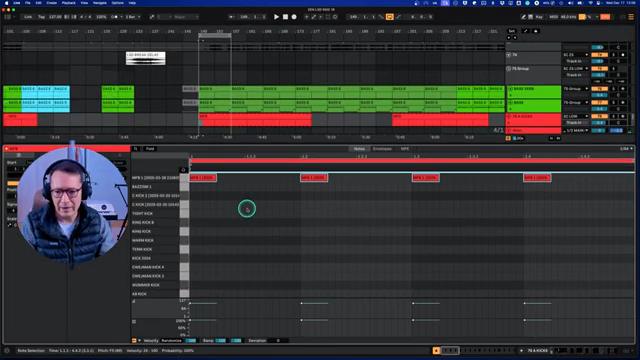
Erik dives into micro-timing like a surfer chasing the perfect wave—subtle shifts that you feel more than hear. He shows how his basslines, sequenced with the Torso T1 and dialled in with the E-RM Multiclock, are nowhere near the grid. Instead, they’re nudged and shuffled until they lock in with the track’s vibe, not just its metronome.
This isn’t about random chaos, though. The trick is to keep your kick drum absolutely nailed to the grid, giving everything else room to dance around it. Erik’s advice is clear: if your kick’s not tight, you’re in for a world of pain. Once that’s sorted, you can start playing with the timing of other elements, introducing micro-delays and swings that transform a flat track into a living, breathing beast. It’s the difference between a sausage sizzle and a full-on BBQ feast—subtle, but game-changing.
E-RM Multiclock: Rotary Encoders and Groove Training
Now, here’s where things get spicy. Erik credits the E-RM Multiclock for training his ears to spot micro-timing differences like a seasoned DJ spotting a dodgy USB stick. This box takes audio from your computer and spits out a rock-solid MIDI clock, letting you shift timing with rotary encoders until everything feels just right.
The real magic is in the hands-on tweaking. By nudging the timing forward or back, Erik finds the groove’s sweet spot, making his tracks feel alive and unpredictable. It’s not just about technical precision—it’s about developing an intuitive sense of what makes a beat hit hard. If you’ve never twisted a knob and suddenly felt the whole track click into place, you’re missing out on one of music production’s great joys. Watching Erik work the Multiclock is like seeing a BBQ master flip snags at the perfect moment—simple, but deeply satisfying.
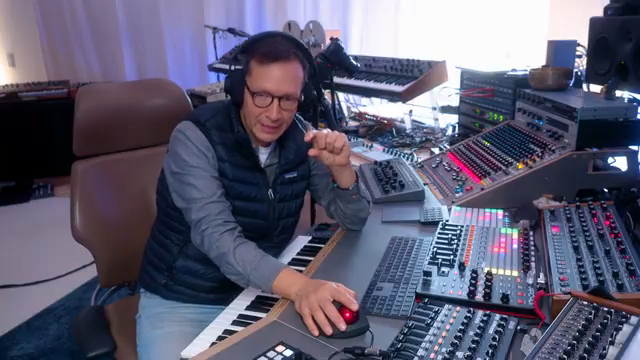
"Being able to turn a rotary trained my hearing to listen to these micro timing differences to the point now where when I hear something in a track is like ahead or behind the beat, it's kind of like DJing."
© Screenshot/Quote: Rapidflow Shop (YouTube)
Timing Tricks: Kicks, Bass, and the Art of the Nudge

"First of all you need to be able to train your hearing to hear these things, and you know my path there was the multi-clock because that's the first time I had a rotary encoder where I could really hear this."
© Screenshot/Quote: Rapidflow Shop (YouTube)
Erik gets down to brass tacks with a series of timing experiments that’ll have you questioning everything you know about groove. First up, he demonstrates how shifting MIDI notes—even by a few milliseconds—can radically change the feel of a bassline or arpeggio. It’s not about quantising everything to death; it’s about nudging parts until they sit just right against the kick.
He then moves on to audio clips, showing how adjusting start points can pull a melody forward or push it back, subtly changing the track’s momentum. This isn’t just DAW trickery—it’s hands-on, ears-first production. Erik also drops a cheeky tip with Waves InPhase LT, using it to seamlessly shift snares and hi-hats in time. Even a few milliseconds can be the difference between a groove that slaps and one that flops like a soggy chip at the footy.
Throughout, Erik hammers home the importance of trusting your ears over your eyes. Forget what the grid says—if it feels right, it is right. His workflow is a blend of technical know-how and gut instinct, and he’s not afraid to call out the myths (like the uselessness of Ableton’s track delay for bouncing). For the full impact, you’ll want to watch him nudge, tweak, and groove in real time—some things just can’t be bottled up in an article.
Groove in Action: The Final Playthrough
To wrap things up, Erik treats us to a playthrough of his Hallucinogen rework, letting all the groove tricks shine in a real-world context. It’s the proof in the pudding—every micro-timing tweak, every off-grid nudge, comes together in a track that pulses with life. If you want to hear how these ideas sound when the rubber hits the road, this is your moment. Chuck on some headphones and let the groove take you for a spin—because some things, mate, you just have to feel for yourself.
This article is also available in German. Read it here: https://synthmagazin.at/rapid-flows-groove-zauberei-off-grid-edm-die-deinen-daw-ins-schwitzen-bringt/
Watch on YouTube:
Latest articles
Watch on YouTube:
Visit the channel:
https://www.youtube.com/RapidFlow_Shop
https://www.youtube.com/RapidFlow_Shop
Links from RapidFlow_Shop:
Rapid Flow Store: https://rapidflow.shop
Instagram: https://www.instagram.com/rapidflow_shop/
Facebook: https://facebook.com/SetsunaMusic
Sponsored links:
If you purchase via these links, we may earn a small commission – at no extra cost to you. The link opens an Amazon keyword search, and results may vary depending on availability.
Ableton Live 12
🔗 Check price on Amazon
🔗 Check price on Amazon
E-RM Multiclock
🔗 Check price on Amazon
🔗 Check price on Amazon
Waves InPhase LT
🔗 Check price on Amazon
🔗 Check price on Amazon
Zensphere VSTi
🔗 Check price on Amazon
🔗 Check price on Amazon