Qu-Bit, the digital mavericks of Eurorack, have surfaced with a substantial firmware update for their Nautilus module—a delay network that’s always been more Jacques Cousteau than classic tape echo. Version 1.2.0 brings a host of new features, including an onboard reverb, expanded delay and feedback modes, and a suite of workflow enhancements. In this article, we dissect what’s new, how it reshapes Nautilus in a live rack, and what creative doors it opens for the voltage-obsessed explorer. If you’re after a delay module that’s as much about performance as it is about sonic experimentation, Qu-Bit’s latest update is worth a closer look.
22. January 2025
MILES
Qu-Bit Nautilus v1.2.0: Diving Deeper into the Subnautical Delay Network
Subnautical Shifts: Nautilus Gets a Firmware Overhaul
Nautilus has always stood out as Qu-Bit’s subnautical delay network, and with firmware v1.2.0, it receives a significant injection of new features aimed squarely at the performance-minded modularist. The update process itself is straightforward—simply download the bin file, load it onto a USB drive, and let Nautilus handle the rest upon reboot. This ease of updating is a nod to Qu-Bit’s community-driven approach, as they’ve actively involved users in beta testing and feedback via their Discord.
The new firmware isn’t just about bug fixes; it’s a genuine expansion of Nautilus’s sonic and functional palette. From mix curve control to reverb and new delay behaviours, the update is clearly designed to make Nautilus more adaptable and expressive in a live rack. For those who thrive on hands-on manipulation and evolving textures, these additions promise to deepen Nautilus’s role as a centrepiece in creative signal chains.

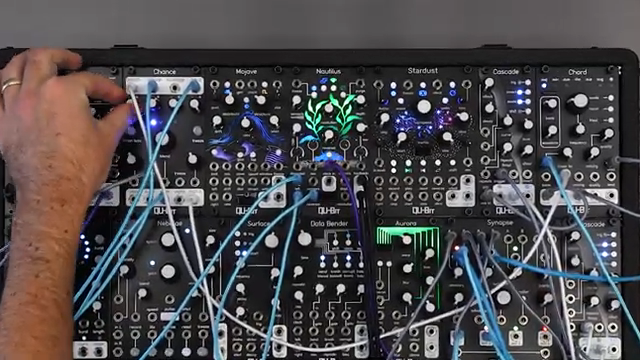
"Nautilus version 1.2.0 includes some awesome new features including control over the mix curve, new delay and feedback behaviors, a reverb, and more."
© Screenshot/Quote: Qubitelectronix (YouTube)
Reverb and Delay: Expanding the Sonic Depths
"Nautilus now has an onboard reverb that is applied to the dry and wet signals."
© Screenshot/Quote: Qubitelectronix (YouTube)
One of the headline features in v1.2.0 is the onboard reverb, which can now be applied to both the dry and wet signals. This isn’t just a bolt-on effect—the reverb is integrated into the Nautilus workflow, accessible by holding the tap button and turning the resolution knob. The reverb mix can be dialled in to taste, but users are cautioned about the extremes of the range, which can flip depending on the input signal.
Alongside the reverb, Nautilus gains new delay and feedback behaviours. These additions offer more nuanced control over how echoes and repeats are handled, giving patchers the ability to sculpt their delay lines with greater precision. Whether you’re after subtle ambience or cavernous, modulated tails, the updated Nautilus now provides more tools to shape your sound in real time.
Freerunning and Mono Modes: Delay Behaviour Reimagined
The introduction of freerunning delay mode marks a notable shift for Nautilus. By holding tap and pressing the delay mode button, users can activate this mode—indicated by a green LED—which allows the resolution knob to smoothly transition delay times, decoupled from clock sync. This is a boon for those who want to morph delay times on the fly without the abruptness of quantised jumps.
Another practical addition is summed mono mode, which ensures that the dry signal stays centred while the delay lines remain in stereo. By holding tap and pressing the feedback mode button, Nautilus sums the left and right inputs to mono before they hit the delay lines. This is particularly useful for classic ping-pong effects, where you want the input signal anchored in the middle while the echoes dance across the stereo field.

"You will know you've activated the mode if the delay mode LED is green."
© Screenshot/Quote: Qubitelectronix (YouTube)
Workflow Tweaks and Aesthetic Touches: Mix Modes, Purge, and Custom LEDs

"When active, Nautilus will continuously purge the delay lines of audio until either the purge button is released or the purge gate signal goes low."
© Screenshot/Quote: Qubitelectronix (YouTube)
Qu-Bit hasn’t just focused on sound—they’ve also expanded Nautilus’s creative workflow and customisation options. Mix mode control, accessible via the Narwhal editor, lets users select different mix curves between dry and wet signals, moving beyond the default linear response. Options like constant power, transition, or wet amount curves allow for more nuanced blending, which can be crucial in a performance context.
A standout new feature is the continuous purge option. When activated, Nautilus continuously clears the delay lines until the purge button is released or the gate goes low. This isn’t just a utility—it’s a performative tool, letting users dynamically remove and reintroduce echoes for organic, evolving textures. Combined with the LED dimmer and customisable LED colours (also set via Narwhal), Nautilus can now be tailored both sonically and visually to fit any rack or stage setup.
Even the reverb gets further tweakability, with selectable timbres—Normal, Bright, and Dark—available through Narwhal. These touches, while subtle, reinforce Qu-Bit’s commitment to both sound design flexibility and user experience. Nautilus v1.2.0 feels less like a minor update and more like a thoughtful reimagining of what a digital delay network can be in a modular environment.
This article is also available in German. Read it here: https://synthmagazin.at/qu-bit-nautilus-v1-2-0-noch-tiefer-im-subnautischen-delay-netzwerk/
Watch on YouTube:
Latest articles
Watch on YouTube:
Visit the channel:
https://www.youtube.com/QuBitElectronix
https://www.youtube.com/QuBitElectronix
Links from QuBitElectronix:
Sponsored links:
If you purchase via these links, we may earn a small commission – at no extra cost to you. The link opens an Amazon keyword search, and results may vary depending on availability.
Qu-Bit Nautilus
🔗 Check price on Amazon
🔗 Check price on Amazon