OXI Instruments is back with a fresh firmware update for their flagship sequencer, the OXI One MKII, and the highlight is Saga Mode—a sequencing paradigm that shatters the traditional step grid. Inspired by stage-based composition, Saga Mode opens up a world of polyphonic freedom, allowing each stage to breathe with independent duration, notes, and performance parameters. In this deep-dive, OXI walks us through everything from evolving melodies to counterpoint and fractional timing, all within a hands-on, performance-focused workflow. If you’re looking to push past rigid patterns and design intricate, expressive sequences, Saga Mode is poised to become your new creative playground.
11. June 2026
LYRA
OXI Instruments: Saga Mode on the OXI One MKII – Escaping the Grid with Nigrán 2.0
Breaking the Grid: The Saga Mode Concept
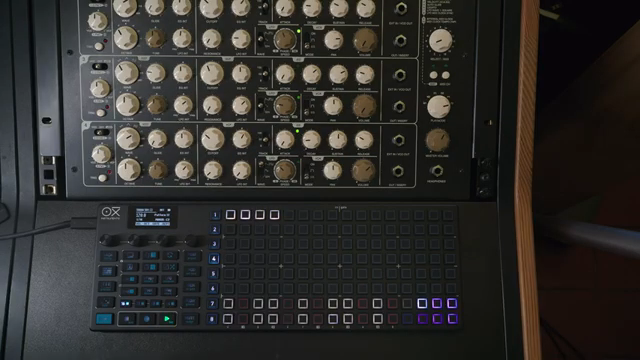
Saga Mode arrives in the Nigrán 2.0 firmware as OXI Instruments’ inventive answer to traditional step sequencing. Instead of chaining music to a rigid grid, Saga Mode invites users to construct sequences from ‘stages’—self-contained musical events, each defined by their own notes, durations, and performance characteristics. This shift is more than cosmetic; it reimagines composition as a series of evolving gestures rather than a series of locked steps.
The video underscores Saga’s fully polyphonic nature and its support for both accumulator and repetition engines. By decoupling melodic ideas from a fixed timeline, the OXI One MKII positions itself as a tool for creative exploration, making it possible to generate flowing, dynamic phrases that are difficult or impossible to achieve with classic step sequencing. OXI’s presentation makes clear that Saga Mode is designed for musicians who want to break out of the box and discover new musical structures.
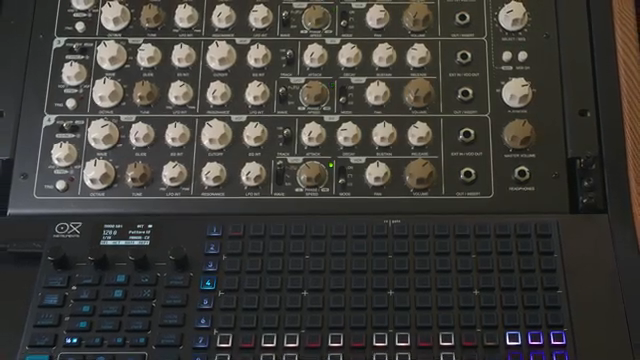
"Saga is our take on stage sequencing, a way of composing music without relying on a fixed grid."
© Screenshot/Quote: Oxiinstruments (YouTube)
Stages Unleashed: Independent Durations and Notes
Saga Mode’s approach to stages is central to its workflow. Users can freely activate any pad in the 6×16 grid to create a stage; there’s no requirement for linear order, and skipped stages act as intentional pauses, providing an intuitive way to shape phrasing. Each stage is its own creative space, holding not just notes but also parameters like velocity, gate length, offset, note randomness, and trigger probability.
The hands-on demo shows how easily one can build polyphonic or monophonic lines, as the system defaults to polyphony but can be switched to mono if desired. By adjusting notes through either encoders or the integrated keyboard, users can stack harmonies or keep things minimal. Saga Mode encourages experimentation, making it easy to add, skip, or modify stages and immediately audition results, all without breaking the creative flow.
Timing, Accumulators, and Fractional Rhythms: Saga’s Engine Room
"Each stage can have a duration of up to 100 steps, and durations can also be fractional."
© Screenshot/Quote: Oxiinstruments (YouTube)
A defining feature of Saga Mode is the granular control over each stage’s duration. Durations can range up to 100 steps and, crucially, can be fractional—allowing for nuanced polyrhythms and grooves. The ability to offset start times, manipulate gate lengths, and tweak total sequence duration makes Saga Mode a playground for those who enjoy sculpting time as much as sound. The sequencer always displays the total sequence duration, helping users keep their structures under control even amidst experimentation.
The video spotlights the repetition and accumulator engines, both of which are accessible via dedicated pages within each stage’s parameter set. Repetitions let users cycle a stage multiple times before progression, while the accumulator can systematically ratchet or build variation across repeats. The presenter demonstrates how adjusting stage duration interacts with these engines to create evolving patterns, especially when paired with groove and randomization functions. These tools are critical for anyone looking to step beyond four-on-the-floor and into more adventurous rhythmic territory.
Saga’s support for fractional values and tied stages further opens up compositional possibilities. By tying stages and mixing integer and fractional values, users can craft highly detailed timing structures. Inserting new stages mid-pattern is straightforward, thanks to shift-and-arrow navigation, which lets performers keep their patterns fluid and evolving. The presenter’s workflow is consistently hands-on and immediate, echoing OXI Instruments’ ethos of fast, direct interaction.
Chords and Counterpoint: Creative Techniques in Saga
Saga Mode doesn’t stop at single-note sequencing; it excels at building chord progressions and multi-voice textures. Activating a stage and entering multiple notes on the keyboard instantly creates a chord, with each voice reacting to the user’s chosen MIDI channel. Adjusting stage durations or time divisions dramatically alters the feel and flow of a progression, turning simple blocks into expressive harmonic movement. The workflow for polyphonic programming is fast and deliberate, making complex voicings accessible in real time.
The real showstopper, though, is Saga’s counterpoint potential. By running multiple Saga instances across different sequencers—each with independent durations and MIDI channels—users can weave interlocking monophonic lines that loop against one another. This creates organically shifting relationships and emergent melodies, perfect for those who love generative music or want their patterns to surprise them. The video’s demonstration of four sequencers in counterpoint illustrates just how quickly unique, evolving musical ideas can materialize.
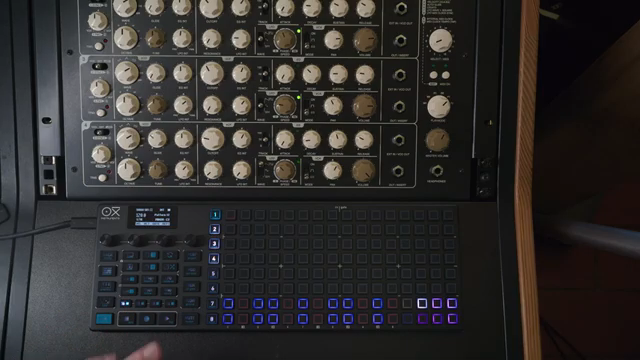
"This allows you to explore the interaction between independent melodic lines and generate interesting counterpoint between voices."
© Screenshot/Quote: Oxiinstruments (YouTube)
Thinking Outside the Grid: The Saga Mindset
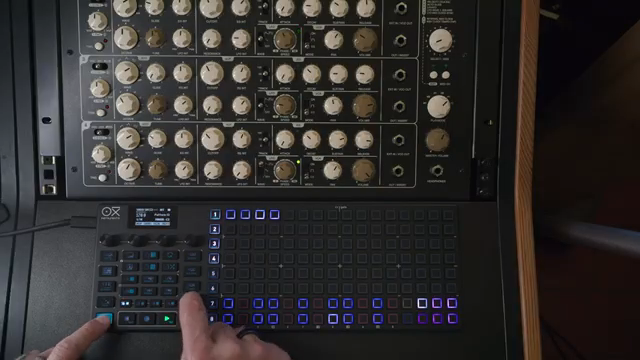
"Saga is designed to help you escape the grid and explore a different approach to composition."
© Screenshot/Quote: Oxiinstruments (YouTube)
Saga Mode is not just another sequencer feature—it’s an invitation to rethink compositional structure on the OXI One MKII. By trading the rigidity of fixed steps for a stage-based approach, OXI Instruments encourages users to break habits and explore musical directions they might never find within a traditional grid. For producers interested in unique melodies, evolving rhythms, and hands-on experimentation, Saga Mode could quickly become a transformative part of their toolkit.
This article is also available in German. Read it here: https://synthmagazin.at/oxi-instruments-saga-mode-auf-dem-oxi-one-mkii-ausbruch-aus-dem-raster-mit-nigran-2-0/
More articles about these products:
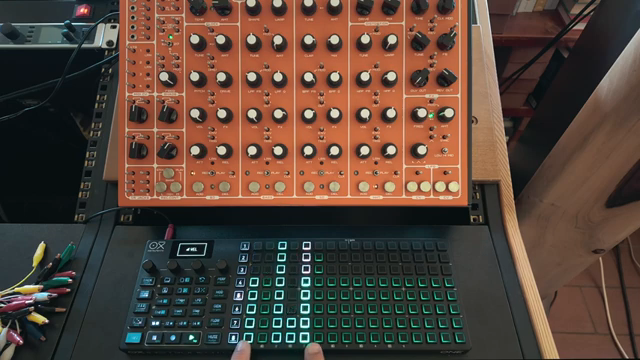 OXI Instruments: Polyrhythmic Grooves with the OXI One mkII’s Decoupled Velocity and Gate
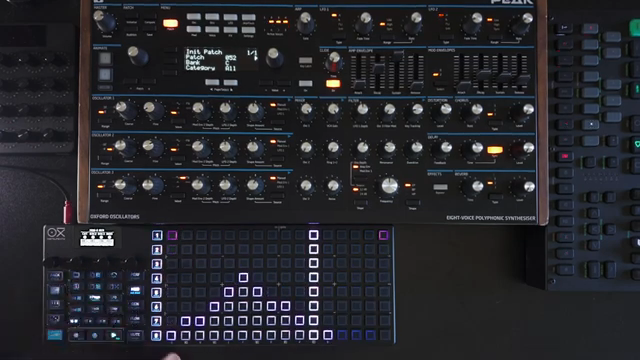 OXI Instruments OXI One mkII: Mod Lanes Unleashed
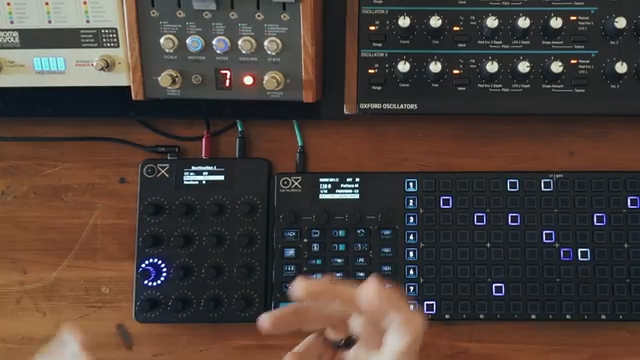 OXI Instruments E16: Dual MIDI Destinations Demystified
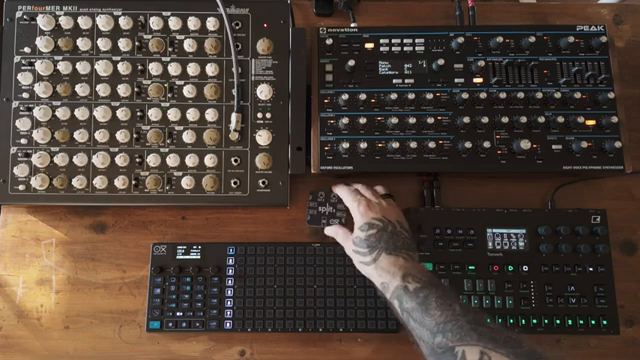 OXI Instruments: Architectural MIDI Connections with the OXI ONE MKII
 OXI Instruments Reinvents Sequencing: Stochastic Mode on the OXI One MKII
 OXI Instruments OXI One MKII: CV & Gate Wizardry for Modular Setups
 OXI Instruments OXI One MKII: Modulation Lanes Unleashed
 OXI Instruments OXI One MKII: Multitrack Mode as the Heart of Hybrid Sequencing
 OXI Instruments OXI One MKII: Multitrack Mode Unleashed
 OXI Instruments OXI One MKII: Pattern Navigation Reimagined
 OXI Instruments OXI One MKII: Architecting Inspiration with the Random Generator
 OXI Instruments OXI One MKII: Accumulators Unleashed
Watch on YouTube:
Latest articles
Watch on YouTube:
Visit the channel:
https://www.youtube.com/oxiinstruments
https://www.youtube.com/oxiinstruments
Links from oxiinstruments:
website: https://oxiinstruments.com
instagram: https://www.instagram.com/oxiinstruments
facebook: https://www.facebook.com/oxiinstruments/
support: https://oxiinstruments.com/support
Sponsored links:
If you purchase via these links, we may earn a small commission – at no extra cost to you. The link opens an Amazon keyword search, and results may vary depending on availability.
OXI ONE MKII
🔗 Check price on Amazon
🔗 Check price on Amazon