What happens when you lock two producers in a Berlin studio with only a Novation Launchkey Mini, Logic Pro, and the full suite of Klevgrand plugins? Novation’s latest video answers that question with a two-hour music production challenge that’s as much about workflow as it is about sound. The session, featuring Vini from Novation and Lucas from Klevgrand, dives deep into the realities of building a track from scratch under strict limitations. Expect hands-on demonstrations of drum programming, chord mapping, arpeggiator tricks, and creative use of effects—all with a focus on how digital tools and performance hardware can shape the modern production process. For anyone interested in the architecture of hybrid setups and the practicalities of DAW-based composition, this is a revealing look at what’s possible (and what’s not) when you embrace constraints.

22. August 2025
LYRA
Novation’s Launchkey Meets Klevgrand: Two Hours, One Track, Infinite Workflow Lessons
Klevgrand Chord Map, Klevgrand DAW Cassette, Klevgrand Korvpressor, Klevgrand OneShot, Klevgrand Revolv, Klevgrand Skaka, Klevgrand Spinn, Klevgrand Stark, Klevgrand Tomofon, Novation Launchkey Mini 37
Berlin, Boundaries, and the Two-Hour Track Gauntlet
Novation’s video opens with a classic challenge format: two producers, Vini from Novation and Lucas from Klevgrand, meet for the first time in Berlin and set out to create a full track in just two hours. The rules are clear and strict—only a Novation Launchkey Mini 37 as the MIDI controller, Logic Pro as the DAW, and Klevgrand plugins for all instruments and effects. Stock Logic EQ is allowed for mixing, but everything else must come from the Klevgrand suite. This setup immediately puts the focus on workflow efficiency and creative problem-solving rather than endless option paralysis.
The video’s tone is refreshingly candid, with both producers admitting they have different starting points for writing—one favoring rhythm and drums, the other gravitating toward harmonic instruments. This diversity in approach sets up a dynamic back-and-forth as they negotiate the direction of the track. The challenge is as much about collaborative process and adapting to limitations as it is about the final musical result.
Drum Foundations, Chord Maps, and the Tomofon Workflow
The first technical deep dive comes with drum programming, using Klevgrand’s OneShot plugin as the drum engine. The Launchkey’s drum pad mode is leveraged for finger drumming, with the team layering kick, snare, and hi-hat patterns. OneShot’s velocity layering (up to 40 layers per drum) is highlighted for its dynamic response, and the workflow is kept intentionally simple to match the challenge’s time constraints.
Next, the focus shifts to harmonic content. Klevgrand’s Tomofon—a hybrid between wavetable synth and sampler, dubbed a ‘real audio synth’—is chosen for chords. The producers select a paddy, steel guitar-inspired preset and introduce Klevgrand’s Chord Map, which automates chord voicings and strumming effects. The Chord Map’s parameters like ‘roll,’ ‘adventure,’ and ‘explore’ are demonstrated, allowing for everything from simple block chords to jazzy, wide inversions. The ability to set a scale (G Mixolydian in this case) and morph chord complexity on the fly is a clear workflow win.
This section underscores how digital tools can accelerate harmonic experimentation. The Launchkey’s integration with these plugins makes it possible to quickly sketch ideas, tweak voicings, and build a harmonic foundation without getting lost in menu-diving or manual MIDI editing.
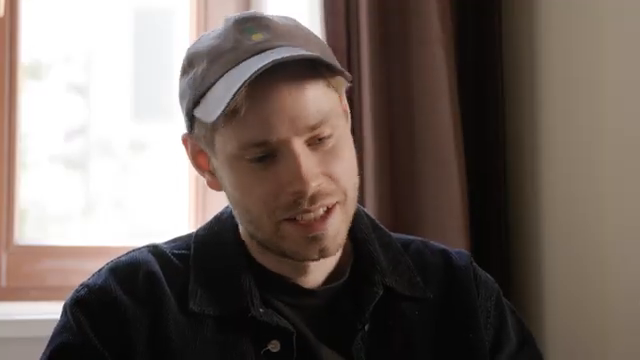
"For the drums, we used OneShot, which is like your workstation for drums, our flagship plugin for drums."
© Screenshot/Quote: Novationtv (YouTube)
Arpeggiators and Bass: Performance Tools in Action
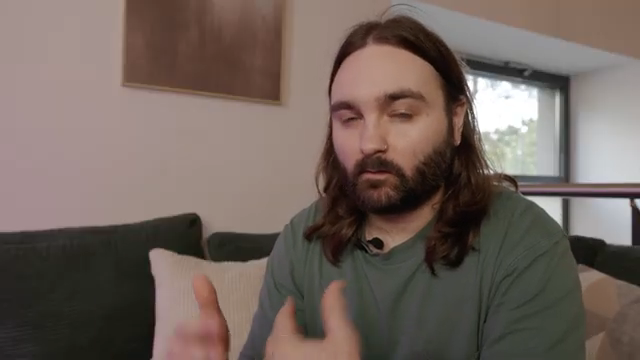
"Something that I really like doing with the launch key when I'm trying to put bass lines together and I'm not quite there with the rhythm yet is I like to use the arpeggiator, change some rhythms around and try some things out with that."
© Screenshot/Quote: Novationtv (YouTube)
With the rhythm and chords in place, attention turns to the bass line. Here, the Launchkey’s built-in arpeggiator becomes a creative tool for generating rhythmic and melodic bass patterns. The producers demonstrate how latching, tempo adjustment, and mutation features allow for rapid experimentation—changing gate lengths, note density, and rhythmic feel on the fly.
This approach highlights how performance-oriented features in modern MIDI controllers can blur the line between composition and live improvisation. Rather than programming a static bass part, the arpeggiator encourages real-time discovery, making it easy to test variations and lock in grooves that complement the evolving track.
Arranging, FX Layers, and the Logic Pro Mixdown
As the session progresses, arrangement becomes the focus. The team builds out A and B sections, using chord variations and drum changes to create contrast. Klevgrand’s Skaka plugin is introduced for shaker and percussion duties, praised for its ease of use—simply holding a note triggers pre-programmed rhythmic sequences, freeing the user from manual pattern programming.
To add character, the intro is shaped with Klevgrand’s DAW Cassette, imparting lo-fi tape textures and automated transitions. Further layers include arpeggiated synths processed through Klevgrand Stark (amp simulation) and Spinn (multiband modulation for stereo movement). Chord tones are refined with Tomofon, and spatial depth is added via Revolv, a convolution reverb. Throughout, the Launchkey remains the central performance interface, handling everything from chord stabs to drum fills.
Mixdown happens in Logic Pro, with Klevgrand’s Korvpressor providing visual compression feedback—a detail appreciated for its educational value as well as sonic utility. The workflow demonstrates how a focused plugin suite and a tightly integrated controller can streamline not just sound design, but also the entire arrangement and mixing process.
Reflections: Embracing Limitations and the Power of Simplicity
With the track finished, the producers reflect on the experience. They acknowledge the constraints of the setup—limited plugin selection, a single MIDI controller, and a tight deadline—but also note how these very limitations fostered creativity and forced decisive action. Not every idea gelled perfectly, and some plugins went unused, but the process revealed the strengths of both the Launchkey and Klevgrand’s ecosystem.
Their closing thoughts advocate for the value of self-imposed boundaries in music production. By stripping back to essentials, they discovered new workflows, unexpected sounds, and a sense of accomplishment that comes from finishing a track under pressure. For anyone tempted by endless options, this video is a compelling case study in the creative benefits of working within a box.
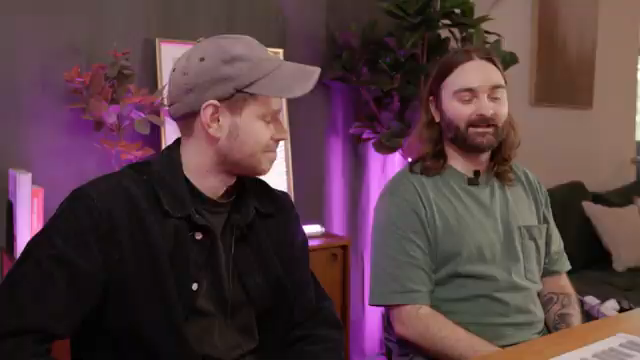
"If you're at home and you're watching this, maybe you should try making a song just with a limitation, just like one keyboard, one set of plugins. You never know what might come out of it."
© Screenshot/Quote: Novationtv (YouTube)
Watch on YouTube:
Latest articles
Watch on YouTube:
https://www.youtube.com/NovationTV
Links from NovationTV:
Sponsored links:
If you purchase via these links, we may earn a small commission – at no extra cost to you. The link opens an Amazon keyword search, and results may vary depending on availability.
🔗 Check price on Amazon
🔗 Check price on Amazon
🔗 Check price on Amazon
🔗 Check price on Amazon
🔗 Check price on Amazon
🔗 Check price on Amazon
🔗 Check price on Amazon
🔗 Check price on Amazon
🔗 Check price on Amazon
🔗 Check price on Amazon