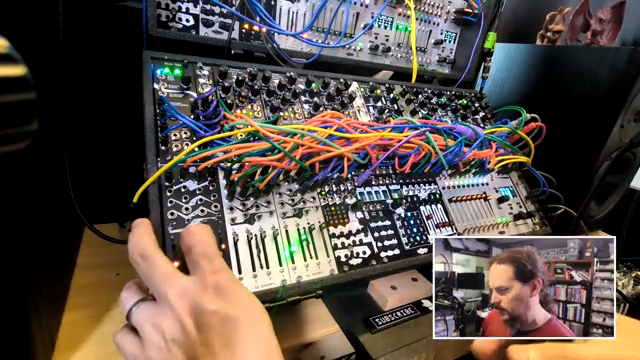
Noise Engineering’s Stephen McCaul lifts the lid on his current modular rig, the very case behind his recent performance jams. In this video, he walks through a tightly packed Eurorack setup brimming with six distinct voices, clever mixing strategies, and a few prototype surprises. From the clang of Incus to the saturated punch of Polydactyl, every module earns its place in a patch that’s as performative as it is sonically diverse. If you’re curious about how a boutique designer configures a real-world modular system for live play, this breakdown is a goldmine of routing ideas, modulation tricks, and hands-on workflow.
3. August 2025
MILES
Noise Engineering’s Modular Case: A Patchwork of Voices and Control
Ampleggio, Debel, Electus, Incus, Lapsus, Libre Legio, Manis, Mimetic Digitize, Polydactyl, Temp, Vert Inter, Zero Mixer
A Compact Playground: Stephen’s Modular Rig Unveiled
Stephen McCaul, Chief Noisemaker at Noise Engineering, opens the video by introducing the modular case that’s been the backbone of his recent performances. The setup is impressively compact, yet it manages to pack in a wide palette of sonic options. This case is not just a collection of modules—it’s a carefully curated ecosystem designed for both flexibility and immediacy in live jams.
The focus here is on how much can be achieved within a relatively small footprint. Stephen hints at the sophistication of the system, noting that it contains six voices—quite a feat for a case of this size. The video promises a breakdown in six parts, each delving into a different aspect of the rig’s design and function.
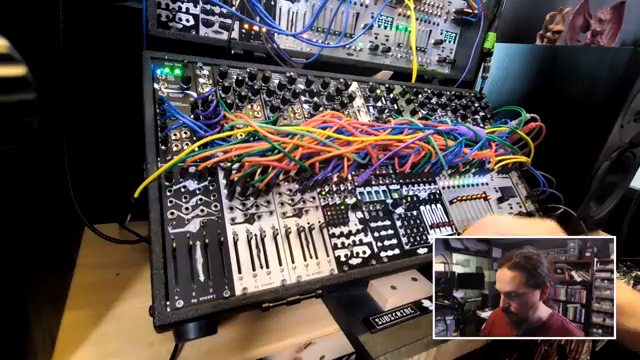
"There are actually six voices in this case which is pretty sophisticated I suppose for this small of a case."
© Screenshot/Quote: Noiseengineering (YouTube)
Six Voices, Six Characters: Oscillators in Action
Diving into the heart of the system, Stephen spotlights the six voices that define his modular sound. The first two voices are Incus modules, with one typically serving as a kick and the other dialed in for more metallic, clangorous tones. This dual Incus setup allows for both rhythmic foundation and percussive colour, demonstrating the module’s versatility within a single patch.
Next up is the Temp, which Stephen almost always uses for hi-hat-like textures, followed by the Debel, a flexible module that can handle melodic, bass, or even clanky duties depending on the patch. Rounding out the set are two more voices: a Vert Inter running through an Ampleggio for deep, wobbly bass, and finally, the Manis, which brings its own aggressive character to the mix. Each oscillator is chosen for its unique timbral contribution, underscoring Noise Engineering’s penchant for distinctive, performance-ready voices.
Mixing, Routing, and Compression: The Signal Flow Engine
"It is a parallel compressor."
© Screenshot/Quote: Noiseengineering (YouTube)
Mixing duties in this rig fall to the Zero Mixer, which Stephen uses to create two distinct submixes. The first three voices are routed through Send A to form a rhythm submix, which is then compressed by the Libre Legio. This parallel compression setup allows for dynamic interplay between kick, hi-hat, and other rhythmic elements, resulting in lively ducking and punchy dynamics that are crucial for performance energy.
Send B on the Zero Mixer is dedicated to the Electus, providing tempo-synced reverb that Stephen controls via a return channel for precise wet/dry balance. After effects, the main output passes through the Polydactyl, where saturation is modulated in real time for added texture and drive. This routing scheme not only maximises sonic control but also enables hands-on manipulation of mix and effects during a set.
Sequencer Prototype: Rhythmic Brains and Pattern Play
At the core of Stephen’s performance workflow is a prototype sequencer—a one-off device that, while unlikely to see commercial release, is central to his creative process. The sequencer offers a 16-step grid with manual editing and the ability to overlay Euclidean and linear rhythms via sliders. This makes it possible to rapidly sketch out everything from straightforward beats to complex, syncopated patterns with minimal effort.
The sequencer also features a sync stack for pitch control and can trigger arpeggiated parts, demonstrating its flexibility in both rhythm and melody generation. All triggers are managed through this device, allowing Stephen to shape intricate grooves and evolving sequences on the fly, a testament to the modular ethos of hands-on experimentation.
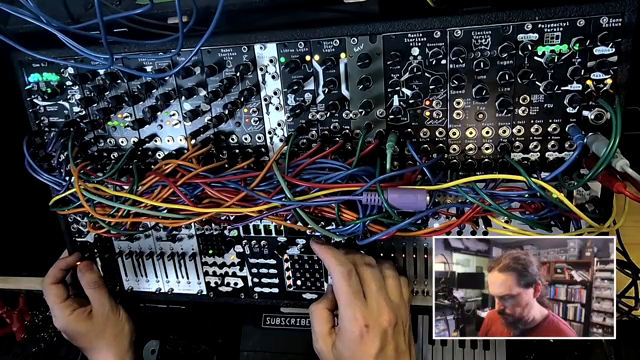
"It makes it really easy to very quickly just throw together either really basic rhythms, or really some pretty complicated and heavily syncopated stuff."
© Screenshot/Quote: Noiseengineering (YouTube)
Master Controls and Modulation: Cross-Mod, Envelopes, and Mimetic Digitize
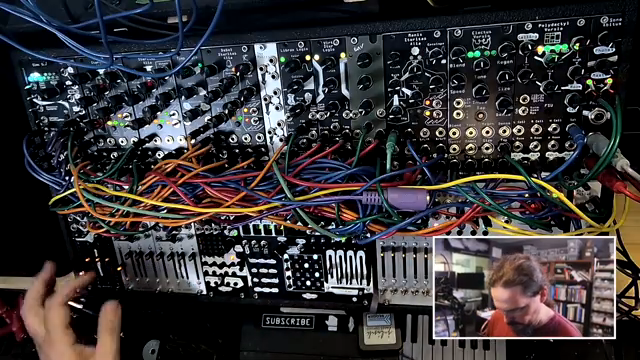
"These are actually kind of complicated interactions. So you can get some just really crazy sounds going on."
© Screenshot/Quote: Noiseengineering (YouTube)
The lower left of the case is home to three Lapses and a Mimetic Digitize, which Stephen describes as the master control hub. The first four sliders govern decay times for the initial voices, enabling smooth transitions and dynamic shifts in the patch. The next set of controls handles cross-modulation, routing envelope outputs from one voice to multiple parameters on another, resulting in complex, evolving interactions and the occasional wild sonic detour.
Further modulation comes from the Mimetic Digitize, which provides four channels of step CV. These are mapped to various parameters, including tone controls for the kick, saw mod on the Vert, and saturation on the Polydactyl. This setup allows for deep, real-time manipulation of timbre and dynamics, highlighting the creative workflows that modular synthesis excels at. Stephen wraps up by noting that, apart from a single external effects module, everything heard in his recent jams comes from this self-contained case.
This article is also available in German. Read it here: https://synthmagazin.at/noise-engineerings-modular-case-ein-flickenteppich-aus-stimmen-und-kontrolle/
Watch on YouTube:
Latest articles
Watch on YouTube:
Visit the channel:
https://www.youtube.com/NoiseEngineering
https://www.youtube.com/NoiseEngineering
Links from NoiseEngineering:
website: https://noiseengineering.us
instagram: https://instagram.com/noiseeng
twitter: https://x.com/noiseeng
facebook: https://facebook.com/noiseeng
reason: https://bit.ly/noiseeng-reason
Sponsored links:
If you purchase via these links, we may earn a small commission – at no extra cost to you. The link opens an Amazon keyword search, and results may vary depending on availability.
Ampleggio
🔗 Check price on Amazon
🔗 Check price on Amazon
Debel
🔗 Check price on Amazon
🔗 Check price on Amazon
Electus
🔗 Check price on Amazon
🔗 Check price on Amazon
Incus
🔗 Check price on Amazon
🔗 Check price on Amazon
Lapsus
🔗 Check price on Amazon
🔗 Check price on Amazon
Libre Legio
🔗 Check price on Amazon
🔗 Check price on Amazon
Manis
🔗 Check price on Amazon
🔗 Check price on Amazon
Mimetic Digitize
🔗 Check price on Amazon
🔗 Check price on Amazon
Polydactyl
🔗 Check price on Amazon
🔗 Check price on Amazon
Temp
🔗 Check price on Amazon
🔗 Check price on Amazon
Vert Inter
🔗 Check price on Amazon
🔗 Check price on Amazon
Zero Mixer
🔗 Check price on Amazon
🔗 Check price on Amazon