What happens when a classically-inclined composer lets Noise Engineering’s wild plugin suite loose on an orchestral cue? In this detailed walkthrough, Owen Nathanael deconstructs his piece “Sacrifice,” revealing how digital effects can morph acoustic textures into something uncannily synthetic—without losing their emotional core. The video, hosted on Noise Engineering’s official channel, is a nerdy, hands-on demonstration of how plugins like Imitor, Desmodus, Polydactyl, Librae, and Ruina can subtly (or not-so-subtly) transform strings, brass, percussion, and vocals. For composers wary of synths but hungry for new sonic dimensions, this is a masterclass in hybrid workflow.
6. October 2024
LYRA
Noise Engineering Plugins: Orchestral Alchemy in Owen Nathanael’s “Sacrifice”
Desmodus reverb plugin, Imitor delay plugin, Librae mid-side processing plugin, Polydactyl multi-band processor plugin, Ruina distortion plugin
Orchestral Roots, Synthetic Branches
The video opens with composer Owen Nathanael introducing his cue “Sacrifice,” a piece originally crafted with acoustic instruments at its core. He sets the stage for a plugin-centric transformation, addressing orchestral composers who might be hesitant to dive into the world of synthesis. The premise is clear: with the right effects, even the most traditional arrangements can acquire a modern, electronic edge.
Owen’s approach is methodical—he plays the cue in its unprocessed form, highlighting the organic interplay of strings, brass, percussion, and vocals. The demonstration is not about replacing orchestral elements but about enhancing them, using Noise Engineering’s plugins as creative tools to bridge the gap between the concert hall and the digital studio. This sets a practical, workflow-focused tone for the rest of the walkthrough.
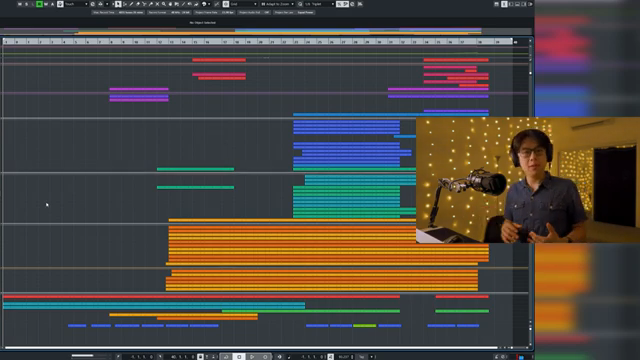
"With a little bit of audio effects, you can transform some of these sounds to be more synth-like and really complement that orchestral texture."
© Screenshot/Quote: Noiseengineering (YouTube)
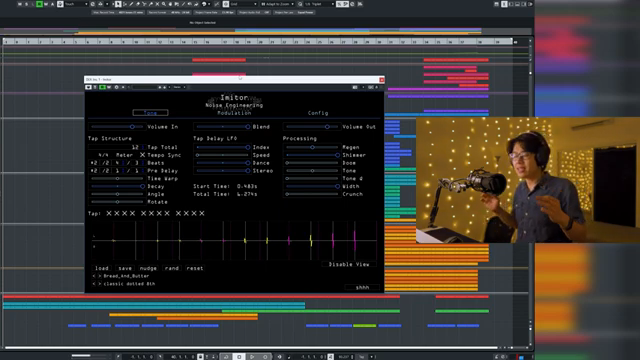
Imitor: Delay Beyond the Physical
"What's really cool about this plugin is that it does things that are beyond what's possible in the physical realm."
© Screenshot/Quote: Noiseengineering (YouTube)
The first deep dive centers on Imitor, Noise Engineering’s delay plugin. Owen explains the basics of delay—echoes in the physical world—before showcasing how Imitor transcends these natural boundaries. By pushing parameters like shimmer and modulation, he demonstrates how delays can become more than just repeats; they can impart pitch-shifted, evolving textures that sit somewhere between orchestral and electronic.
He walks through several use cases: supporting vocals with lush, modulated echoes, and subtly enriching pads by adding multiple taps and micro-pitch variations. The result is a sound that feels both familiar and alien, a kind of sonic “uncanny valley” that blurs the line between live ensemble and synth pad. Imitor’s interface encourages experimentation, letting users dial in everything from subtle stereo movement to overtly synthetic wobble.
Desmodus: Reverb as Sonic Transformation
Next up is Desmodus, a reverb plugin that specializes in impossibly long and lush tails. Owen demonstrates how Desmodus can take a string quartet’s rhythmic pulse and, with the addition of an FX modulator and extended reverb, transform it into something ethereal and enveloping. This isn’t just about adding space—it’s about fundamentally altering the emotional character of the sound.
He also explores how layering modulation and delay with Desmodus can create pads that drift seamlessly from acoustic to synthetic. By toggling between dry and wet signals, Owen shows how the plugin can push orchestral textures into new territory, making them shimmer and pulse in ways that traditional reverb units simply can’t achieve. The workflow encourages creative signal routing and parameter automation for evolving soundscapes.
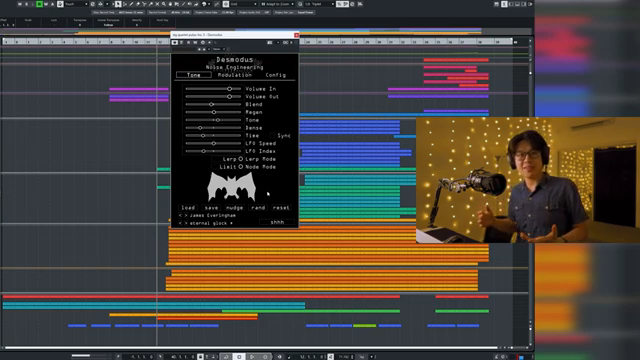
"You can make the reverb tail really long in ways that it's not possible in the physical world."
© Screenshot/Quote: Noiseengineering (YouTube)
Polydactyl: Multiband Processing for Depth and Realism
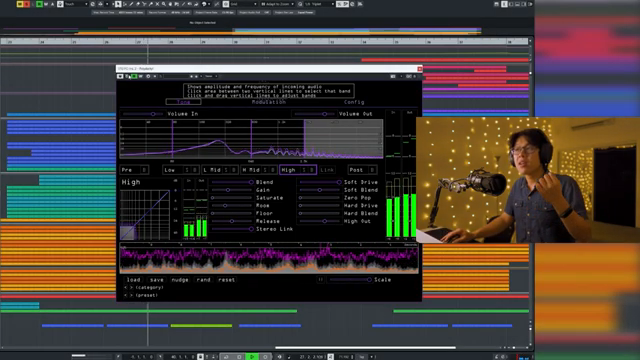
"You have this definition from the live strings that you're not getting from the sequence string."
© Screenshot/Quote: Noiseengineering (YouTube)
Polydactyl enters as a multiband processor, and Owen uses it to add both subtle and dramatic enhancements to live-recorded strings and brass. By applying soft drive to specific frequency bands, he brings out the high-end detail in strings—sometimes to the point of brittleness in solo, but with the intention of blending more convincingly with sequenced elements in the mix.
The plugin’s flexibility is further highlighted in the brass section, where driving both the high and low ends results in a more commanding, powerful sound. Owen demonstrates the before-and-after effect of bypassing Polydactyl, making it clear how much presence and realism the plugin can inject. The workflow is all about context: what might sound exaggerated in isolation becomes essential when layered within a dense orchestral arrangement.
Embracing the Hybrid: Plugins as Creative Companions
The final stretch of the video is a call to action for orchestral composers: don’t fear the synthetic. Owen’s use of Librae for mid-side processing and Ruina for distortion illustrates how effects can bring acoustic elements forward in the mix, add grit, and envelop the listener. These tools aren’t just for electronic music—they’re bridges to new creative possibilities.
Ultimately, the walkthrough is less about technical bravado and more about expanding one’s sonic vocabulary. Noise Engineering’s plugins are presented as approachable, flexible companions for anyone willing to experiment, regardless of their background. The message is clear: hybrid workflows are not only possible but can be deeply musical and inspiring.
This article is also available in German. Read it here: https://synthmagazin.at/noise-engineering-plugins-orchestrale-alchemie-in-owen-nathanaels-sacrifice/
Watch on YouTube:
Latest articles
Watch on YouTube:
Visit the channel:
https://www.youtube.com/NoiseEngineering
https://www.youtube.com/NoiseEngineering
Links from NoiseEngineering:
website: https://noiseengineering.us
instagram: https://instagram.com/noiseeng
twitter: https://x.com/noiseeng
facebook: https://facebook.com/noiseeng
reason: https://bit.ly/noiseeng-reason
Sponsored links:
If you purchase via these links, we may earn a small commission – at no extra cost to you. The link opens an Amazon keyword search, and results may vary depending on availability.
Desmodus reverb plugin
🔗 Check price on Amazon
🔗 Check price on Amazon
Imitor delay plugin
🔗 Check price on Amazon
🔗 Check price on Amazon
Librae mid-side processing plugin
🔗 Check price on Amazon
🔗 Check price on Amazon
Polydactyl multi-band processor plugin
🔗 Check price on Amazon
🔗 Check price on Amazon
Ruina distortion plugin
🔗 Check price on Amazon
🔗 Check price on Amazon