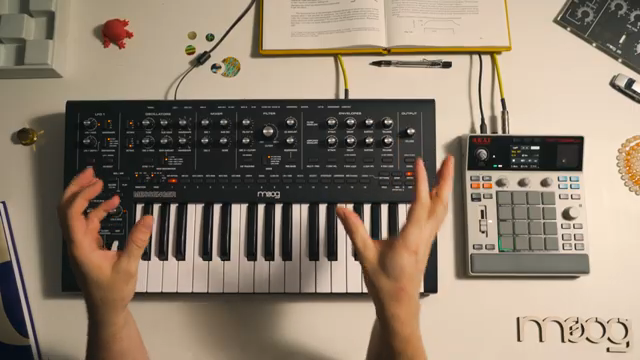
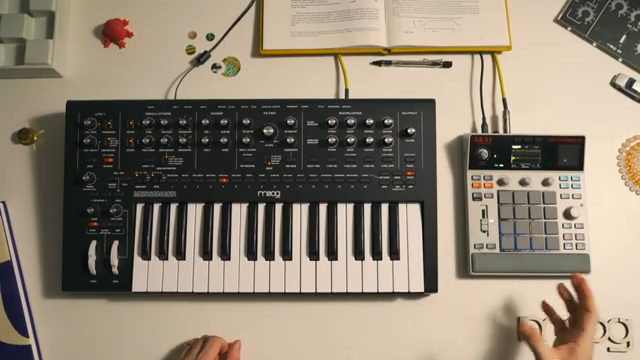
Moog Music’s official channel kicks off a new series exploring the synergy between their Messenger analog monosynth and the Akai MPC Sample. This video focuses on pushing monophonic synthesis to new creative heights by layering, sampling, and arranging drum sounds. The Messenger’s analog voice is sculpted into a deep library of percussive elements before those sounds move into the MPC’s digital domain. As Moog demonstrates, combining classic hands-on synthesis with modern sample-based workflow can dramatically amplify a focused rig’s creative potential.
27. June 2026
LYRA
Moog Music: Analog Drum Synthesis Meets Modern Sampling with Messenger & MPC Sample
Analog Meets Digital: Setting the Stage
The video opens with Moog Music introducing a purposeful partnership: the Moog Messenger, a monophonic analog synthesizer, is paired with the Akai MPC Sample to expand the creative reach of a traditionally single-note synth. The team addresses the inherent limitations of monophonic hardware—namely, its inability to play chords or build layered drum arrangements natively—while hinting at the transformative power sampling can provide.
It’s clear from the outset that this isn’t just another sound demo. Instead, the focus is on workflow—specifically, how the Messenger’s analog signal path can serve as a rich sound source for the MPC Sample’s recording, layering, and arrangement capabilities. The goal: to turn a focused, compact setup into a full-featured production environment.
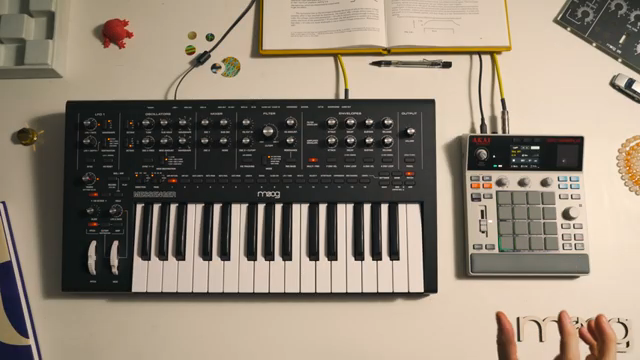
"These two are really a match made in heaven."
© Screenshot/Quote: Moogsynthesizers (YouTube)
Messenger as a Drum Machine: Deep Sound Design
"What I'm gonna use the filter envelope to do is to emulate the pitch bend that happens on a kick drum when the pedal hits the actual drum."
© Screenshot/Quote: Moogsynthesizers (YouTube)
Diving into the Messenger’s architecture, Moog demonstrates how its analog engine can be sculpted into a variety of percussive voices. The video begins with kick drum design, showing the process of initializing a patch, selecting waveforms (such as triangle for body and sawtooth for brightness), and using envelope shaping for punch and decay.
Attention is paid to how oscillator, filter, and envelope parameters interact—especially how the filter envelope can be routed to create pitch bends that mimic drumhead attack, and how subtle tweaks to cutoff and resonance shape the harmonic content. Moog’s approach is hands-on, highlighting both the instrument’s flexibility and the iterative nature of analog sound design.
Layering, Sampling, and Arranging: Workflow in Focus
With a bank of custom drum sounds taking shape, the video pivots to workflow. All Messenger audio is routed through the MPC Sample, allowing the user to hear the end result as it will be captured by the sampler. This integration enables a seamless transition from analog tweaking to digital arrangement.
By recording and layering Messenger’s percussive sounds in the MPC, the setup overcomes the monophonic limitation, opening up possibilities for chords, stacked drums, and more complex arrangements. This approach is not just about sound, but about building a hybrid workflow that leverages the strengths of both instruments.
Percussive Alchemy: Crafting Drums and Beyond
Moog spends the bulk of the session meticulously sculpting a range of drum and percussion sounds from scratch. Techniques for kicks range from classic oscillator-based synthesis—with pitch envelopes and filter shaping—to self-oscillating filter tricks for more tom-like or subby results. Each drum type receives its own patch and flavor: snares marry triangle waves with noise to capture both shell and snare wire character, while claps are conjured using fast LFO modulation of the noise source for a burst-generator effect.
Hi-hats are built from noise and high-pass filtering, with decay settings dialing in closed versus open variations. Woodblock and metallic percussion patches showcase Messenger’s ability to layer oscillators, apply FM, and exploit the bandpass filter for timbral edge. Throughout, the video highlights the value of iterative tweaking—envelope times, modulation amounts, and filter modes shape each percussive voice into a distinct instrument.
What stands out is the Messenger’s versatility in analog drum synthesis when paired with a sampler. Moog’s workflow allows users to create a custom library of one-shots, each tailored by hand, then quickly saved and arranged for further processing in the MPC. The result is a toolkit that goes far beyond the boundaries of a single-voice synth.
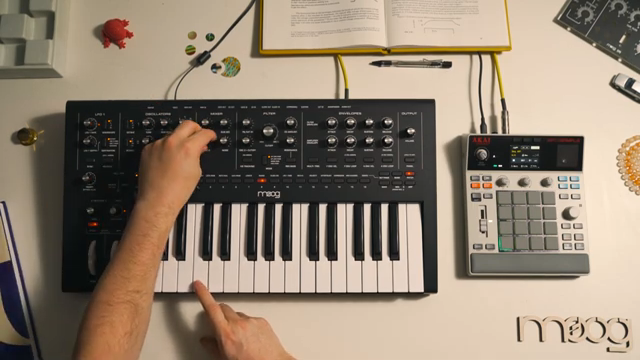
"It gives us this kind of woody percussion sound."
© Screenshot/Quote: Moogsynthesizers (YouTube)
Next Steps: From Synthesis to Full Production
The session closes by looking ahead: now that a deep bank of custom drum sounds has been crafted on the Messenger, the next video will focus on sampling and arranging these sounds within the MPC Sample. Moog sets the stage for a workflow that bridges analog sound design with digital beatmaking, promising a glimpse into a truly hybrid production process.
This article is also available in German. Read it here: https://synthmagazin.at/moog-music-analoge-drum-synthese-trifft-modernes-sampling-mit-messenger-mpc-sample/
More articles about these products:
 Akai MPC Sample: How Much MPC Do You Really Need?
 MPC Sample Reality Check: Sunwarper Spills the Good, the Bad & the Groovy
 Akai Professional’s MPC Sample: Chopping, Grooving, and Crafting Without Barriers
 TAETRO vs. Pocket-Sized FM Fury: The MVAVE FM-1 Reviewed
 TAETRO vs. Creative Block: Chasing Beats with the MPC Sample & TempoKEY K32 Play
 Moog Music: Layering the Messenger with Akai MPC Sample – A Workflow Deep Dive
 TAETRO’s Sidekick Obsession: Teenage Engineering Finds the Missing Link
 AudioPilz Toys with the MPC Sample: Teenage Engineering Vibes, Akai Grit
 Why MALO BEATS Thinks the MPC Sample Outguns the Rest
 Sunwarper vs. The DAW: Why Portable Samplers Rule the Studio Streets
 sunwarper’s MPC Sample: The Beatmaker’s Sketchbook That’ll Make You Rethink Your Workflow
 TAETRO Throws Down: Ableton Move vs MPC Sample – Which Groovebox Wins the Street Fight?
Watch on YouTube:
Latest articles
Watch on YouTube:
Visit the channel:
https://www.youtube.com/MoogSynthesizers
https://www.youtube.com/MoogSynthesizers
Links from MoogSynthesizers:
website: https://moogmusic.com
instagram: https://instagram.com/moogsynthesizers
facebook: https://www.facebook.com/moogmusicinc
twitter: https://twitter.com/moogmusicinc
Sponsored links:
If you purchase via these links, we may earn a small commission – at no extra cost to you. The link opens an Amazon keyword search, and results may vary depending on availability.
Akai MPC Sample
🔗 Check price on Amazon
🔗 Check price on Amazon
Moog Messenger
🔗 Check price on Amazon
🔗 Check price on Amazon