Modal Electronics brings the architecture of their Element One synth into sharp focus, unveiling a suite of 40 unique oscillator algorithms and a dual-oscillator group setup with deep layering potential. This video isn’t just a preset parade—it’s a guided tour through the engine room, where waveform math and modulation options converge for serious sound design. Whether you’re looking for vintage warmth, digital edge, or evolving textures, Modal’s walkthrough shows how algorithmic combinations, parameter morphing, and hands-on modulation unlock a broad sonic palette. The core: flexibility, workflow, and a modern approach to synthesis.
10. October 2026
LYRA
Modal Electronics Cracks Open the Element One: 40 Algorithmic Waveforms Under the Microscope
Element One: An Algorithmic Playground
The video opens by establishing oscillators as the foundational building blocks of any synthesizer, emphasizing their role as the raw material for sound design. Modal Electronics positions the Element One as a machine designed for depth, not surface-level preset browsing. Here, oscillators aren’t limited to the usual suspects—Sine, Saw, Square—but are turbocharged with algorithmic variety.
Element One’s core innovation is its suite of 40 waveform algorithms. These go beyond classic analog waveforms, adding layers of complexity and flexibility. The video promises to explore the breadth of these algorithms, offering a preview of both vintage-inspired textures and more aggressive, unconventional timbres. It’s immediately clear: this synth is built for users who want to shape their sound at the source, not just dress it up downstream.
Dual Oscillator Groups: 64 Voices in Motion
Element One features two completely independent oscillator groups per voice, each packing eight oscillators. That means, across a patch, you’ve got 64 oscillators working in real time—an architecture that’s rare, even among modern digital synths.
This setup isn’t just for show: the dual oscillator groups allow for dense layering, detuning, and complex waveform blending. The video highlights how each group can load different algorithms, opening up a playground for sonic experimentation. The independence of the groups means users can craft everything from thick unison stacks to intricate, harmonically rich textures that evolve over time.
Algorithm Blending and Parameter Morphing: Sculpting the Source
A standout feature is the ability to load two different algorithms—one per oscillator group—and morph between them. This blending capability is more than a crossfade; it’s a mathematical fusion, letting users traverse entirely new timbral territory with a single movement. The video demonstrates how this opens up a wealth of sonic options, from subtle transitions to dramatic spectral shifts.
Each algorithm comes with two assignable parameters, labelled A and B, whose functions shift depending on the selected algorithm. For example, in VA Sweep, parameter A morphs the waveform from sine to saw to square; in other algorithms, these parameters might control bit crushing, oscillator spread, or pulse width. This means each algorithm is a micro-engine, inviting users to experiment and personalize their sound at a granular level.
Modal’s demonstration methodically moves through several algorithms—VA Sweep, VA Crushed, Spread Saw, PWM, dual PWM, hard sync, fractal and reverse waveforms, windowed sync, metal, ring mod, FM, noise, chaos, fold, and filtered noise. Each one introduces new sonic possibilities, with the parameters acting as real-time performance tools or modulation targets. The UI feedback, especially visual waveform displays, reinforces the connection between control and sound, making the engine’s complexity approachable for hands-on exploration.
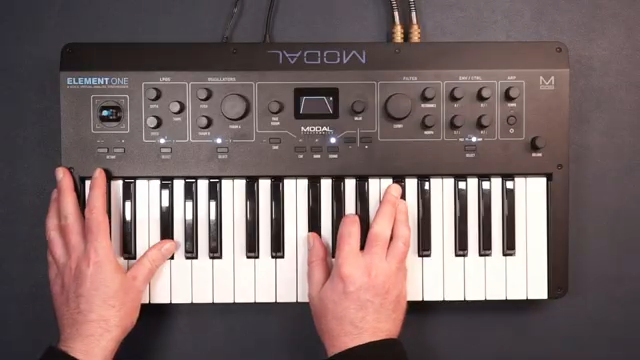
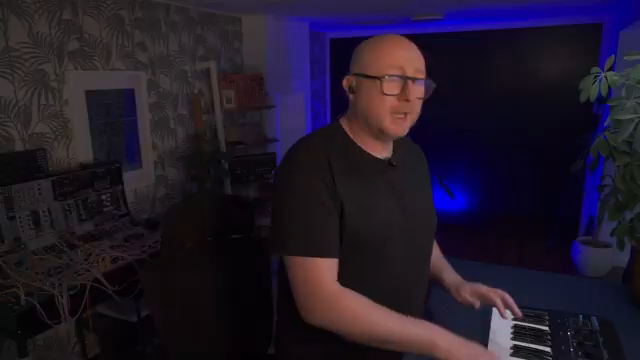
"You can load up two different separate algorithms and actually blend between them, giving you a massive amount of capabilities when it comes to designing your sounds."
© Screenshot/Quote: Modalelectronics (YouTube)
From Pads to Leads: Use Cases for Every Algorithm
The video situates the algorithms in musical context, demonstrating how different combinations excel at different roles. Lush pads emerge from morphing and detuning, especially when blended with effects and subtle modulation. Searing leads benefit from the edgier algorithms—hard sync, fractal, and metal—where harmonic complexity and movement are front and center.
There’s a focus on evolving textures as well, with the chaos, noise, and fold algorithms providing the unpredictability and organic movement prized in cinematic and ambient music. The ability to apply arpeggiators and modulation sources further expands these roles, making Element One a flexible tool for both traditional and boundary-pushing sound design.
Modulation, Effects, and Filtering: The Sonic Finishing Touch
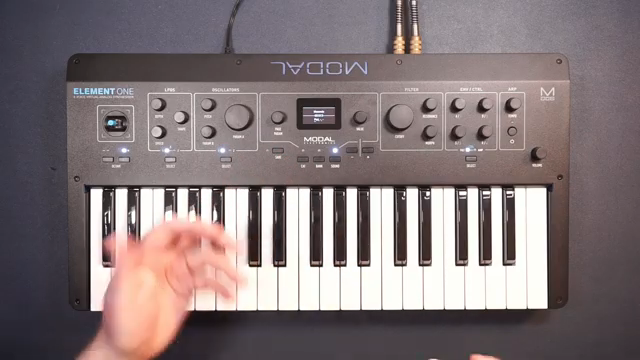
"Don't forget, we've still got the effects, we've got the modulation, we've got the filter, we've got the envelopes that we can use."
© Screenshot/Quote: Modalelectronics (YouTube)
Beyond oscillator algorithms, the video briefly touches on the broader sound-shaping toolkit. Modulation is presented as deeply integrated: parameters A and B of any algorithm can be modulated by sources like LFOs, adding dynamic movement with minimal menu diving. This modulation can be set up directly from the front panel or via the software editor, and is shown controlling pulse width, algorithm morphing, and more.
Effects and filtering are also part of the package, with delays, reverbs, and the multimode filter all available for further sculpting. While the video’s focus remains on raw oscillator power, it makes clear that these features are designed to complement and enhance the algorithmic core, not compensate for it. The result: a synth that encourages users to iterate, layer, and modulate their way to unique sounds rather than rely on off-the-shelf presets.
This article is also available in German. Read it here: https://synthmagazin.at/modal-electronics-oeffnet-die-element-one-40-algorithmische-wellenformen-im-detail/
More articles about these products:
Watch on YouTube:
Latest articles
Watch on YouTube:
Visit the channel:
https://www.youtube.com/ModalElectronics
https://www.youtube.com/ModalElectronics
Links from ModalElectronics:
website: https://modalelectronics.com
twitter: https://twitter.com/ModalElectronic
instagram: https://instagram.com/modalelectronics
Sponsored links:
If you purchase via these links, we may earn a small commission – at no extra cost to you. The link opens an Amazon keyword search, and results may vary depending on availability.
Modal Electronics ELEMENT One
🔗 Check price on Amazon
🔗 Check price on Amazon