Step into the vapor-lit corridors of Martin Stürtzer’s studio, where Dub Techno is less a genre and more a living, breathing ecosystem. In this walkthrough, Stürtzer guides us through the creation of “Echo System,” weaving together Ableton Live’s digital bones with the spectral warmth of analog synths. Each sound is a drifting island, each chord a ripple in a boundless sea of resonance. This is not just a production tutorial—it’s an invitation to inhabit the spaces between beats, to feel the magnetic pull of texture and time. Prepare to lose yourself in a landscape where every note is a story, and every echo a ghost.
19. December 2025
LUMINA
Martin Stürtzer’s Sonic Cartography: Mapping Dub Techno’s Echo System
Entering the Echo System
We begin not with a technical checklist, but with an immersion—a plunge into the fog-draped world of Dub Techno, as conjured by Martin Stürtzer. The video opens with a performance, a living tapestry of delay and reverb, where each sound seems to drift and refract like light through mist. Here, genre is not a box but a landscape: vast, mutable, and haunted by the ghosts of analog circuitry.
Stürtzer’s approach is less about rigid structure and more about the slow unfolding of atmosphere. The walkthrough is an invitation to explore the genre’s unique sonic geography, where rhythm is both anchor and current, and every element is chosen for its ability to evoke space. This is Dub Techno as narrative—a world built from echoes, pulses, and the shimmer of distant memories.
"Welcome to this Dub Techno production walkthrough."
© Screenshot/Quote: Martinstuertzer (YouTube)
Ableton’s Palette: Painting Without Luxury
With Ableton Live as his canvas, Stürtzer demonstrates that sonic richness does not require a vault of boutique plugins. Instead, he leans into the stock devices, sculpting rhythm and resonance with tools available to any traveler in the DAW wilderness. The message is clear: limitation breeds invention, and the absence of luxury becomes a catalyst for deeper exploration.
Each device is wielded with intention, transforming the ordinary into the extraordinary. The workflow is practical, yet never sterile—Ableton’s native effects and instruments become vessels for texture, movement, and mood. Through this lens, production is not about gear envy, but about the art of coaxing nebulae from the simplest of means.
Analog Spirits in the Digital Stream
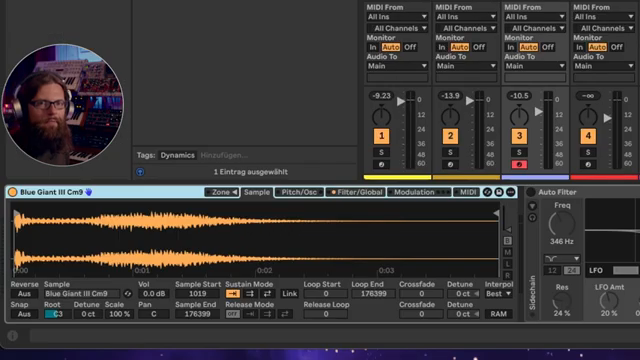
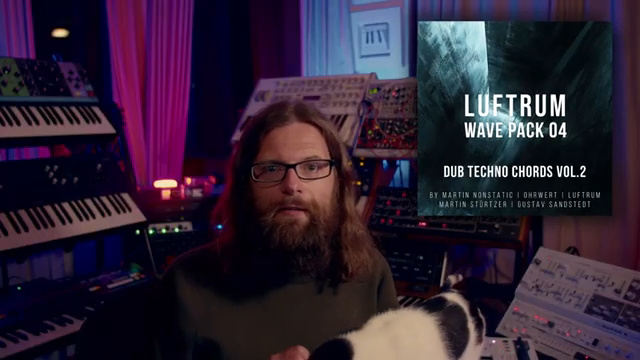
"Now let's add the first Dub chord patch using a sample from the Luftrum Dub Chords Vol. 2 pack."
© Screenshot/Quote: Martinstuertzer (YouTube)
The digital world is porous here—analog spirits seep in, summoned by samples from the Minimoog and Juno60. Stürtzer’s use of the Luftrum Dub Chords Vol. 2 sample pack infuses the track with a warmth that feels tactile, almost breathing. These are not sterile recordings, but living fragments, each one carrying the magnetic resonance of real circuits and hands-on dials.
The analog samples do more than color the sound—they anchor the track in a sense of organic depth. The Minimoog’s low-end growl, the Juno60’s shimmering pads: these are the ghosts that haunt the digital corridors, reminding us that every echo has a source, every shimmer a story.
Sculpting the Sonic Terrain: Drums, Pads, and Beyond
Stürtzer’s walkthrough is a slow-motion reveal of the track’s architecture, each element introduced with care. The kick drum is not just a pulse but a subterranean thud, grounding the piece like a heartbeat beneath layers of fog. Sub bass follows, a shadow that moves beneath the surface, felt more than heard.
Dub chords arrive in waves—first patch, then second, then third—each one a new color in the spectrum, each one shaped by delay and reverb until it blooms into the mix. The pad sound is a wash of fractured light, filling the negative space with a sense of infinite distance. Percussion and hi-hats flicker at the edges, like rain on glass, adding movement without disturbing the stillness.
It’s in these details that the track’s emotional topography emerges. Every sound is chosen for its ability to create space, to invite the listener deeper into the echo system. The walkthrough doesn’t just show how; it reveals why—why these textures matter, why restraint is a form of storytelling. For those who crave the full resonance, the video’s soundscape is best experienced firsthand, where every nuance can be felt as well as heard.

"Let's add some hi-hats to give the track a bit more movement."
© Screenshot/Quote: Martinstuertzer (YouTube)
Echoes Worth Returning To
To revisit this walkthrough is to rediscover the layered complexity that defines Stürtzer’s approach. The interplay of rhythm and texture, the careful placement of each sonic ghost—these are details that reward repeated listening. There is always another echo, another hidden current beneath the surface.
For those who seek not just to produce, but to inhabit their music, this video is a map and a mirror. The journey through “Echo System” is never quite the same twice, and the true depth of its soundscape waits patiently for those willing to drift inside.
This article is also available in German. Read it here: https://synthmagazin.at/martin-stuertzers-klangkartografie-dub-techno-im-echo-system/
Watch on YouTube:
Latest articles
Watch on YouTube:
Visit the channel:
https://www.youtube.com/MartinStuertzer
https://www.youtube.com/MartinStuertzer
Links from MartinStuertzer:
Homepage: https://martinstuertzer.de
Bandcamp: https://phelios.bandcamp.com
Instagram: https://instagram.com/martin_stuertzer
My stuff at Thomann: https://thmn.to/thocf/i8xb8v3845
Sponsored links:
If you purchase via these links, we may earn a small commission – at no extra cost to you. The link opens an Amazon keyword search, and results may vary depending on availability.
Ableton Live
🔗 Check price on Amazon
🔗 Check price on Amazon
Juno60
🔗 Check price on Amazon
🔗 Check price on Amazon
Luftrum Dub Chords Vol. 2
🔗 Check price on Amazon
🔗 Check price on Amazon
Minimoog
🔗 Check price on Amazon
🔗 Check price on Amazon