In this Make Noise video, Bruxa—the mysterious mono signal processor—takes centre stage alongside its maximalist cousin N.U.S.S. We’re walked through how these two distinct personalities can be coaxed into a collaborative patch, with the jumbler and multi-mod providing motion and modulation magic. The result? A lively exploration of motion, filtering, and rhythmic mutation, all firmly grounded in Make Noise’s experimental ethos. For those who crave evolving sonic textures and real-time patching, this is a showcase of what happens when design constraints push creativity in unexpected directions.
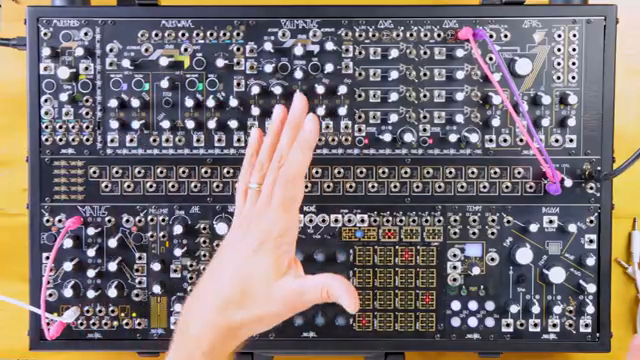
Bruxa: Mono Majesty
Bruxa is introduced as a uniquely characterful mono signal processor, echoing the Make Noise tradition of modules that use extensive circuitry for singular, focused purposes. Like its cousin Strega, Bruxa is unapologetically mono—not by oversight, but by both design intent and technical necessity. This constraint sets the tone for the patching approach throughout the video, shaping how sound sources are routed and processed.
Rather than splitting itself across multiple channels, Bruxa commits all its resources to manipulating a single signal path. The result is described as having a ‘majestic beauty,’ even when the sonic results veer into noisy or rough territory. This sets the scene for exploring how mono and stereo worlds can collide in the Make Noise ecosystem.

"Brusa uses a whole lot of circuitry to process a single signal."
© Screenshot/Quote: Maken0Isemusic (YouTube)
Taming the Beast: Bruxa and N.U.S.S. Integration
"The new universal synthesizer system is a multi-channel stereo maximalist monstrosity."
© Screenshot/Quote: Maken0Isemusic (YouTube)
The video moves swiftly from theory to practice, showing how Bruxa’s mono nature can coexist with the multi-channel, stereo-obsessed universe of N.U.S.S.—the so-called ‘maximalist monstrosity.’ The challenge, and the fun, lies in patching these two together so they complement rather than clash. The patch begins with Multi-Wave as the signal source, funneled through a single QXG channel, with an early decision to keep Polymaths largely out of the initial setup. Instead, motion and distribution are handled by the Jumbler.
Jumbler is deployed to distribute Multi-Wave’s outputs, feeding them into Bruxa’s lone input. The patching is deliberate: outputs from the Jumbler are sent to Bruxa, whose fully wet output then routes into a QXG channel. The demo highlights the importance of careful signal management, as the mono Bruxa must hold its own alongside the sprawling multichannel routing of N.U.S.S. Monitoring is set up via the QXG outputs, anchoring the mono processor in a sea of stereo possibilities.
Jumbler Motion and Multi-Output Patchwork
A core theme in the patch is the use of the Jumbler to add motion and variation to the signal flow. By rotating the Jumbler, the video demonstrates how the patch can scan between multiple channels of Multi-Wave, creating a shifting, animated sonic landscape. The tactile control of the Jumbler knob directly translates into audible motion, underscoring Make Noise’s preference for hands-on patching.
Layering continues as additional Jumbler channels are patched into QPOS, allowing for the extraction of separately filtered signals from the right low-pass and left high-pass outputs. A dummy cable is cleverly used to prevent unwanted signal summing, enabling precise separation of the filtered paths. These filtered signals are then routed back into QXG, thickening the patch and reinforcing the notion that a single mono processor can generate extensive complexity when embedded in a flexible modular environment.
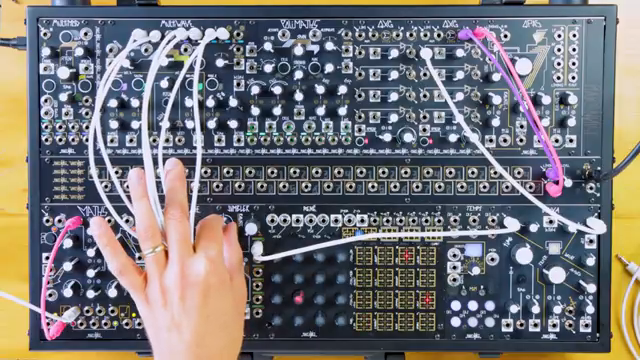
"As we rotate the jumbler, we hear it scan between these several channels of multi-wave."
© Screenshot/Quote: Maken0Isemusic (YouTube)
Modulation Madness: Multi-Mod and Beyond
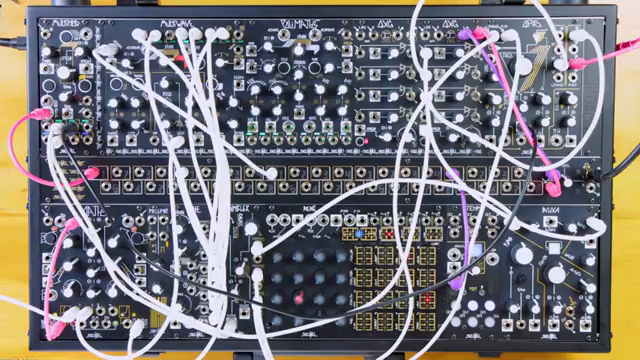
"Ruscia filter sweeps."
© Screenshot/Quote: Maken0Isemusic (YouTube)
The patch’s vitality comes into focus once the modulation sources are brought into play. Multi-Mod is set to a slewed random shape, introducing unpredictable motion across parameters. A leading clock—supplied by a Maths end-of-cycle gate and distributed via the big bus—injects rhythmic structure, clocking both Multi-Mod and Tempi, and activating Multi-Wave. This interconnected clocking ensures the patch moves in coordinated pulses, even as the modulation shapes remain organic and shifting.
Pitch control is addressed by routing another Maths channel, attenuated for subtlety, into Multi-Wave’s volt-per-octave input. The resulting pitches are intentionally unquantized until the scale quantizer is engaged, demonstrating how the system can shift from chaos to order with the flick of a switch. The video briefly notes that certain features, like the custom scale quantizer, depend on firmware versions—a reminder to check for updates if your module behaves differently.
Creative Workflows: Real-Time Mutation
The latter half of the video focuses on real-time manipulation and the creative workflow made possible by this patch. Modulation sources—Multi-Mod, Tempi, and GTE—are woven together to animate parameters such as jumbler rotation and filter sweeps, as well as to provide rhythmic pulses. The demonstration highlights how patching the GTE output can generate additional pulses, further multiplying the rhythmic complexity at play.
Flexibility is the watchword: mute switches on Tempi allow for on-the-fly toggling of rhythmic modulation, while different modulation channels can be rerouted or stopped using techniques like dummy cables or holding the Multi-Mod. At any point, the patch can be radically altered by adjusting the leading clock rate, starting pitch, or mix amount on Bruxa. The video’s closing minutes reinforce the idea that the system thrives on hands-on experimentation—every tweak sends the patch into new sonic territory, exemplifying Make Noise’s commitment to open-ended modular exploration.
This article is also available in German. Read it here: https://synthmagazin.at/make-noise-bruxa-trifft-das-biest-monophone-patch-experimente/
More articles about these products:
 ADSR Mysteries Unwrapped: The Unperson Goes Full Pharaoh
 The Unperson’s Analog Oscillator Rumble: From Sine to Mayhem
 MAKEN0ISE MultiWAVE: Patching Through Space and Unusual Tunings
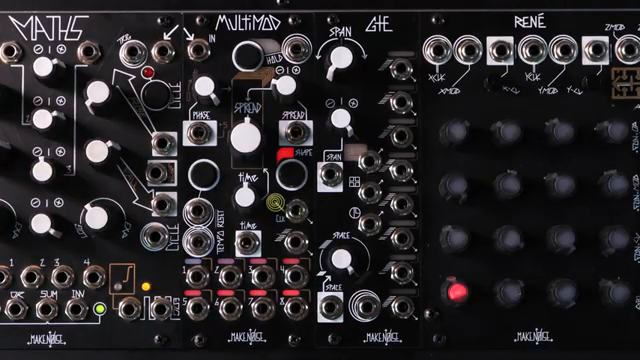 MAKEN0ISE GTE: Channel Index Translation for Rhythmic Control in Eurorack
 Make Noise Skiff Systems: Compact Powerhouses in Modular Synthesis
 MIDI, CV and the Make Noise N.U.S.S.: Skiff System in Hybrid Action
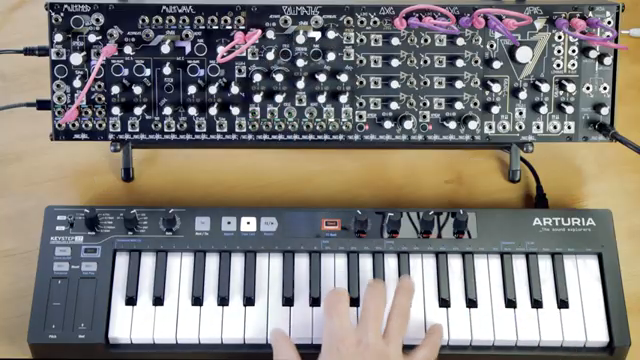 Make Noise Unveils the Universal Skiff System: Polyphony and MIDI in a Compact Modular Format
 MAKEN0ISE: Strumming the Grid – A Patch Adventure Beyond Sequencing
 MAKEN0ISE’s Universal Synthesizer System: A Modular Starting Patch Dissected
 MAKEN0ISE PoliMATHS: Oscillation, Submixing, and Audio-Rate Adventures
 Make Noise PoliMATHS: A Deep Dive into Span Modes and Modular Possibilities
 All the Cycles: Make Noise’s Multimod, Polimaths and the Art of Modular Modulation
Watch on YouTube:
Latest articles
Watch on YouTube:
Visit the channel:
https://www.youtube.com/MAKEN0ISEMUSIC
https://www.youtube.com/MAKEN0ISEMUSIC
Links from MAKEN0ISEMUSIC:
website: https://www.makenoisemusic.com
instagram: https://www.instagram.com/makenoisemusic
twitter: https://twitter.com/makenoisemusic
facebook: https://www.facebook.com/makenoiseco
Sponsored links:
If you purchase via these links, we may earn a small commission – at no extra cost to you. The link opens an Amazon keyword search, and results may vary depending on availability.
Bruxa
🔗 Check price on Amazon
🔗 Check price on Amazon
Jumbler
🔗 Check price on Amazon
🔗 Check price on Amazon
Maths
🔗 Check price on Amazon
🔗 Check price on Amazon
Multi-Mod
🔗 Check price on Amazon
🔗 Check price on Amazon
Multi-Wave
🔗 Check price on Amazon
🔗 Check price on Amazon
N.U.S.S.
🔗 Check price on Amazon
🔗 Check price on Amazon
Polymaths
🔗 Check price on Amazon
🔗 Check price on Amazon
QPOS
🔗 Check price on Amazon
🔗 Check price on Amazon
Tempi
🔗 Check price on Amazon
🔗 Check price on Amazon