In the electronic jungle of synths, Luke Million takes us on a journey through the Roland Juno 6. This trusty old beast is like a six-pack of vintage brew, with chorus effects that can turn a drizzle into a downpour. Luke’s deep dive reveals why this classic still holds its own, proving it’s more than just a first-time buyer’s friend, but an endlessly charming piece of gear that slaps harder than a Chicago wind.
The Journey Begins
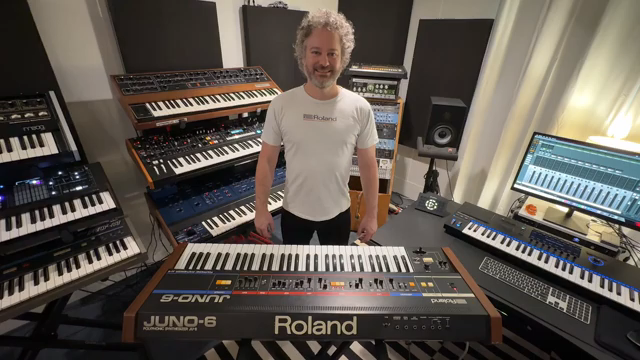
When Luke Million kicks off another episode of ‘My Favourite Synths,’ you know it’s going to be an electrifying ride. Episode 3 puts the spotlight on the Roland Juno 6, an iconic synthesizer born in the wild synth days of 1982. Designed as an affordable entry into polyphonic soundscapes, the Juno 6 wasn’t looking to outshine its Jupiter siblings but to carve out a niche of its own. Luke quickly dispels any notion that it’s a poor man’s Jupiter 8; instead, he compares it to a souped-up SH-09 with its six-voice polyphony and digitally controlled oscillator. This piece of vintage machinery is all about the essentials, making it perfect for synth newcomers and seasoned sound architects alike. According to Luke, it’s the simplicity that truly sets the Juno 6 apart, offering a pure analog experience untainted by digital patch storage—it’s a jam every time you touch those keys.
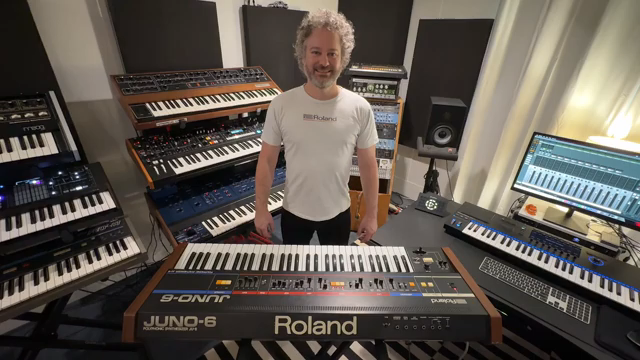
"It's an incredibly simple synthesizer that just gets the job done."
© Screenshot/Quote: Lukemillionmusic (YouTube)
A Closer Look at the Controls
"This is used to gradually remove low frequencies that you don't want in your sound."
© Screenshot/Quote: Lukemillionmusic (YouTube)
Luke then dives into the colorful world of the Juno 6’s interface, describing it as a festival of reds, blues, and whites. It’s basically a music producer’s candy store, with everything clearly laid out and within arm’s reach. The layout is user-friendly, allowing even synth rookies to create a spectrum of sounds without getting lost in a maze of knobs and buttons. In the red corner of this analog boxing ring, we have the low frequency and digitally controlled oscillators, ready to deliver those signature Juno tones. In blue sit the effects that include the famous Juno chorus and arpeggiator – tools that can turn any melody into a celestial dance party. And for when you’re ready to rock, the white controls offer pitch bending and master adjustments, fully prepared to take you from the basement to the main stage. Luke shares how the Juno’s envelope generator, with its snappy ADSR (attack, decay, sustain, release) combo, can give life to sounds that could rival a seasoned drummer’s beat. With the capability to twist sounds through its oscillators and filters, the Juno 6 is all about tuning those vibes just right.
Why Juno 6 is a Keeper
So, why does Luke Million keep coming back to the Juno 6? Well, it’s all about the unique punchiness and tightness in its sound—qualities that even newer models can’t quite replicate. It’s like comparing analog warmth to digital precision; sometimes you just want that classic, raw feel that only something like the Juno 6 can deliver. The arpeggiator, for instance, isn’t just a one-trick pony. You can mess with the range, modes, and hold function to build complex patterns that can sit comfortably in any electronic track. Its ability to span multiple octaves and employ the external clock input make it versatile, ready to adapt to whatever rhythm or beat you’re cooking up. The synthesizer’s character shines through its selective control options that hint at complexity yet invite exploration. Luke reveals that he loves using the arpeggio with the Juno’s psychedelic chorus to create mesmerizing soundscapes—it’s like stepping into another dimension.
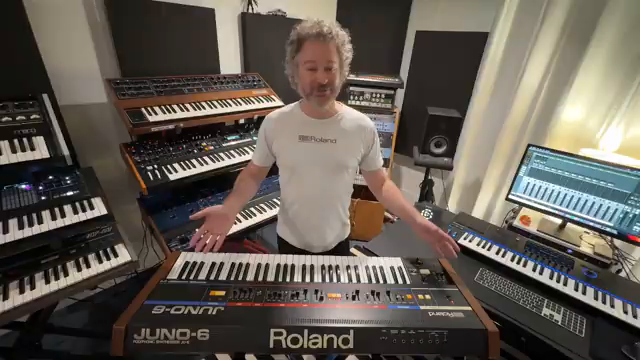
"It's a really cool effect and I've used this in a few tracks."
© Screenshot/Quote: Lukemillionmusic (YouTube)
Exploring the Sounds
Wrapping up the episode, Luke Million gives us a taste of the Juno 6 in action. This synth isn’t just about nostalgia; it’s a living, breathing unit that stands the test of time. He demonstrates how the chorus, combined with its single LFO, crafts those lush, dreamy textures that are the Juno trademark. Whether you’re creating melancholic pads or upbeat arpeggios, this simple machine has enough soul to fill a hundred mix tapes. It’s got a stability that rivals the best, thanks to its digitally controlled oscillators, but still packs that analog charm. Luke plays around with the hidden tremolo effect—a cheeky addition that’s like finding some extra hot sauce in your street taco. For producers who crave authenticity, that analog noise is a bonus, not a flaw. This is more than just a piece of musical history; it’s a canvas begging for creativity. The Juno 6 is a testament to why less is sometimes more—boasting fewer gizmos but inviting limitless possibilities.
This article is also available in German. Read it here: https://synthmagazin.at/luke-million-rockt-den-roland-juno-6/
Watch on YouTube:
Latest articles
Watch on YouTube:
Visit the channel:
https://www.youtube.com/lukemillionmusic
https://www.youtube.com/lukemillionmusic
Links from lukemillionmusic:
Website: https://lukemillion.com
Instagram: https://instagram.com/lukemillionmusic
TikTok: https://tiktok.com/@luke_million
Facebook: https://facebook.com/lukemillionmusic
Twitter: https://twitter.com/lukemillion
Soundcloud: https://soundcloud.com/lukemillion
Sponsored links:
If you purchase via these links, we may earn a small commission – at no extra cost to you. The link opens an Amazon keyword search, and results may vary depending on availability.
Roland Juno 6
🔗 Check price on Amazon
🔗 Check price on Amazon