LOOK MUM NO COMPUTER dives headfirst into the Schober Tunesmith—a DIY kit organ that’s as quirky as it is stubborn. This isn’t your average synth teardown: expect cracked circuit boards, dodgy power supplies, and a heap of soldering mischief. True to form, LMNC brings his signature blend of chaos and charm, turning what could’ve been a landfill rescue into a playable museum piece. If you like your synths with a side of unpredictability and a dash of history, this one’s for you. Don’t expect a glossy demo—expect real talk, real fixes, and a synth that’s more character than polish.

13. December 2025
SPARKY
LOOK MUM NO COMPUTER vs. The Schober Tunesmith: Vintage Oddity or Secret Weapon?
The Tunesmith: DIY Relic with Issues
The Schober Tunesmith isn’t just a synth—it’s a full-on DIY kit organ from a time when soldering was a rite of passage, not a YouTube trend. LOOK MUM NO COMPUTER picked this oddball up at a Vemia auction for a hundred quid, shipped all the way from Japan. No one else even bothered to bid, which should tell you something about its reputation—or lack thereof.
From the jump, the Tunesmith oozes charm and mystery. Is it an organ? A monophonic synth? Both? LMNC admits he didn’t have a clue until he cracked it open. What he found was a uniquely simple design, but also a heap of problems. The synth arrived DOA, and the challenge was on: could this museum-bound misfit be brought back to life, or was it destined for the parts bin?

"Yeah you can decide whether it's worth it or not."
© Screenshot/Quote: Lookmumnocomputer (YouTube)
Cracked Boards and Soldering Sagas
"oh look look look the blooming circuit board's cracked look the circuit board's snapped that'll do it"
© Screenshot/Quote: Lookmumnocomputer (YouTube)
The repair journey starts with the classic LMNC approach: poke around, don’t get electrocuted, and see what’s actually inside. The Tunesmith’s guts are basic—just a handful of wires, a transformer, and a power supply that’s seen better days. The real villain? A cracked circuit board, snapped clean through at a crucial trace. That’s the kind of design flaw that makes you question every life choice that led you to vintage gear.
Fixing it meant bridging the broken traces with wire and slapping on some epoxy cement—because why use the right glue when you can use the only glue you’ve got? LMNC’s repair style is pure punk: brute force, a bit of luck, and a lot of wire. It’s not pretty, but it works. After a bit of soldering and some creative reinforcement, the Tunesmith was ready for a test run.
Of course, nothing’s ever that simple. The vibrato didn’t want to play ball, and tuning was a mess. But with some methodical knob-twiddling and a tuner, LMNC managed to coax the thing back into something resembling musical order. The whole process is a masterclass in making do—and a reminder that vintage DIY synths are not for the faint-hearted.
Monophonic Mayhem and Vibrato Vibes
Once patched up, the Tunesmith reveals its true nature: a monophonic synth with a resistor ladder keyboard and a vibrato circuit that’s more moody than musical. The keyboard acts as a giant voltage divider, and tuning each note is a hands-on affair—think resistor ladder meets patience test. There’s no polyphony here, just raw, single-note action.
The vibrato circuit is quirky, with a wide range but a tendency to drop out after a second or two. Still, the synth’s voice selection—labelled A to F for maximum confusion—offers a surprising palette of tones. Add a splash of delay or reverb, and suddenly this museum piece starts to sound like a proper street weapon. It’s not about precision; it’s about character, and the Tunesmith’s got it in spades.
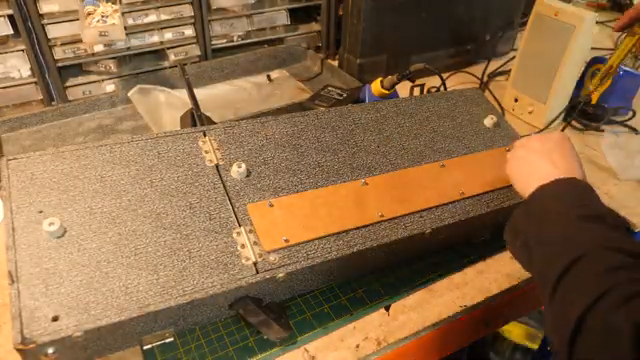
"so as you saw in the inside it is obviously a monophonic synthesizer it's like a solo kind of symphony it's quite good at what it does"
© Screenshot/Quote: Lookmumnocomputer (YouTube)
No-Frills, All-Fun: The Tunesmith’s Simple Soul

"there's no frills there's no faff it's just about plopping it for a bit of effects and just getting a good lead line and you make fun melodies like that"
© Screenshot/Quote: Lookmumnocomputer (YouTube)
What sets the Tunesmith apart isn’t complexity—it’s the lack of it. There’s no menu diving, no patch memory, no endless modulation matrix. Just a handful of controls, a few voices, and a keyboard that’s more resistor ladder than Steinway. It’s the kind of instrument that begs you to stop faffing about and start making noise.
LOOK MUM NO COMPUTER nails the appeal: this is a synth for people who love to get their hands dirty and don’t mind a few quirks. It’s about the joy of discovery, the thrill of coaxing music out of something that probably shouldn’t work at all. If you want a pristine, modern experience, look elsewhere. If you want a synth with soul, pull up a chair.
Download the Oddity: Tunesmith Samples for All
If you’re itching to get a taste of the Tunesmith without braving the museum or the auction circuit, LMNC’s got you covered. He’s sampled the different voices and made them available for download on Patreon. It’s a chance to inject some of that vintage, slightly-broken magic into your own tracks—no soldering iron required. For the full experience (and the full mess), though, you’ll want to watch the video and hear the Tunesmith in all its unpredictable glory.
This article is also available in German. Read it here: https://synthmagazin.at/look-mum-no-computer-vs-der-schober-tunesmith-vintage-kuriositaet-oder-geheime-waffe/
Watch on YouTube:
Latest articles
Watch on YouTube:
Visit the channel:
https://www.youtube.com/LOOKMUMNOCOMPUTER
https://www.youtube.com/LOOKMUMNOCOMPUTER
Links from LOOKMUMNOCOMPUTER:
Help us make the vids here :): https://lookmumnocomputer.com
Instagram: https://instagram.com/lookmumnocomputer
Join The Patreon: https://patreon.com/lookmumnocomputer
Sponsored links:
If you purchase via these links, we may earn a small commission – at no extra cost to you. The link opens an Amazon keyword search, and results may vary depending on availability.
Schober Tunesmith
🔗 Check price on Amazon
🔗 Check price on Amazon