Liam Killen gets his hands on the Elektron Outbox 8, taking it for a spin in a real-world hardware and hybrid rig. If you’ve ever cursed at Elektron boxes for their lack of individual outs, this one’s for you. Killen’s practical, no-BS approach slices straight through the hype, showing how this minimalist slab can turn any DAWless setup into a multi-lane sonic motorway. Prepare for sharp routing, dirty compression, and the kind of workflow hacks only a true gearhead can deliver.
22. September 2026
SPARKY
Liam Killen Unleashes the Elektron Outbox 8: The Outs’ Revolution
Elektron Digitakt, Elektron Digitakt 2, Elektron Digitone, Elektron Digitone 2, Elektron Outbox 8, Lindell Audio 7X500VIN, Louder Than Liftoff Chroma 500, SSL Big 6
A New Outs Order
Liam Killen kicks things off with the Elektron Outbox 8, and straight away it’s clear: this box is about to shake up hardware and hybrid workflows. Elektron sent him the unit—always a sign you’re in the inner circle—and he doesn’t waste time laying out why this matters. Historically, Elektron have been stingy with individual audio outs, leaving DAWless warriors and sample-pack hustlers stuck with stereo mixes and workarounds. The Outbox 8 aims to blow that out of the water, promising freedom for anyone mixing hardware and software (or both, like Killen).
For the first time, Elektron machines without dedicated outs—think Digitakt 2, OG Digitakt, Digitone, you name it—can finally break free from their stereo prison. Individual analog outs on these units mean you can now route, process and slam your tracks like you’re running a 90s rave bunker. No more being forced into Ableton for multi-tracking or having to perform surgery on your audio just to get some separation. Killen’s enthusiasm is contagious, and you can tell this is more than a spec list: it’s a workflow revolution for anyone deep in the Elektron ecosystem.

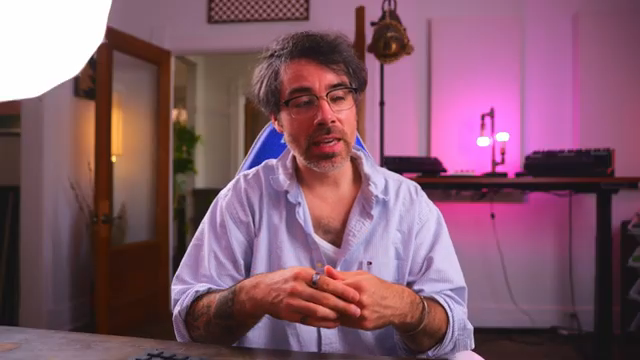
"I am here with the Outbox 8, an Electron user's dream."
© Screenshot/Quote: Liamkillen (YouTube)
Minimalist Brick, Maximum Routing
Design-wise, the Outbox 8 is a no-nonsense rectangle with USB-C power, USB-C in from your Elektron box, and eight analog audio (or CV) outs. Minimalist? Absolutely. But that’s the point—no distractions, just get the job done. Killen is laser-focused on audio, making it clear CV is cool, but the real juice is in the outs for this demo. The configuration is all handled digitally: fire up your Elektron menu, find the Outbox 8, and start routing. Want stereo pairs, mono tracks, or something in between? It’s just a menu scroll away.
Routing gets surgical. Assign tracks to whichever out you want, group kicks and toms, or send effects to their own channel for wild external processing. Killen reminisces about patchbay chaos and the Patchulator Pro, but the Outbox 8 makes that cable spaghetti a thing of the past. The flexibility is wild: you can slam your kick and toms through a proper compressor, or create Frankenstein chains that sound nothing like the polite demo stuff. This is how you turn a groovebox into a proper street weapon.
TR-8S vs. Outbox 8: The Routing Royal Rumble
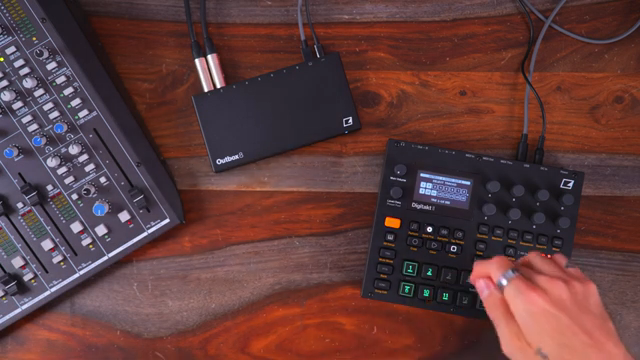
"it's very difficult to match the strength of an electron sequencer, especially for more underground, like electronic music genres, techno, house music, anything that's kind of up-tempo, I find that this sequencer just kills it."
© Screenshot/Quote: Liamkillen (YouTube)
Killen throws the Roland TR-8S into the ring for a quick compare-and-contrast. The TR-8S already gives you assignable outs and works as its own audio interface—no Outbox 8 required. But here’s where it gets spicy: Elektron’s sequencers still bring something special to the fight, especially for underground genres like techno and house. Killen’s not shy about saying it—the groove, the workflow, the vibe are tough to beat.
Workflow matters. If you’re locked into the Elektron way, the Outbox 8 is the missing link that finally lets you wrangle every sound into its own lane. Sure, not every box needs it, and the TR-8S has its own tricks, but nothing else quite matches the Elektron sequencer flex. For anyone who wants real separation and hardware-level control, this thing is basically a cheat code.
Real-World Routing Mayhem
You want proof? Killen dives right into practical setups, sending kicks and toms through a Lindell Audio 7X500VIN compressor and instantly changing the whole feel of the groove. It’s not just about separation; it’s about transforming your sound. Want hi-hats and claps to get the tape-emulation treatment through the Chroma 500? Sorted. Want delay on just the hats? Scroll, assign, done. Every output can become a playground for hardware FX, and it’s all fed into an SSL Big 6 for DAWless, hands-on mixing. No more endless cable plugging—just digital menus and real analog chaos.
The genius is in the speed and flexibility. You can push this box further by running two Elektron devices (Digitone 2 and Digitakt 2) into one Outbox 8 if you go the hybrid route. Ableton’s Overbridge lets you distribute streams to any output, though Killen admits he prefers to stay in hardware land. The real fun, though, is watching him twist sounds live—something words (or even this article) can’t do justice. For the full sonic transformation, you’ll want to see and hear the madness yourself.
Transcriptions, Projects, and More Madness
Killen wraps up by inviting viewers to dive deeper into his world—sequencer transcriptions, Digitakt and Digitone projects, and all sorts of exclusive content are up for grabs on his Patreon. He’s dozens of sequencers deep, pulling rhythms from underground records for anyone hungry for new patterns and grooves. Affiliate links and shoutouts abound, but the real takeaway is this: if you want your Elektron workflow to hit harder and cleaner, this is the tool—and Killen’s got the roadmaps to take you there.
This article is also available in German. Read it here: https://synthmagazin.at/liam-killen-entfesselt-die-elektron-outbox-8-die-outs-revolution/
More articles about these products:
 tafony’s Eurorack Live Rig: Like a Modular Kangaroo on a Red Bull Bender
 Devin Belanger vs. The Laptop: Why Hardware Synths Still Rule
 Elektron Outbox 8: Expanding Audio & CV Horizons
 Molten Music Technology Unleashes Knobula Drum Farm: A Percussive Playground for Chaos Lovers
 Sineway’s First Live Set: Gear Glory and Rookie Regrets
 Liam Killen’s Digitone II: More Tracks, More Chaos, More Techno
 sunwarper’s SP404 MK2: Five Years Deep and Still the Studio Chameleon?
 True Cuckoo’s Synth Safari: Kids, Chaos & Cheap Headphones in Rural Norway
 sunwarper vs. DAWless Mayhem: Patchbay to the Rescue
 Sineway’s No-Click Loop Hack: Seamless Sampling for Syntakt, Digitakt & Beyond
 AudioPilz Dishes the Dirt: What Your Synth REALLY Says About You
 Sampler Showdown 2026: Nu-Trix The Synth Guy Keeps It Real
Watch on YouTube:
Latest articles
Watch on YouTube:
Visit the channel:
https://www.youtube.com/LiamKillen
https://www.youtube.com/LiamKillen
Links from LiamKillen:
Orbit Music: https://orbitmusic.store
Patreon: https://patreon.com/liamkillenmusic
Instagram: https://instagram.com/liamkillenmusic/
Sponsored links:
If you purchase via these links, we may earn a small commission – at no extra cost to you. The link opens an Amazon keyword search, and results may vary depending on availability.
Elektron Digitakt
🔗 Check price on Amazon
🔗 Check price on Amazon
Elektron Digitakt 2
🔗 Check price on Amazon
🔗 Check price on Amazon
Elektron Digitone
🔗 Check price on Amazon
🔗 Check price on Amazon
Elektron Digitone 2
🔗 Check price on Amazon
🔗 Check price on Amazon
Elektron Outbox 8
🔗 Check price on Amazon
🔗 Check price on Amazon
Lindell Audio 7X500VIN
🔗 Check price on Amazon
🔗 Check price on Amazon
Louder Than Liftoff Chroma 500
🔗 Check price on Amazon
🔗 Check price on Amazon
SSL Big 6
🔗 Check price on Amazon
🔗 Check price on Amazon