Korg dives deep into the world of traditional Chinese instruments with the EXs325 Yangqin, a meticulously sampled library for the KRONOS and NAUTILUS workstations. This official walkthrough explores how Korg captures the nuanced articulations and performance techniques of the hammered string Yangqin, blending historical context with modern digital programming. Expect a detailed look at attack variations, tremolo, harmonics, and ghost notes, all powered by advanced PCM editing and wave sequencing. For those seeking expressive, culturally rich sounds within a digital workflow, this video is a revealing showcase of Korg’s sampling and programming prowess.
25. October 2025
LYRA
Korg EXs325 Yangqin: Tradition Meets Digital Articulation
From Rosewood to RAM: The EXs325 Yangqin Sample Library
Korg’s EXs325 Yangqin is more than just a collection of samples—it’s a digital homage to the Chinese hammered string instrument, designed specifically for the KRONOS and NAUTILUS platforms. The video opens with a concise history lesson, tracing the Yangqin’s lineage from Persian santoor to its modern Chinese form, and highlighting its role in both solo and ensemble contexts. This historical framing sets the stage for understanding the instrument’s unique sonic footprint and why capturing its essence digitally is a challenge worth tackling.
The walkthrough emphasizes the Yangqin’s physical characteristics: multiple elevated bridges, flexible bamboo hammers, and a string arrangement that delivers both harmonic richness and dynamic agility. Korg’s approach is to replicate not just the sound, but the performance nuances—right down to the clean playing areas and the evolving string groupings across the instrument’s range. For digital musicians, this means the EXs325 isn’t just a static sample set, but a playable, expressive instrument that aims to bring the Yangqin’s organic complexity into the digital domain.
Articulations Unleashed: Attack, Tremolo, Harmonics, and Ghost Notes
The heart of the EXs325 library lies in its articulation palette, which Korg showcases with methodical clarity. Users can access a variety of attack and stick variations—main, reverse, bottom, and finger techniques—each imparting a distinct character to the sound. The video demonstrates how different hammers and striking points yield sharper or softer timbres, and even finger plucking is represented for a gentler, more intimate tone.
Tremolo, a signature Yangqin articulation, receives special attention. Korg’s programming allows for both manual and tempo-synced tremolo, with joystick assignments (notably the +Y axis) offering real-time control over articulation dynamics. Harmonics are also included, providing shimmering overtones that expand the instrument’s expressive range. The ghost note feature is particularly notable: by simulating the rapid, bouncing hammer technique, the EXs325 enables nuanced rhythmic textures that go beyond simple note repetition.
This breadth of articulations isn’t just about sonic variety—it’s about enabling authentic performance workflows. The video makes it clear that these techniques are mapped for intuitive access, allowing players to move seamlessly between expressive gestures without menu-diving or cumbersome key-switching.

"Tremolo is a Yang Qin's essential articulation."
© Screenshot/Quote: Korgofficial (YouTube)
PCM Editing and Dynamic Control: Smoothing the Digital Edges
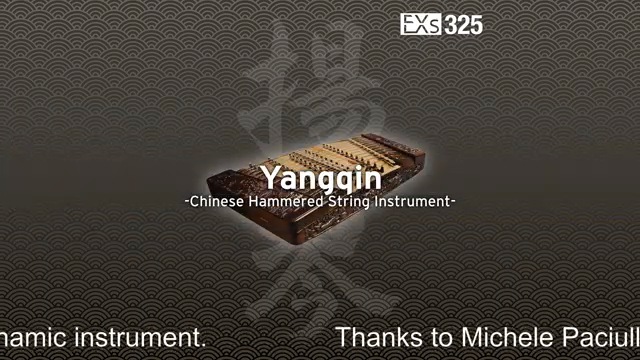
"Thanks to Michele Paciulis' vector crossfade, the whole dynamic range can be performed without a resolution of continuity, just like the real Yang Qin."
© Screenshot/Quote: Korgofficial (YouTube)
Korg leverages advanced PCM editing and sound programming to bridge the gap between static samples and organic performance. The use of vector crossfading is highlighted as a key technique, allowing for stepless dynamic transitions that mimic the real Yangqin’s continuous expression. This means that musicians can perform crescendos, diminuendos, and subtle timbral shifts with a realism that’s often elusive in sample-based instruments.
Performance control isn’t limited to velocity alone. The EXs325 programs respond to a range of controllers—joystick, ribbon, and switches—enabling nuanced manipulation of articulations and dynamics. This flexibility is crucial for integrating the Yangqin into both studio and live workflows, giving performers the tools to shape phrases in real time rather than relying on post-production tweaks.
Round Robin and Tempo-Adaptive Magic: Realism in Repetition
To further enhance authenticity, Korg implements round robin sampling—a technique that cycles through multiple sample variations for repeated notes, reducing the mechanical feel of digital repetition. The video points out that both regular and round robin versions are provided, giving users the choice between absolute purity and a more natural, performance-like response. This dual approach acknowledges the subtle trade-offs inherent in digital emulation.
Tempo-adaptive tremolo, powered by wave sequencing, is another standout feature. By syncing tremolo speed to MIDI tempo or time code, the EXs325 ensures that rhythmic articulations stay locked to the musical context—vital for modern productions and live setups. Together, these features push the EXs325 beyond static sampling, offering a level of realism and flexibility that invites creative exploration while respecting the instrument’s traditional roots.
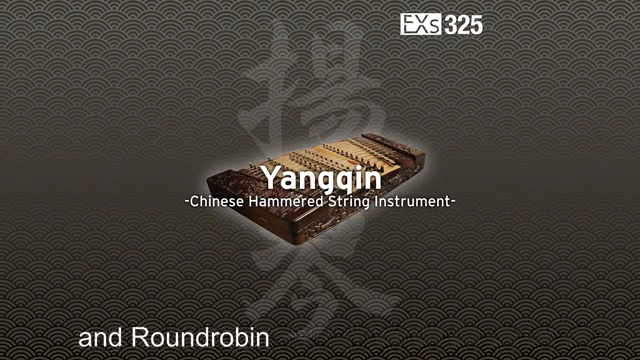
"When many repetitions are performed on the same note, the round robin version sounds more natural."
© Screenshot/Quote: Korgofficial (YouTube)
This article is also available in German. Read it here: https://synthmagazin.at/korg-exs325-yangqin-tradition-trifft-digitale-artikulation/
Watch on YouTube:
Latest articles
Watch on YouTube:
Visit the channel:
https://www.youtube.com/KorgOfficial
https://www.youtube.com/KorgOfficial
Links from KorgOfficial:
website: https://www.korg.com
facebook: https://www.facebook.com/KORGusa
twitter: https://twitter.com/KorgUSA
instagram: https://instagram.com/korgofficial
soundcloud: https://soundcloud.com/korg
Sponsored links:
If you purchase via these links, we may earn a small commission – at no extra cost to you. The link opens an Amazon keyword search, and results may vary depending on availability.
Korg EXs325 Yangqin
🔗 Check price on Amazon
🔗 Check price on Amazon
Korg KRONOS
🔗 Check price on Amazon
🔗 Check price on Amazon
Korg Nautilus
🔗 Check price on Amazon
🔗 Check price on Amazon