KOMA Elektronik, the Berlin-based purveyors of hands-on analog mischief, have unveiled their Monoplex Melodic Microtonal Sequencer at Superbooth 2026. This 16-step sequencer is built for modular enthusiasts who crave precise melodic control, microtonal adventures, and a wealth of patchable options. In this first-look video, KOMA walks us through Monoplex’s core functions, from sequence shaping and rhythmic trickery to its flexible integration with external clocks and MIDI. If you’re the sort who likes your sequences slippery, skippable, and just a bit left of standard tuning, this one’s worth a closer inspection.
9. May 2026
MILES
KOMA Elektronik Monoplex: A Sequencer for the Patch-Obsessed
Meet the Monoplex: Sequencing with Precision
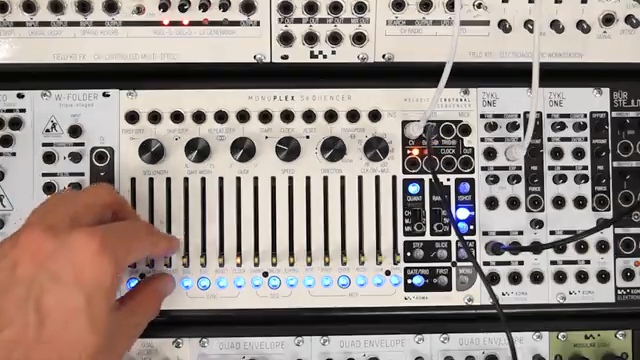
KOMA Elektronik introduces the Monoplex as a 16-step melodic sequencer, clearly aimed at modular aficionados who demand both flexibility and hands-on control. The design is unapologetically tactile, with a row of main sliders that directly set the output voltages for each step—no menu-diving required for basic melodic work. The input and output sections are neatly arranged, making it easy to patch into a typical Eurorack setup.
From the outset, the Monoplex is positioned as more than just a note repeater. Its interface encourages real-time interaction, with each slider corresponding to a step that can be individually enabled or disabled. Logical outputs for sequence start and end, as well as MIDI connectivity, hint at its ambitions to be the central brain of a patch, rather than just another sequencer in the rack.
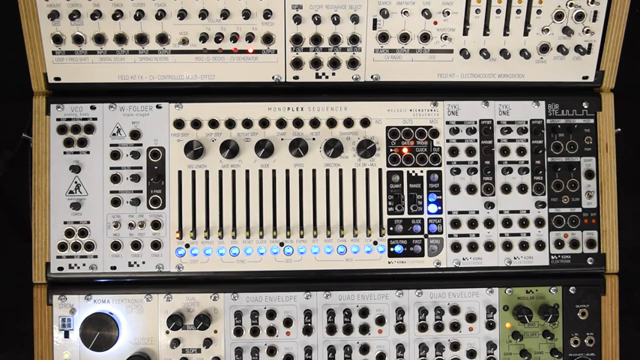
"This is a 16-step melodic sequencer from ComaElectronic."
© Screenshot/Quote: Komaelektronik (YouTube)
Core Controls: Sequence Length, Gates, Glide and More
"By moving these sliders I change the voltage on the output which goes to the one volt per octave of the VCO."
© Screenshot/Quote: Komaelektronik (YouTube)
The heart of the Monoplex lies in its core parameters: sequence length, gate width, glide, tempo, direction, and clock division/multiplication. Adjusting sequence length is as simple as turning a knob, with immediate visual and sonic feedback as the number of active steps changes. The sliders themselves output voltages directly to your VCO’s 1V/oct input, making melodic programming intuitive and fast.
Gate width is equally hands-on, with LED feedback showing the length of each gate as you tweak. The module allows for external modulation—patching in an LFO, for example, can dynamically alter gate length, adding rhythmic complexity. Glide is available globally or per step, letting you morph between staccato and legato phrases at will. Tempo can be dialed from a slow crawl to a brisk 220 bpm, and the sequencer’s direction can be set to forward, reverse, pendulum, or random, all from the front panel. Clock division and multiplication ensure the Monoplex will play nicely with any tempo source in your system.
Advanced Step Tricks: Skips, Repeats and Rhythmic Play
Beyond the basics, Monoplex offers a suite of advanced options to keep sequences evolving. Each step’s gate can be enabled or disabled, allowing for rests and syncopation within a pattern. Steps themselves can be skipped entirely, creating irregular or evolving sequence lengths—ideal for breaking out of the 16-step grid. Glide can be applied per step, so only selected notes slide into each other, and all these settings are saveable for later recall.
Repeats and ratcheting are handled with a dedicated menu, and can be CV-controlled for live variation. An LFO patched into the repeat CV input, for example, causes steps to be repeated a variable number of times, with visual feedback showing each repeat. The ratcheting mode adds bursts of triggers within a single step, perfect for Berlin School pulses or IDM-style flurries. Logic outputs for sequence start and end, reset behaviors, and swing settings further expand the rhythmic palette. For those who like to get granular, there’s even a polarity setting for the sliders, allowing for bipolar output between -1V and +1V.
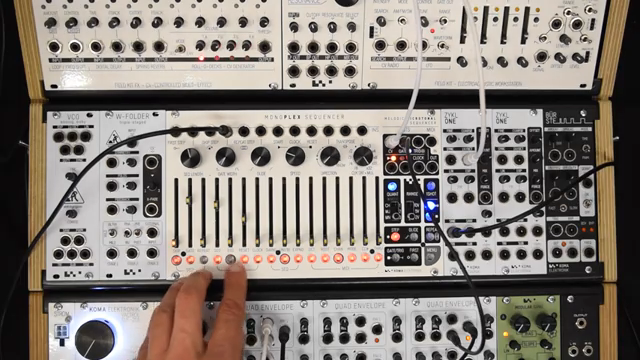
"As you can see it skips the step completely."
© Screenshot/Quote: Komaelektronik (YouTube)
Sync and Play: External Clocking and MIDI Integration
KOMA makes a point of showing how the Monoplex fits into a larger setup. The sequencer can be clocked externally, either via analog clock or MIDI clock, ensuring tight synchronization with other gear. This flexibility means the Monoplex isn’t just a studio tool—it’s ready for live rigs, DAWless jams, or hybrid MIDI/modular environments. The module’s logical outputs and reset functions further support complex performance setups, letting you chain or trigger events with precision.
Microtonal Mayhem: Scala Scales via MIDI SysX
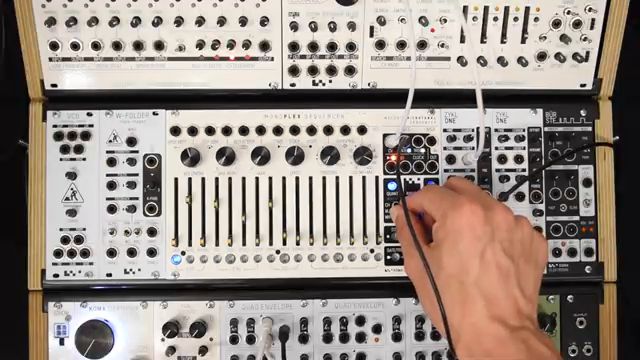
"We can upload different kinds of scales via MIDI SysX to the sequencer including microtonally defined scales which use the scala format."
© Screenshot/Quote: Komaelektronik (YouTube)
Perhaps the most intriguing feature is Monoplex’s support for microtonal scales. Users can upload custom scales—including those in the popular Scala format—via MIDI SysX. This opens the door to non-Western tunings, experimental intervals, and all manner of melodic exploration beyond the usual 12-tone grid. Whether you’re composing for microtonal synths or just want to break free from standard scales, Monoplex’s adaptability is a rare find in Eurorack sequencers.
This article is also available in German. Read it here: https://synthmagazin.at/koma-elektronik-monoplex-ein-sequencer-fuer-patch-enthusiasten/
Watch on YouTube:
Latest articles
Watch on YouTube:
Visit the channel:
https://www.youtube.com/KOMAelektronik
https://www.youtube.com/KOMAelektronik
Links from KOMAelektronik:
website: https://koma-elektronik.com
instagram: https://instagram.com/koma_elektronik
facebook: https://facebook.com/KOMAelektronik
Sponsored links:
If you purchase via these links, we may earn a small commission – at no extra cost to you. The link opens an Amazon keyword search, and results may vary depending on availability.
KOMA Elektronik Monoplex Sequencer
🔗 Check price on Amazon
🔗 Check price on Amazon