Joranalogue Audio Design returns with Flow 3, a deceptively compact 6HP Eurorack filter that packs more than just the usual state-variable fare. In this official overview, the Belgian brand’s penchant for precision analogue circuits is on full display as Flow 3 offers simultaneous lowpass, bandpass, and highpass outputs—plus a clever auto-dynamic feature that lets the filter modulate itself. The video walks through classic sweeps, self-oscillation, and quadrature sine duties, but also dives into pinged percussion and envelope following, showing how Flow 3 can become a flexible hub in any modular patch. For those who crave both surgical control and creative chaos, this filter might just be the new secret weapon.
7. May 2026
MILES
Joranalogue Audio Design’s Flow 3: Compact State-Variable Filter with a Self-Modulating Twist
Joranalogue Collide 4, Joranalogue Cycle 5, Joranalogue Filter 8, Joranalogue Flow 3, Joranalogue Fold 6
Triple Threat: Simultaneous Outputs in a Slim Package
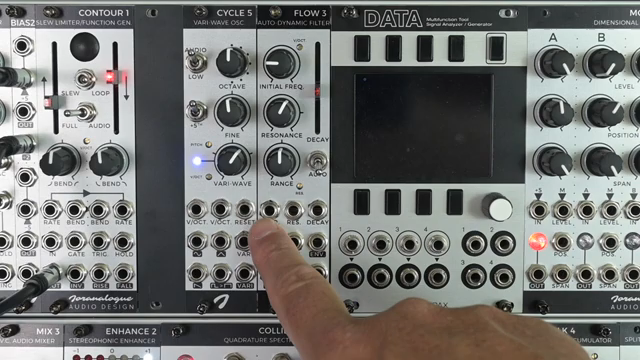
Joranalogue’s Flow 3 makes its entrance as a compact state-variable filter, but don’t let the 6HP panel fool you—there’s a lot lurking behind that minimalist façade. The module delivers simultaneous 2-pole lowpass, bandpass, and highpass outputs, giving users a versatile palette for shaping audio in real time. Each output is available at all times, allowing for parallel processing or creative routing, whether you want to split, layer, or morph signals within your rack.
This simultaneous output design is classic Joranalogue: clean, logical, and engineered for maximum patching flexibility. The video demonstrates how each filter mode can be monitored independently, making it easy to audition or combine outputs as needed. For those who like to experiment with spectral processing, the ability to tap into all three filter responses at once is a welcome feature.
Auto-Dynamic Filtering: Modulation from Within
Flow 3’s standout trick is its auto-dynamic capability, which lets the filter modulate its own cutoff frequency using a built-in decay generator and envelope follower. By sending a trigger to the dedicated input, users can activate the decay envelope, which then sweeps the filter frequency over a user-defined range. The range control is bipolar, so you can push the filter up or pull it down in response to each trigger, adding movement and punch to static sounds.
Alternatively, the envelope follower tracks the amplitude of incoming audio and translates it into a control voltage, which can also drive the filter’s cutoff. The two modulation sources—decay envelope and envelope follower—can be used independently or together, and their combined output is available at a dedicated envelope out. This opens up possibilities for dynamic, signal-reactive filtering without needing extra modules, keeping patches tidy and creative workflows flowing.
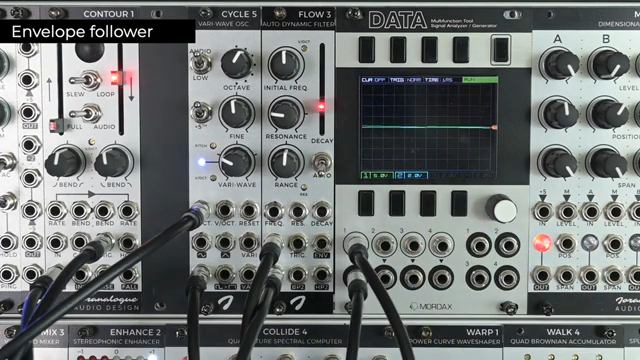
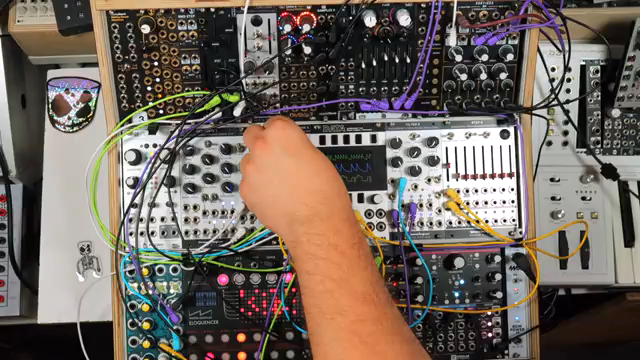
"If I then turn up the range knob here you can hear that Flow 3 starts reacting dynamically to our input signal."
© Screenshot/Quote: Joranalogue (YouTube)
Sweeps, Self-Oscillation, and Quadrature Sines: The Sonic Arsenal
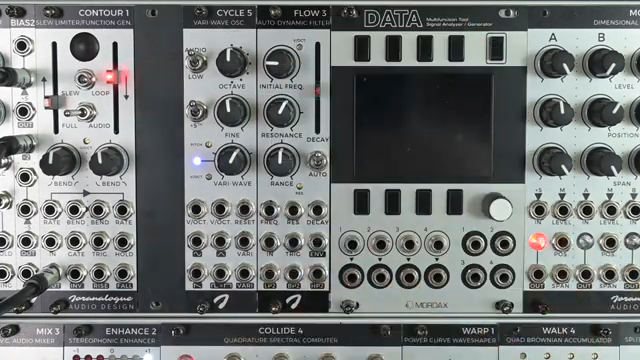
"You get 10V peak-to-peak quadrature sine waves from these 3 outputs. They are each 90 degrees out of phase with the previous one."
© Screenshot/Quote: Joranalogue (YouTube)
The video dives into Flow 3’s bread-and-butter filter sweeps, starting with a saw wave from Cycle 5 routed through the lowpass, bandpass, and highpass outputs. Each mode is demonstrated across a range of resonance settings, from subtle to full self-oscillation. Notably, the bandpass output requires a touch more resonance to match levels—a quirk familiar to filter aficionados.
Cranking the resonance brings Flow 3 into self-oscillation, where it produces clean, 10V peak-to-peak quadrature sine waves across its outputs. These sines are 90 degrees out of phase, making them ideal for stereo effects or as modulation sources. The filter tracks 1V/octave precisely, so it can double as a sine VCO or, with negative CV, as a quadrature LFO. Modulation inputs for frequency, resonance, and decay further expand its role as a flexible sound generator and modulator.
From Crossovers to Kick Drums: Complex Patching in Practice
Flow 3 isn’t just a filter—it’s a spectrum splitter, percussion voice, and dynamic processor rolled into one. Thanks to its Linkwitz-Riley response, the lowpass and highpass outputs are complementary; when mixed (with one inverted), they reconstruct the original signal, allowing Flow 3 to act as a crossover for frequency splitting. The video demonstrates this by sending a complex sound through the filter and processing only the high frequencies with an external wavefolder, leaving the lows untouched.
The module also excels at drum synthesis. By pinging the filter with a short trigger while it’s on the verge of self-oscillation, Flow 3 produces classic filter pings—snappy percussive sounds that can be shaped further by adjusting resonance and frequency. Engaging the envelope follower and tweaking the range lets users craft pitch envelopes for kick drum sounds, making Flow 3 a handy all-in-one drum voice or dynamic effect in a modular setup.
Envelope Follower: Extracting CV and Expanding Possibilities
The built-in envelope follower isn’t just for modulating the filter—it can be used as a standalone CV extractor from any audio source. The video shows how sending audio into Flow 3 and monitoring the envelope output yields a control voltage that mirrors the input’s dynamics. The slew rate of this envelope can be adjusted for snappy or sluggish responses, and the resulting CV can be patched anywhere in your rack to modulate other modules.
Importantly, the envelope output remains available even when the range knob is set to zero, so you can extract envelopes without affecting the filter’s behaviour. This makes Flow 3 not only a filter and sound generator, but also a utility for dynamic modulation, opening up new avenues for creative patching and interaction within a Eurorack system.
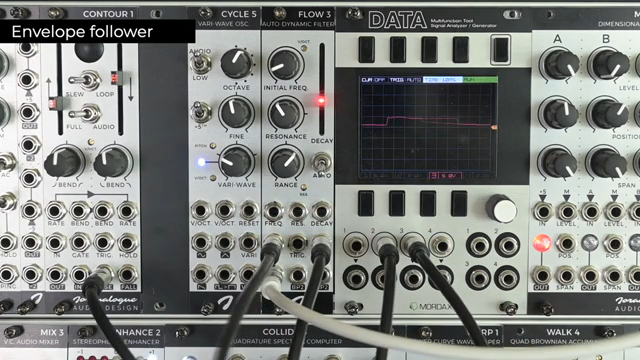
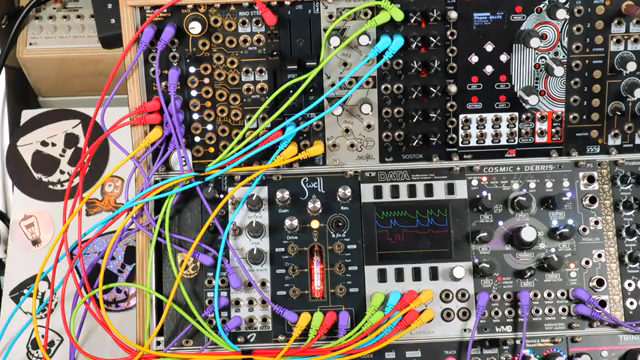
"On the scope we can see the extracted envelope from the envelope output on Flow 3."
© Screenshot/Quote: Joranalogue (YouTube)
This article is also available in German. Read it here: https://synthmagazin.at/joranalogue-audio-design-flow-3-kompakter-state-variable-filter-mit-selbstmodulation/
More articles about these products:

Watch on YouTube:
Latest articles
Watch on YouTube:
Visit the channel:
https://www.youtube.com/joranalogue
https://www.youtube.com/joranalogue
Links from joranalogue:
website: https://joranalogue.com
facebook: https://facebook.com/joranalogue
twitter: https://twitter.com/joranalogue
soundcloud: https://soundcloud.com/joranalogue
modulargrid: https://www.modulargrid.net/e/vendors/view/578
instagram: https://instagram.com/joranalogue
Sponsored links:
If you purchase via these links, we may earn a small commission – at no extra cost to you. The link opens an Amazon keyword search, and results may vary depending on availability.
Joranalogue Collide 4
🔗 Check price on Amazon
🔗 Check price on Amazon
Joranalogue Cycle 5
🔗 Check price on Amazon
🔗 Check price on Amazon
Joranalogue Filter 8
🔗 Check price on Amazon
🔗 Check price on Amazon
Joranalogue Flow 3
🔗 Check price on Amazon
🔗 Check price on Amazon
Joranalogue Fold 6
🔗 Check price on Amazon
🔗 Check price on Amazon