Oscillator Sink, the gentle architect of ambient explorations, invites us into the magnetic symmetry of the Tilde Instruments Röntgen—a device where minimalism meets deep improvisational possibility. In this video, he drifts through the instrument’s fog-lit corridors, revealing how a handful of unmarked controls can conjure nebula drones, shifting grooves, and alien transmissions. The Röntgen’s design is a study in purposeful restraint, its sound a tapestry of subtle interactions and bold sonic gestures. For those who seek not just notes, but moods and mysteries, this is a journey best experienced with headphones and open ears.
5. January 2026
LUMINA
Elegance in Sonic Flux: Oscillator Sink Illuminates the Röntgen
Symmetry and Silence: The Röntgen’s Elegant Form
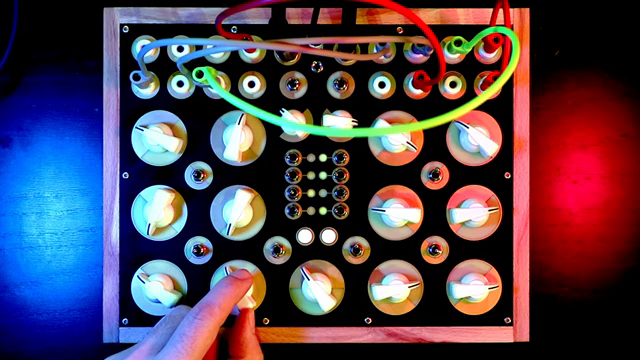
The Tilde Instruments Röntgen stands as a quiet sculpture—its surface unbroken by labels, its controls arranged in a mirrored dance. Oscillator Sink describes the device as embodying elegance, a word that lingers in the air like a soft reverb. The instrument’s design is clean and bold, each knob and switch chosen with intention, their symmetry inviting the hands to move in unison.
This purposeful minimalism is more than just aesthetics; it’s an invitation to listen and respond. With only a handful of controls, the Röntgen asks us to trust our ears and intuition, to let go of visual cues and instead feel our way through the sound. The absence of labels becomes a feature, not a flaw—reminding us that sometimes, the most profound sonic journeys begin in the unknown.
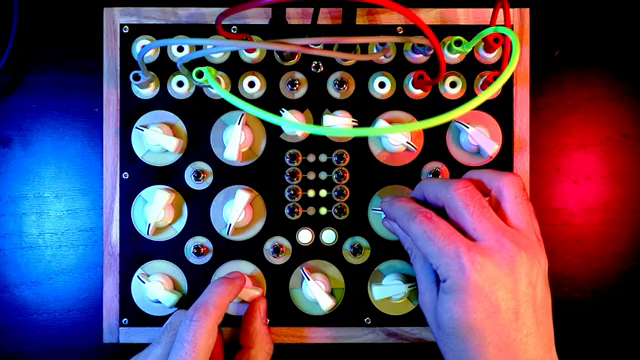
"The vibe for me here summed up in a single word is elegance."
© Screenshot/Quote: Oscillatorsink (YouTube)
Simple Tasks, Infinite Interactions: The Röntgen’s Architecture
"Doing a small number of simple things very well, and then letting them interact in interesting ways."
© Screenshot/Quote: Oscillatorsink (YouTube)
Beneath its serene exterior, the Röntgen reveals a mirrored duality: two identical synth voices, each an oscillator flowing into a wave folder, modulated and sequenced by a shift register. Oscillator Sink guides us through this architecture, highlighting how each element is designed to do a simple thing exceptionally well. The wave folder, for example, maintains the fundamental frequency even as it sculpts the harmonics, yielding a sound that is both weighty and articulate.
Yet the true magic emerges in the interplay. The mirrored voices can cross-modulate, feedback, and blend, creating a lattice of sonic possibilities. The architecture is not about overwhelming complexity, but about letting a few elements interact in ways that spiral outward—like ripples meeting on a pond, or magnetic fields colliding in slow motion. The result is an instrument that rewards curiosity and rewards those who listen for the subtle shifts beneath the surface.
A Chameleon of Sound: Personalities Unveiled
Röntgen’s sonic palette is as varied as a shifting sky. Oscillator Sink conjures droneful timbres first, letting the instrument exhale fog and fractured light. The voices, shaped by the wave folder and delay, bloom into deep pads and hollow, rounded tones—sometimes reminiscent of vintage game consoles, sometimes as weighty as thunderclouds. The stereo delay, modulated and stretched, adds a sense of space that feels almost architectural.
But the Röntgen is not content to linger in the mist. With a twist of patch cables and a shift in clocking, it transforms into a groovebox—sequencing rhythms, sculpting kicks and toms, and producing minimal techno pulses with a few deft moves. The shift registers become engines of chaos or order, depending on how they are clocked and fed, allowing for both locked-in patterns and unpredictable, evolving sequences.
In the hands of Oscillator Sink, the Röntgen’s personalities multiply: pretty and sinister, sci-fi and alien, rhythmic and freeform. Each patch is a new narrative, a sonic ghost flickering in and out of focus. The instrument’s depth is not in its menu-diving, but in the way it invites the player to drift, discover, and shape sound as story. Some moments—like the wild modulations and alien jazz drums—are best heard rather than described, their impact living in the resonance between speaker and soul.
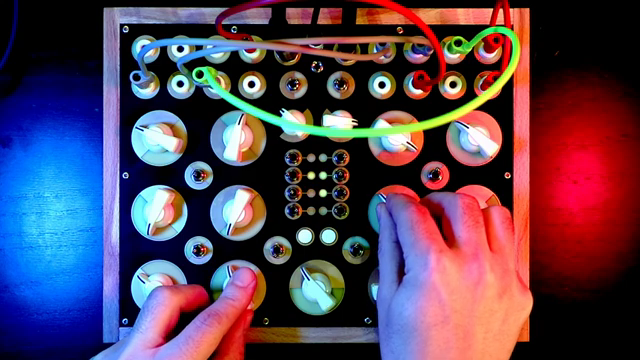
"How many different personalities it had from a music-making perspective."
© Screenshot/Quote: Oscillatorsink (YouTube)
Echoes of the Pioneers: Influences and Esoterica
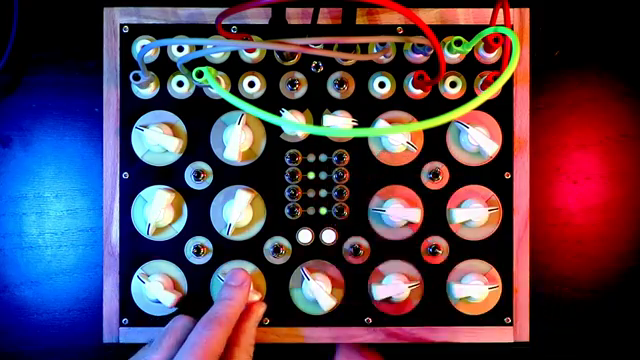
"Röntgen lies comfortably in the experimental or esoteric side of synthesisers."
© Screenshot/Quote: Oscillatorsink (YouTube)
The Röntgen’s DNA is a tapestry woven from the ideas of synthesis visionaries. Oscillator Sink traces its lineage to Rob Hordijk, Serge Tcherepnin, and Peter Blasser—names synonymous with experimental and esoteric synthesis. Their influence is felt in the Röntgen’s willingness to embrace unpredictability, to let chaos and order coexist.
This is an instrument that doesn’t just replicate familiar sounds; it encourages exploration at the edge of control. Techniques like shift register sequencing, wave folding, and feedback loops are not just features—they are invitations to lose and find oneself in sound. The Röntgen stands as a tribute to those who see synthesis as a living, breathing art form, always in flux.
An Invitation to Drift: The Video’s Sonic Journey
To truly appreciate the Röntgen’s depth, one must step beyond words and diagrams. Oscillator Sink’s video is not just a demonstration, but an immersive experience—a chance to witness the instrument’s many personalities in real time. The nuances of its drones, grooves, and chaotic transmissions are best felt in the ebb and flow of sound, where each gesture leaves a trace in the air. For those drawn to the poetry of synthesis, this is a journey worth taking with eyes closed and ears wide open.
This article is also available in German. Read it here: https://synthmagazin.at/eleganz-im-klangfluss-oscillator-sink-enthuellt-den-roentgen/
Watch on YouTube:
Latest articles
Watch on YouTube:
Visit the channel:
https://www.youtube.com/OscillatorSink
https://www.youtube.com/OscillatorSink
Links from OscillatorSink:
website: https://oscillatorsink.com
instagram: https://www.instagram.com/oscillatorsink
twitter: https://x.com/OscillatorSink
facebook: https://www.facebook.com/OscillatorSink
bandcamp: https://oscillatorsink.bandcamp.com
gumroad: https://oscillatorsink.gumroad.com
Sponsored links:
If you purchase via these links, we may earn a small commission – at no extra cost to you. The link opens an Amazon keyword search, and results may vary depending on availability.
Double Knot
🔗 Check price on Amazon
🔗 Check price on Amazon
Tilde Instruments Röntgen
🔗 Check price on Amazon
🔗 Check price on Amazon