Ever wondered what happens when a composer with a taste for the weird picks up a battered Dutch guitar from the sixties? David Hilowitz Music dives headfirst into a Craigslist mystery, unboxing a vinyl-clad relic that looks like it survived a toaster-fight in a Rotterdam dive bar. Expect dodgy wiring, missing ground wires, and a neck swap that would make Leo Fender blush. This isn’t your granddad’s Les Paul—think more “budget Bond gadget” than boutique classic. If you want to see a true underdog get a second chance (and hear it sing on a fresh track), this one’s for you.
11. January 2026
SPARKY
David Hilowitz Music vs. The Dutch Vinyl Oddity: A Sixties Guitar Gets a Rave Resurrection
Egmond Typhoon Guitar, Squier Mustang Humbucker, Squier Stratocaster Neck
Craigslist Spy Games: The Hunt for a Dutch Oddball
David Hilowitz kicks off his adventure in classic covert-ops style, tracking down a mysterious sixties guitar spotted on Craigslist. The rendezvous? Not some dingy pawn shop, but right next to Carnegie Hall—because why not add a touch of espionage to your gear hunt? The seller, keeping things strictly off-camera, hands over a case that’s more likely to contain secrets than strings.
What’s inside is a brand the likes of which even seasoned gear-heads haven’t seen. Cheap, weird, and a bit broken—Hilowitz is all in. There’s a certain thrill in picking up a piece of gear with a past, especially when it’s got more quirks than a modular synth convention. If you’re the sort who loves a fixer-upper with a story, this is your kind of chase.
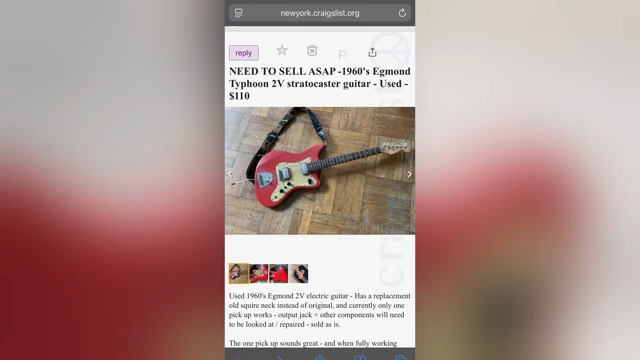
"I bought it because it was cheap, and weird looking, and because the seller said it's a bit broken."
© Screenshot/Quote: Davidhilowitzmusic (YouTube)
Vinyl, Squier Necks, and Quirks Galore
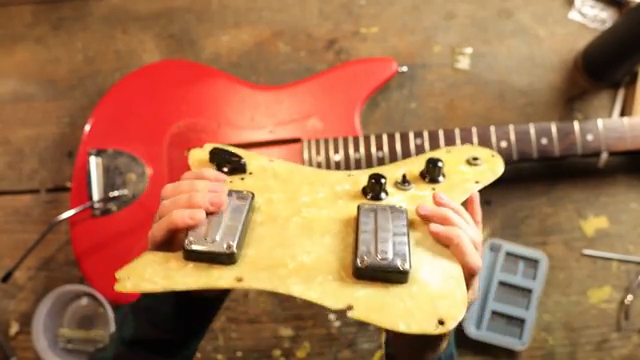
"The pickups are actually sitting on top of the pickguard. Like, there's no hole at all in the pickguard. I've never seen that before."
© Screenshot/Quote: Davidhilowitzmusic (YouTube)
Once back in the lab, David gives the guitar a proper once-over. The body? Wrapped in diner-seat vinyl—forget sunburst, this is pure retro upholstery chic. All the hardware looks original, but the neck’s been swapped for a Squier Stratocaster number. Surprisingly, it feels great, but the electrics are another story: dodgy volume knob, staticky output, and only the neck pickup working. There’s even a mystery toggle switch that does absolutely nothing except refuse to stay put.
Peeling back the pickguard reveals even more oddities. No grounding wire, a hollow body with a secret chamber, and pickups mounted on top of the guard like an afterthought. The wiring is dead simple, but the toggle switch isn’t even connected—someone’s idea of a fix was just to leave it dangling. If you like your guitars with a side of chaos, this one’s a feast.
Egmond: The Dutch Budget Kings
A bit of digging uncovers the guitar’s roots: Egmond, a Dutch company started by a retired station master in 1932. By the time rock and roll hit Europe, Egmond was churning out cheap student guitars by the truckload—so basic they made entry-level Squires look fancy. But they were everywhere, and even legends like George Harrison and Brian May cut their teeth on them. The Typhoon model, with its vinyl-wrapped body and hollow plywood construction, was Egmond’s mid-sixties answer to the American giants. It’s a budget street weapon from a time when rules were still being written, and it’s got the scars to prove it.
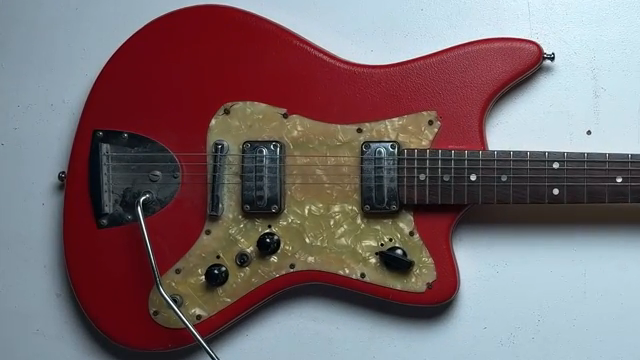
"Many of the construction choices, such as the hollowed-out plywood body, make it clear that this was very much still a budget instrument."
© Screenshot/Quote: Davidhilowitzmusic (YouTube)
Repairs, Mods, and a Bit of Luck
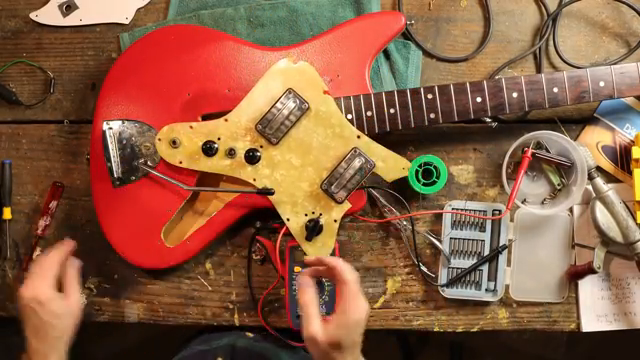
"Yeah, the hum is gone. I think this is the first time deoxidizing has actually worked for me."
© Screenshot/Quote: Davidhilowitzmusic (YouTube)
Back at the bench, David dives into repairs. The volume knob gets a dose of contact cleaner—miraculously, it actually works, killing the hum for once. Cleaning up the body is a challenge; guitar polish isn’t meant for vinyl, but a bit of elbow grease and compressed air do the trick. The real surprise? No grounding wire to the bridge, so David adds one, giving the guitar a fighting chance against buzz.
The neck pickup is a gem, but the bridge pickup is dead as disco. Rather than hack up the pickguard, David rigs a Squier Mustang humbucker straight to the guard—no holes, just screws and stubbornness. It’s a hack worthy of any DIY bunker, and somehow, it all fits. If you want to see a guitar held together by hope and hardware-store ingenuity, this is the bit to watch.
From Scrapheap to Studio: The Sound of Survival
With the guitar reassembled, it’s time for the real test: recording a song. David lays down drums, bass, and then gives the Egmond its moment—both as an electric and, thanks to its hollow body, as a makeshift acoustic. The result? A track that’s rough around the edges but full of character, just like the guitar itself. The original neck might be gone, but the Squier replacement feels right at home. There’s a certain magic in hearing a forgotten instrument come alive on a new recording—something you really need to experience in the video, because words can’t capture the full grit and glory.
This article is also available in German. Read it here: https://synthmagazin.at/david-hilowitz-music-vs-die-hollaendische-vinyl-kuriositaet-eine-sixties-gitarre-im-rave-revival/
Watch on YouTube:
Latest articles
Watch on YouTube:
Visit the channel:
https://www.youtube.com/DavidHilowitzMusic
https://www.youtube.com/DavidHilowitzMusic
Links from DavidHilowitzMusic:
David Hilowitz Web Site: https://davidhilowitz.com
Contact Form: https://davidhilowitz.com/contact
facebook: https://facebook.com/davidhilowitz
Sponsored links:
If you purchase via these links, we may earn a small commission – at no extra cost to you. The link opens an Amazon keyword search, and results may vary depending on availability.
Egmond Typhoon Guitar
🔗 Check price on Amazon
🔗 Check price on Amazon
Squier Mustang Humbucker
🔗 Check price on Amazon
🔗 Check price on Amazon
Squier Stratocaster Neck
🔗 Check price on Amazon
🔗 Check price on Amazon