Ever wondered why your basslines feel a little… flat? Bthelick, the groove doctor himself, drops a chord trick that flips the script on boring low-end. Forget rigid theory—he’s out here mixing sampled stabs with unlikely bass notes, turning vanilla loops into certified dancefloor heat. If you think you know what your samples can do, think again. Buckle up: this is the kind of hack you’ll want to try before your next beat session.
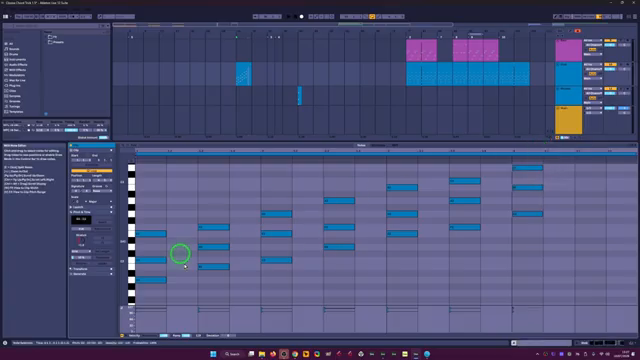
The Secret Sauce: Chord Trick Breakdown
Let’s kick things off with Bthelick showing us a chord move that hits harder than a cold can of cheap lager. He takes a simple stab—yep, the same one from that Free Your Mind track—and instead of just following the chords with the bass, he sends the bass somewhere totally unexpected. This isn’t your average theory lesson; it’s a little twist that yanks your ears off autopilot and makes your bassline pop.
What’s wild is how this trick uses the fixed nature of sampled chords to its advantage. Normally, you’d expect the bass to chase the chord root like a puppy, but here, Bthelick flips the script. Suddenly, the bass is leading, not following, and your groove just got a whole lot deeper. Trust me, you’ll want to hear how he does it—this is the kind of hack that takes your tracks from meh to massive.
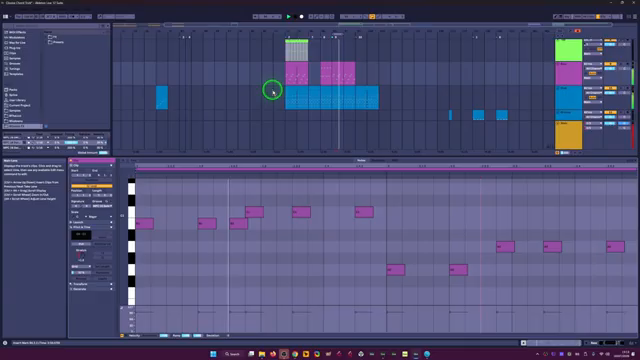
"It's a super interesting little chord trick you can do to open up more options, especially when you're working with samples."
© Screenshot/Quote: Bthelick (YouTube)
Chords and Bass: Not Just Friends, Sometimes Frenemies
"Without being able to shift notes around, the only notes you can trigger from a sample that will fit in a minor scale are one, four and five."
© Screenshot/Quote: Bthelick (YouTube)
Bthelick goes deep on why chord relationships matter, especially when your bass is doing its own thing. He breaks down how, in most electronic music, the scale is your guide, but scales aren’t as symmetrical as you think—some notes play nice together, others start drama. That’s why just pitching your sample up and down doesn’t always work out; sometimes it just sounds off.
When you work with sampled stabs, you can’t just rearrange the notes inside like you’re in MIDI heaven. The magic happens when you realize which notes and chord shapes actually fit together in your scale. Bthelick shows that only certain moves keep things sounding tight, but if you’re brave (or just a little reckless), you can push those boundaries for a wild vibe shift.
Sampled Stabs: More Than One Way to Flip the Cake
Here’s where things get tastier than street tacos at 2 a.m. Bthelick dives into the gritty details of manipulating sampled stabs. He jokes that you can’t unbake a cake—once your chord is inside a sample, those notes are glued together. But hey, just because you can’t pull the cake apart doesn’t mean you can’t add new toppings.
He shows how playing with bass notes underneath a fixed chord sample can give you new harmonic flavors. It’s like taking a standard A minor chord and moving the bass around until you stumble onto a juicy, unexpected combination. You can’t change what’s inside the sample, but you can flip the whole mood by what you stack underneath. Sometimes that means breaking the rules, and honestly, that’s when things get interesting.
"That's right, we're actually getting to the whole point of the video."
© Screenshot/Quote: Bthelick (YouTube)
From Theory to Heat: Shifting Vibes With One Move
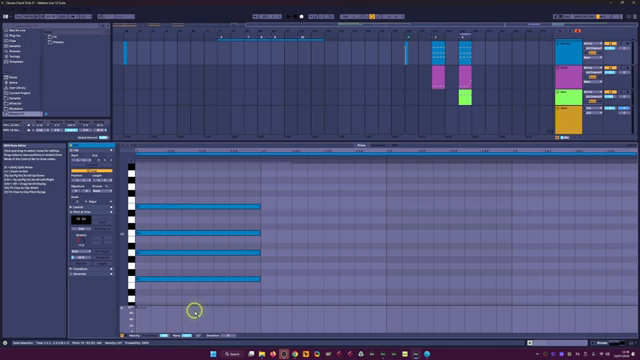
"Not that the names really matter, but the important thing is this is no longer a type of A chord."
© Screenshot/Quote: Bthelick (YouTube)
If you want your tracks to stand out in the club, this is the part you gotta pay attention to. Bthelick runs through real-world examples showing how this bass-beneath-chord move can totally flip the vibe. He walks through how, by sneaking in different bass notes, you can morph a chord sample into something that feels fresh and unexpected—sometimes even bending the key for a bar or two.
You don’t need a music degree to get this working. Try it out: drop a sample, throw some bold bass moves underneath, and see what sticks. Sometimes the best grooves come from the happy accidents you can only catch by ear. And honestly, the nitty-gritty of how these shifts sound is something you gotta hear for yourself—the video demos are pure fire, way beyond what I can scribble down here.
This article is also available in German. Read it here: https://synthmagazin.at/bthelicks-akkord-hack-basslines-mit-einer-prise-magie/
Watch on YouTube:
Latest articles
Watch on YouTube:
Visit the channel:
https://www.youtube.com/Bthelick
https://www.youtube.com/Bthelick
Links from Bthelick:
Instagram: https://instagram.com/bthelickmusic
SoundCloud: https://soundcloud.com/bthelick
Ko-Fi: https://ko-fi.com/bthelick
facebook: https://facebook.com/bthelick
Twitter: https://twitter.com/BtheLick