Behringer’s DICE audio interface family aims to demystify the leap from casual recording setups to serious studio environments. In their latest video, Behringer walks through the DICE lineup—from the compact 1U2 to the versatile 4U4—highlighting features like MIDAS preamps, loopback, and flexible direct monitoring. The focus is on intuitive design and workflow enhancements that cater to evolving needs, whether you’re a bedroom producer or assembling a small band. We analyze the architecture, hands-on control, and the subtle decisions that shape your creative journey.
25. September 2026
LYRA
Behringer DICE: Architecting Your Recording Workflow
Behringer DICE 1U2, Behringer DICE 2U2, Behringer DICE 2U4, Behringer DICE 4U4
From Bedroom Beginnings to Studio Ambitions
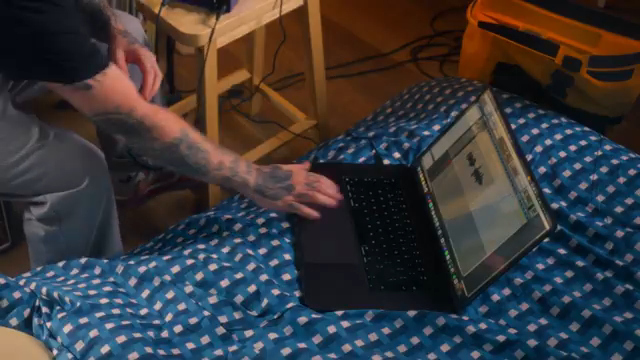
Behringer sets the stage by acknowledging the humble beginnings of most music creators—recording on phones, USB mics, or even basic headsets. While these tools suffice for early experimentation, the video makes a clear case for upgrading to a dedicated audio interface as a pivotal step in a creator’s journey.
The DICE family is presented as a scalable solution, with each model designed for a specific stage in the evolution from bedroom recording to more complex studio setups. The video emphasizes simplicity: plug-and-play functionality, minimal cabling, and the promise of cleaner, noise-free recordings. This architectural approach is about supporting growth, not overwhelming users with unnecessary complexity.

"Each one is built for a different point in your journey."
© Screenshot/Quote: Behringer (YouTube)
Core Features: MIDAS Preamps and Smart Routing
"The preamp draws on that Midas heritage that we trust and love, and the converters are just as honest."
© Screenshot/Quote: Behringer (YouTube)
Central to the DICE experience are the MIDAS preamps, which Behringer highlights for their clean, low-noise performance and transparent sound. The video underscores that what you record is precisely what you get—without unwanted coloration or hiss. This focus on audio integrity is paired with user-friendly physical controls, such as a satisfying main knob and rubberized feet for desktop stability.
Loopback functionality is given special attention, allowing users to reroute computer audio into their DAW or streaming software—a crucial feature for modern hybrid workflows. Direct monitoring is also showcased, eliminating latency issues and enabling musicians to perform without distracting delays. The physical switches for input selection and monitoring modes are all within immediate reach, reinforcing Behringer’s commitment to hands-on, distraction-free recording.
Model Variations: Tracking, MIDI, and Insert Versatility
Each DICE model brings distinct workflow enhancements. The 2U2 supports simultaneous tracking with dual preamps, making it ideal for collaborative sessions or stereo instrument capture. Inputs are flexible, accommodating both microphones and instruments, while a series of tactile switches provide direct control over input type and monitoring.
Moving up to the 2U4 and 4U4, users gain access to MIDI in/out, insert points for integrating outboard hardware, and expanded output routing. The 2U4 enables individual monitoring mixes across four outputs, catering to performers with unique headphone needs. The 4U4 further increases capacity with four preamps and XLR-balanced outputs, supporting small band recordings and advanced routing scenarios. This modular scaling allows users to choose the right interface for their immediate needs without sacrificing future expandability.

"You've got four outputs unlocking something people just don't expect at this size."
© Screenshot/Quote: Behringer (YouTube)
Workflow Simplicity: Fast Setup, Direct Control
Ease of use is a recurring theme—Behringer makes a point of keeping all essential controls on the hardware itself. Physical switches for input type, monitoring, and the subtle ‘shine’ enhancement are never buried in software menus. The video demonstrates that even without a computer, direct monitoring remains available, inviting spontaneous creativity.
Setup is streamlined: interfaces appear instantly with a single cable, requiring no driver installations or complex configuration. This approach supports both seasoned producers and first-timers, removing friction and letting users focus on music rather than troubleshooting. The design philosophy here is about reducing menu-diving and maximizing immediacy in the studio workflow.
The Pivotal Choice: Commitment to Craft

"That's the decision that changes everything."
© Screenshot/Quote: Behringer (YouTube)
Behringer frames the decision to invest in a DICE interface as more than a technical upgrade—it’s a personal commitment to one’s creative craft. The video suggests that choosing the right interface is a turning point, signaling a shift from casual experimentation to serious music-making.
Rather than comparing specs for their own sake, the focus is on matching the tool to the creator’s workflow and ambitions. It’s a subtle invitation to reflect on your own needs and to make a deliberate step toward a higher standard of audio quality and flexibility. This message is about empowerment, encouraging users to take ownership of their sound and their creative process.
This article is also available in German. Read it here: https://synthmagazin.at/behringer-dice-architektur-fuer-deinen-recording-workflow/
Watch on YouTube:
Latest articles
Watch on YouTube:
Visit the channel:
https://www.youtube.com/behringer
https://www.youtube.com/behringer
Links from behringer:
website: https://www.behringer.com
facebook: https://www.facebook.com/Behringer
twitter: https://twitter.com/BEHRINGER
instagram: https://instagram.com/Behringer
Sponsored links:
If you purchase via these links, we may earn a small commission – at no extra cost to you. The link opens an Amazon keyword search, and results may vary depending on availability.
Behringer DICE 1U2
🔗 Check price on Amazon
🔗 Check price on Amazon
Behringer DICE 2U2
🔗 Check price on Amazon
🔗 Check price on Amazon
Behringer DICE 2U4
🔗 Check price on Amazon
🔗 Check price on Amazon
Behringer DICE 4U4
🔗 Check price on Amazon
🔗 Check price on Amazon